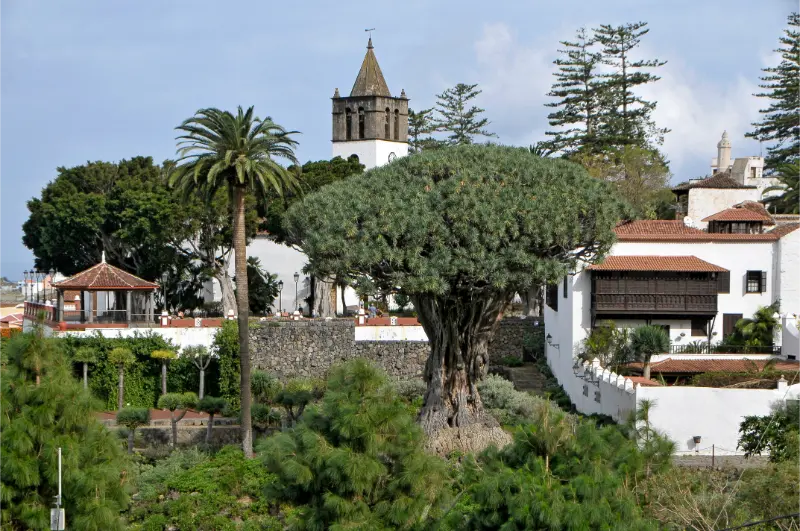
The Drago Milenario is one of Tenerife’s most recognisable natural symbols, but I would not reduce a visit to one photograph from a viewpoint: Parque del Drago gives the tree a botanical, cultural and landscape context.
What the Drago Milenario actually is
The tree is a Dracaena draco, the dragon tree species associated strongly with the Canary Islands. The Icod specimen was declared a National Monument in 1917 and stands at the heart of the historic town. The word “milenario” is traditional and symbolic; exact age estimates for ancient dragon trees are difficult because their growth does not work like a conventional tree with simple annual rings. I prefer to describe it as a venerable, exceptionally old specimen rather than pretend an exact birthday is scientifically certain.
Why I would enter the park
The official tourism page describes a three-hectare park planted with native Tenerife species and designed to represent several island ecosystems. The route also includes ethnographic elements, old trades, viewpoints and a cave interpretation of Guanche life. That means the ticket is not only payment for standing closer to the trunk; it supports a broader visit about Canarian flora and Icod heritage.
2026 opening hours and ticket prices
As of September 2026, the official tourism information lists daily summer opening from April to October from 09:00 to 20:00, and winter opening from November to March from 09:00 to 18:00. General admission is listed at €5 for adults, €3 for students and pensioners, €2.50 for children aged 6–11, and free for children under 6. Canary Island resident rates are lower. I still recheck before travelling because prices and operational details can change.
Accessibility is an important limitation
The official listing currently states that the park is not accessible for wheelchairs. That is a detail I would want to know before arriving, especially because the historic centre itself has gradients and older paving. Travellers who cannot enter the park can still see the Drago from public viewpoints around Icod and enjoy the surrounding streets, but the experience is different. I would plan the day around what is realistically accessible rather than discover the limitation at the gate.
Rules worth knowing
Pets are allowed on a lead according to the current official listing, while drones and smoking are prohibited. These rules make sense in a compact botanical environment. I also stay on marked paths and avoid touching plants simply to get a closer photograph.
Pairing the park with Icod
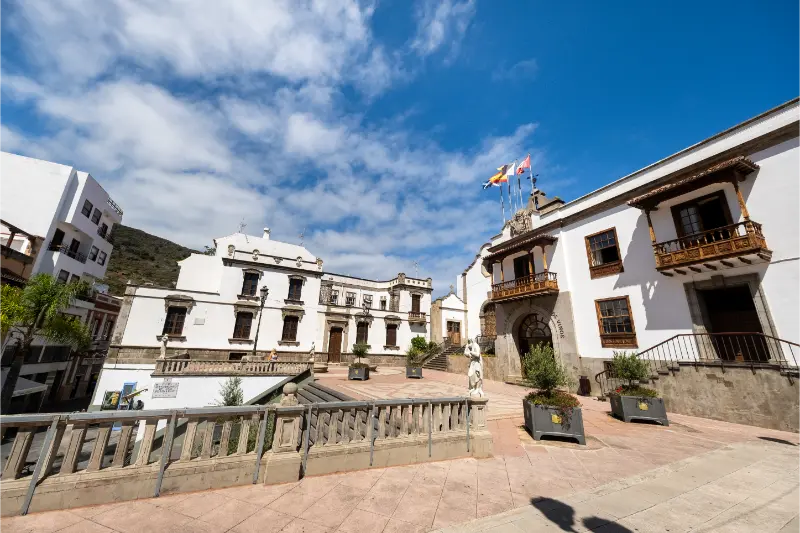
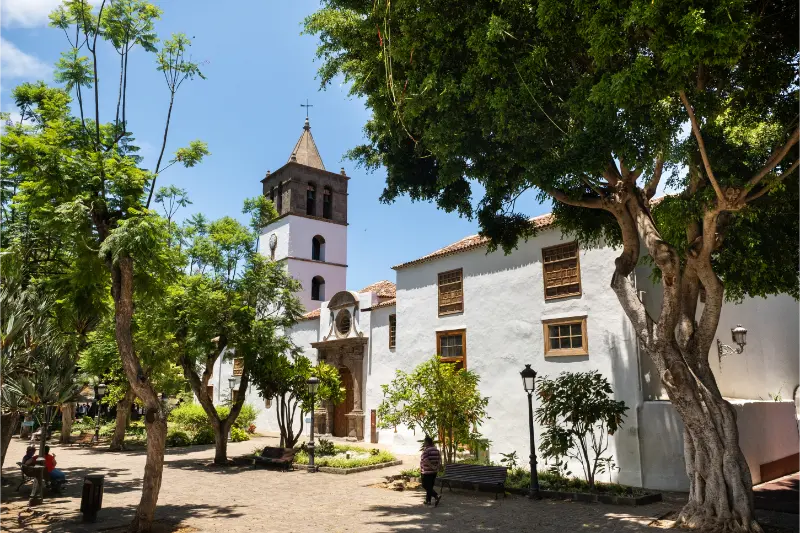
The Drago works best as the anchor of an Icod day, not a five-minute roadside stop. The historic centre, Iglesia de San Marcos and local food make the visit more rounded. My Icod de los Vinos guide covers the town, while my Cueva del Viento guide explains why the lava tube must be booked and planned separately.
Official information I use
I verify the current details on the official Tenerife tourism page for Parque del Drago. It currently lists the seasonal hours, admission prices and visitor rules used above.
How I photograph the Drago respectfully
I first look for context: church tower, historic roofs, garden vegetation and the scale of the crown. A tight trunk photograph can make the tree look like any unusual plant. A wider frame explains why it dominates the town. I stay on public paths and never lean on barriers or vegetation to remove an obstacle from the shot.
Why the park works with children
The visit is short enough for many families and the mix of unusual plants, ethnographic corners and the enormous tree gives children more variety than a single monument. I do not oversell the age as a precise number; instead I use the tree to talk about how plants grow, why old living things are hard to date and why conservation matters.
How I fit Parque del Drago into a Tenerife itinerary
I would not plan Parque del Drago in isolation. I first look at the geography of the day and decide what belongs naturally before or after it. I would combine the park with Icod’s historic centre and, only with a separate reservation and enough time, Cueva del Viento. Garachico also fits geographically if I am making a northwest day. That approach keeps driving or bus time under control and leaves enough margin for weather, queues, a longer lunch or simply staying somewhere because it is better than expected. For wider planning I use my Icod de los Vinos guide and then build the day around one main experience rather than a collection of unrelated pins.
When I would go
Morning is my favourite because I can see the park before lunch and then continue through Icod. In summer I avoid making the botanical walk the hottest part of the afternoon. Tenerife is a year-round destination, but the best hour for a specific place can matter more than the best month. I think about light, heat, wind, crowds and whether the surrounding streets are lively or congested. I also check the exact local forecast instead of relying on a forecast for the island as a whole; altitude and exposure create very different conditions over short distances.
How long I would allow
I allow about 60–90 minutes for the park itself, then at least another hour for Icod if this is my first visit. I prefer a realistic visit that includes arrival, orientation and a few pauses. The number printed on a map rarely includes parking, walking from a bus stop, buying a ticket, using changing facilities or finding lunch. Building those small transitions into the plan is one of the easiest ways to make a Tenerife day feel relaxed rather than rushed.
Getting there without wasting half the day
Icod is connected by bus with Puerto de la Cruz and other north-coast towns. By car I park outside the tightest historic streets and walk in rather than trying to stop beside the Drago. If I use public transport, I check both the outward and return timetable before leaving, not when I am ready to go home. If I drive, I save a legal parking option and a second choice on the map. Tenerife distances can look short, but urban traffic, steep roads and limited parking can change the real journey time. My getting around Tenerife guide explains the wider trade-offs between car, bus and taxi.
What I would bring
Comfortable shoes matter more than special equipment. I add water and sun protection and keep a light layer for the north coast in cooler months. I keep the day bag light: water, sun protection, a charged phone, and a thin layer if the visit may continue into evening or a higher area. For swimming places I add footwear suitable for hot paving or rough surfaces and never assume lockers or shaded space will be available. For museums or religious buildings I prefer simple, respectful clothing and a small bag that is easy to carry.
Accessibility and travelling at a slower pace
The park’s current official listing says it is not wheelchair accessible, so I would plan alternative viewpoints and accessible parts of Icod in advance when step-free access is required. Accessibility is not only about a wheelchair symbol: slopes, cobbles, stairs, distance from parking, toilets and shaded seating all matter. When step-free access is essential I confirm the current arrangements directly before travelling. My accessible Tenerife guide is a useful starting point for broader planning.
Where I would eat nearby
Icod is a good place to stop for Canarian food rather than leave immediately after the park. I look for a restaurant within the historic centre and keep the day geographically compact. I usually separate the attraction from lunch unless there is a genuinely good reason to eat on site. That gives me more choice and prevents a queue at the café from dictating the day. I look for a local restaurant, bakery or simple bar within the same area and keep one backup saved. For context on island dishes and restaurant habits, see my what to eat in Tenerife guide and eating out in Tenerife guide.
Where to stay if this place is a priority
Icod can work for a quiet northwestern base, but most first-time visitors will visit from Puerto de la Cruz or another north-coast town. I choose accommodation by map position rather than marketing description. A property that looks close can still be awkward on foot if there is a steep road, motorway barrier or long detour. I compare live options with accommodation around Icod de los Vinos and then cross-check the neighbourhood in my where to stay in Tenerife guide.
Common mistakes I would avoid
- Claiming the Drago has a precisely known age.
- Arriving without checking the seasonal closing time.
- Assuming the park is wheelchair accessible.
- Trying to visit Cueva del Viento spontaneously without a reservation.
The common thread is simple: I try not to turn Parque del Drago into a box-ticking stop. Tenerife rewards a little spare time, especially in places where the surrounding promenade, historic streets, gardens or coastline are part of the experience.
What I check on the day
Before leaving I verify the official opening or access information, local weather, any temporary closure and the route back. I check seasonal hours and any temporary maintenance notice, then confirm my next stop before entering so the day flows naturally. I save the official page and any ticket or reservation offline. This takes only a few minutes and is much more reliable than assuming that an old screenshot, blog post or map listing is still correct.
My final take
Parque del Drago is worth visiting when I treat the ancient dragon tree as part of Icod’s living landscape. The strongest visit combines botany, history and the town itself rather than reducing the tree to a souvenir photo.

Frequently asked questions
Do I need to book in advance?
It depends on the venue and ticket type. I check the official page close to the visit; where timed tickets or guided experiences are offered, advance booking can be useful even if basic admission is available at the door.
Is it worth visiting if I only have a few days in Tenerife?
I would include it when the subject genuinely matches my interests and it fits geographically with the rest of the day. On a short first trip, I avoid adding an attraction simply because it appears on a long checklist.
Can I visit with children?
Usually yes, but I adjust the duration and expectations. A shorter, focused visit with food or outdoor time afterwards works better than making children absorb every exhibit or historical detail.