Tag: La Orotava

  • Hijuela del Botánico Guide: Free Historic Garden in La Orotava

    Hijuela del Botánico Guide: Free Historic Garden in La Orotava

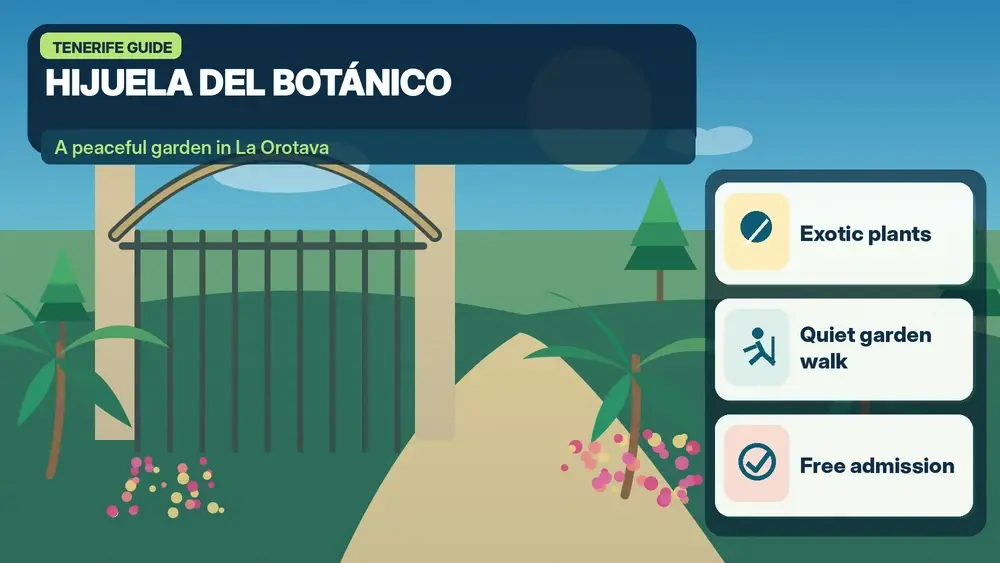
    Hijuela del Botánico is one of the small La Orotava stops I like precisely because it does not demand half a day. Hidden behind the town hall, this historic botanical garden covers about 4,000 square metres and contains roughly a hundred species. It works beautifully as a quiet pause between churches, balconies and the steep streets of the historic centre.

    Turismo de Tenerife states that the garden was created in 1788 and has been a Bien de Interés Cultural since 2008. It was conceived as a complementary site to the acclimatization garden that is now the Jardín Botánico in Puerto de la Cruz.

    Quick planning facts

    LocationBehind La Orotava Town Hall
    SizeAbout 4,000 m²
    OriginCreated in 1788
    Heritage statusBien de Interés Cultural since 2008
    CollectionAround one hundred species
    Official priceFree
    Official hoursTurismo de Tenerife currently lists 09:00–14:00 year-round

    Why I add it to a La Orotava walk

    La Orotava can become architecture-heavy: carved balconies, churches, manor houses and steep stone streets. Hijuela changes the pace. I enter a green space, slow down and look at plants collected from very different parts of the world.

    My La Orotava guide gives the broader walking route. Hijuela is a good 20- to 40-minute component rather than the reason I cross the island on its own.

    A short history

    The garden is linked to the same historical interest in acclimatizing exotic plants that shaped the larger botanical garden in Puerto de la Cruz. Its creation in the late eighteenth century reflects Tenerife’s role in Atlantic scientific and botanical exchange.

    I find that context more interesting than simply counting species. The garden is evidence of how the island’s climate attracted botanists and plant collectors long before modern tourism.

    What I look for

    The official page highlights species such as horse chestnut, flame tree, sapote, Australian conifers and a notable dragon tree. Collections can evolve, so I treat those as examples rather than a guaranteed checklist for every visit.

    I look at tree form, bark, shade and how the garden is laid out within the historic town. Because it is compact, I can pay more attention to individual specimens than in a huge park.

    Best time of day

    Morning fits the official opening hours and works naturally with a La Orotava walking itinerary. I would visit before lunch, then continue to Casa de los Balcones, churches or viewpoints.

    Cloudy north-Tenerife weather is not a problem here. Soft light can actually make plants and stonework easier to photograph than hard midday sun.

    Photography

    The garden rewards detail: leaves, old trunks, framed views and the contrast between vegetation and town architecture. I avoid blocking narrow paths with a tripod and respect any areas closed for maintenance.

    If plant photography is a major interest, I combine the stop with my Puerto de la Cruz Botanical Garden guide. The two sites are linked historically but very different in scale.

    Accessibility and pace

    A compact garden can still include uneven surfaces or steps, so travellers with limited mobility should confirm the current accessible route. I do not assume heritage gardens meet the same standards as modern parks.

    For most visitors, the small scale is an advantage: it is easy to enjoy without exhausting legs already dealing with La Orotava’s slopes.

    Combining with food and culture

    After the garden I like a slow lunch or coffee in the historic centre. This is also a good day to connect architecture with local crafts at Casa de los Balcones or the MAIT crafts museum.

    La Orotava Historic Center Panorama Tenerife

    I avoid adding Puerto de la Cruz, Teide and several museums unless I am comfortable with a rushed day. La Orotava deserves time on foot.

    Official information

    I use Turismo de Tenerife’s Hijuela del Botánico page for current reference. It currently lists free admission and opening from 09:00 to 14:00 all year.

    Frequently asked questions

    Is Hijuela del Botánico the same as the Botanical Garden in Puerto de la Cruz?

    No. It is a separate, much smaller historic garden in La Orotava, although the two are historically linked.

    How long do I need?

    For most travellers 20 to 40 minutes is enough. Plant enthusiasts may stay longer.

    Is it worth visiting if I already saw the Puerto de la Cruz garden?

    Yes if you are already in La Orotava. The value is the historic setting and compact character, not a larger collection.

    Final thoughts

    Hijuela del Botánico is exactly the kind of small place that makes a travel day feel less mechanical. I would not oversell it as a major attraction, but I would absolutely include it in a thoughtful La Orotava walk.

    How I fit this stop into a full day

    I give the attraction a clear role: morning culture stop, midday break or late-afternoon visit. I avoid booking another timed activity immediately afterward because parking, queues and the temptation to stay longer can make the schedule brittle.

    I save the address, current hours and official page offline. If the place is unexpectedly closed, I already know the nearest alternative rather than spending half an hour searching from the pavement.

    Photography and visitor etiquette

    I check whether indoor photography is allowed and keep flash off around delicate objects, plants or exhibitions unless explicitly permitted. I also avoid turning narrow paths into a photo studio. Other visitors should be able to move through the space normally.

    Accessibility questions I ask before going

    Historic buildings and gardens can contain steps, cobbles, slopes and narrow doors. “Accessible” may apply to only part of a site. If mobility is important, I confirm the actual route, toilet access and parking rather than relying on a generic accessibility icon.
    Historic Center Of La Orotava Tenerife

    Why small attractions matter in a long Tenerife trip

    A major park or famous viewpoint can be spectacular, but smaller cultural and garden stops prevent the itinerary from becoming repetitive. They are where I learn details that make later food, architecture and landscape easier to interpret.

    A final planning rule I use on Tenerife

    I leave at least one hour of unscheduled margin around rural, mountain or cultural stops. That buffer absorbs parking problems, weather changes, a longer lunch or a road that is slower than expected. It also gives me permission to stay when a place turns out to be more interesting than the itinerary suggested.

    Before driving away, I check the next fuel, food and return option. This small habit matters most in the parts of Tenerife where tourism infrastructure is deliberately light. Good planning should make the day feel freer, not more rigid.

    Why this article belongs in a complete Tenerife plan

    The island becomes much more interesting when I connect major sights with smaller landscapes and cultural stops. This experience adds context rather than another box to tick, which is exactly what I want from a second or third day away from the main resort areas.

    Small details that improve the visit

    I check opening hours or access information on the same day whenever the experience depends on a museum, visitor centre, tasting, campsite or protected route. Tenerife is easy to travel around, but it is still frustrating to cross the island for a facility that has changed its schedule. A two-minute check before departure is one of the most useful habits in my planning.

    I also keep cash and a bank card, water, a light layer and a charged phone with me. None of those items is dramatic, but together they solve many of the small problems that can turn a relaxed day into unnecessary stress.

    What I would not try to combine on the same day

    I avoid attaching a long Teide hike, a late-night drive or several fixed-time attractions to a day that already involves rural roads, tasting, museums or protected landscapes. The island looks compact on a map, but the most rewarding places often deserve more time than their distance suggests.

    When I have extra time, I use it for a cafe, a short walk or a viewpoint rather than adding another far-away destination. That usually creates a better travel day and makes the article useful as a realistic plan rather than an impossible checklist.

    Before I leave

    I take one last look at the return journey before starting the visit. In Tenerife, a place that feels close on the map can sit on the opposite side of a ridge or at a very different altitude. Knowing whether I am returning by motorway, town roads or a mountain route helps me decide when to leave and prevents the final hour of the day from becoming rushed.

    I also keep the plan flexible enough to stop if the weather, light or atmosphere is better than expected. That flexibility is especially valuable in the north and in the mountains, where conditions can change quickly and a short unplanned stop can become the most memorable part of the day.

    Who I think will enjoy it most

    This experience works best for travellers who want more than the headline attractions and enjoy understanding how local culture, landscape and everyday life fit together. It is less suitable for anyone trying to maximize the number of famous sights in a single day, and that is exactly why I consider it valuable in a longer Tenerife itinerary.

  • MAIT La Orotava Guide: Ibero-American Crafts Museum, Hours and Tickets

    MAIT La Orotava Guide: Ibero-American Crafts Museum, Hours and Tickets

    The Museo de Artesanía Iberoamericana de Tenerife (MAIT) is one of the La Orotava museums I would choose when I want the town’s historic architecture and its craft traditions to reinforce each other. The museum occupies the former Dominican convent of San Benito Abad, now commonly referred to as the former Santo Domingo convent, and its permanent collections connect Canary Islands crafts with wider Ibero-American traditions.

    The La Orotava tourism website lists the museum at Calle Tomás Zerolo 34. At the time of this update, official municipal pages are not fully consistent on opening hours: the tourism page lists Monday to Friday 10:00–15:00 and Saturday 10:30–13:30, while the municipality’s facility page lists Monday to Friday 09:00–15:00. Both indicate a €2 general ticket and free admission for Tenerife residents. I therefore verify the timetable directly before travelling rather than presenting one listing as guaranteed.

    Quick visit facts

    LocationCalle Tomás Zerolo 34, La Orotava
    BuildingFormer Dominican convent, 17th century
    HoursOfficial municipal pages currently show differing schedules; verify before visiting
    Current listed general price€2; Tenerife residents free
    Collection focusCanarian and Ibero-American crafts
    Time I allow60–90 minutes
    Best pairingLa Orotava historic centre and Casa de los Balcones

    The building is part of the reason to visit

    I would not separate the collection from the former convent. The municipal museum description highlights the stone entrance arch, cloister, timber ceilings and stone staircase, with work associated with Canarian architect, sculptor and gilder Antonio de Orbarán. Those spaces give handmade objects a setting that feels appropriate rather than neutral.

    If architecture is my priority, I compare this building with the patios and balconies elsewhere in town. My La Orotava travel guide provides a walking route through the historic centre.

    What the collection covers

    The permanent exhibition is designed to represent Ibero-American craft traditions, including practices that continue today and others that have disappeared. The museum gives special attention to Canary Islands craftsmanship but also includes material from America, the Philippines and Spain. This broader context helps me see Canarian crafts as part of long networks of exchange rather than an isolated folk style.

    La Orotava Historic Center And Mountains Tenerife

    Highlighted collections include popular art from America and the Philippines, regional Canarian craft design awards, traditional musical instruments and Spanish popular pottery. I would choose a few themes and follow them rather than try to memorise every object label.

    What I look for in the Canarian craft rooms

    In the Canary Islands sections I slow down for techniques that are easy to overlook when they are reduced to souvenir labels. Openwork embroidery, or calado, depends on removing selected threads from fabric and rebuilding decorative patterns with careful hand stitching. Traditional pottery, basketry, woodwork and textile work are equally useful because they show how local materials, household needs and trade shaped everyday objects. I pay attention to labels explaining where an object was made, what raw materials were used and whether the piece was intended for daily work, dress, storage or decoration. That context matters more to me than simply deciding which object looks prettiest. It also helps later when I browse shops: I can ask how something was made and avoid assuming that every item marketed as Canarian represents the same craft tradition. MAIT works best when I use the collection as a vocabulary lesson before looking for contemporary artisan work elsewhere on the island.

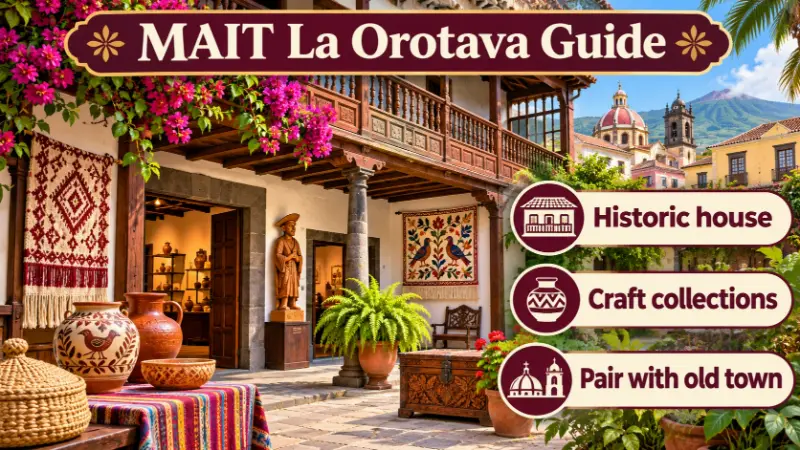
    Illustrated guide: MAIT La Orotava, with practical visitor tips
    Illustrated guide: MAIT La Orotava.

    Why it complements Casa de los Balcones

    Casa de los Balcones is more immediately visual, with its architecture, courtyards and strong association with traditional crafts. MAIT is more museum-like and comparative. Visiting both can work well because one gives a domestic-architectural setting and the other provides a broader interpretive framework.

    My Casa de los Balcones guide explains the practical details of that second stop. I would normally leave time for a café between the two rather than turn La Orotava into a museum marathon.

    Crafts as living culture, not only souvenirs

    The museum is a useful reminder that “craft” can mean technique, design, social history and skilled labour—not simply an object bought at the end of a holiday. Lace, pottery, basketry, woodwork, textiles and musical instruments all carry information about materials, trade and everyday life.

    That changes how I shop later. I am more likely to ask who made an item, what material was used and whether the design belongs to a local tradition. The Tenerife food souvenirs guide covers edible products, but I apply the same principle to non-food crafts: fewer, better-documented objects are more meaningful than generic souvenirs.

    Official source I check

    For current visitor information I compare La Orotava tourism’s official MAIT page with the municipality’s current MAIT facility listing. Because those official pages can show different opening times, I treat the museum’s own contact details as the final check before travelling. Both sources are still useful for the address, ticket information and collection overview.

    How much time I would allow

    I would normally allow between one and two hours for MAIT – Museo de Artesanía Iberoamericana, then keep the rest of the day for the surrounding historic centre. Museums and interpretation centres are most useful when I do not rush through every panel. I choose the sections that interest me, read enough context to understand what I am looking at and then continue outside with a clearer sense of place.

    This is why I combine the visit with my La Orotava travel guide rather than treating the museum as an isolated stop. A coffee, market visit or short walk afterwards gives the information from the displays somewhere to “land” in the real city.

    Opening hours and tickets: what I verify

    Hours, temporary exhibitions and ticket systems can change, especially around public holidays, Carnival, Christmas and local events. I therefore use the official website as the final source on the day before visiting. If free timed entry or advance booking is offered, I reserve it rather than assume I can walk in at the busiest hour.

    I also check whether bags, tripods, food, flash photography or large groups have specific rules. These small details are easy to overlook and can matter more than the headline ticket price.

    Who I think gets the most from the visit

    MAIT – Museo de Artesanía Iberoamericana works best for travellers who want context, not only a list of sights. It is particularly useful on a cloudy day, for repeat visitors, for families with older children who like interactive or visual displays, and for anyone trying to understand Tenerife beyond beaches and viewpoints. I would not force a museum into every itinerary, but I think one or two well-chosen cultural visits make the rest of the island easier to read.

    Accessibility and comfort

    Before travelling with a wheelchair, stroller or limited mobility, I confirm the current accessibility information directly with the venue because historic buildings can have level changes, lifts or temporary restrictions. I also check nearby parking or the walking distance from a bus/tram stop. My broader accessible Tenerife guide is useful for planning the whole day rather than only the museum entrance.

    A realistic La Orotava cultural half-day

    I would start in the historic centre while the streets are quiet, visit MAIT near opening time, continue through the main squares and traditional houses, and choose one second interior such as Casa de los Balcones. Lunch then becomes the pause before deciding whether to continue to Puerto de la Cruz or drive toward the Orotava Valley viewpoints.

    Frequently asked questions

    Is MAIT only about Canarian crafts?

    No. The permanent exhibition is Ibero-American in scope, with a strong Canary Islands component but collections that also connect Spain, America and the Philippines.

    Is the building historic?

    Yes. The museum occupies a seventeenth-century former Dominican convent, and the architecture is a major part of the visit.

    Is it expensive?

    Official municipal information currently lists a €2 general ticket and free admission for Tenerife residents. I confirm both price and opening time before arrival, especially because official pages can be updated on different schedules.

    Final thoughts

    MAIT is a good example of the smaller Tenerife museum that becomes more valuable when placed in context. I would not visit only to “see crafts”; I would use it to understand the materials and techniques that appear elsewhere in La Orotava and then notice those details differently as I walk through the town.

    How I prepare before entering

    I read just enough before the visit to know the basic story, but I do not try to learn the entire collection online. A museum is more engaging when I recognise a few themes and still have room to discover something new. I save the official page and any digital guide, then put my phone away for parts of the visit.

    Fountain and gardens in front of the pink Liceo de Taoro building in La Orotava

    I also check the last admission time, not only the closing time. Some venues stop entry before the doors close, and temporary events can affect normal access. If I am building the day around a specific exhibition, I verify that it is still running.

    Photography without missing the museum

    If photography is permitted, I take a few images that help me remember an object or display and then keep moving. Photographing every label usually means I read nothing properly. For historic interiors I avoid blocking narrow passages, leaning on cases or using flash unless it is explicitly allowed.

    What I do after the visit

    I give myself ten minutes afterwards to walk without another objective. Museums can be dense, and the transition back into the city is often when the information becomes useful. I notice architecture, shop signs, festival posters or craft objects differently because I now have a context for them.

    This is also when I decide whether I need another museum. Often I do not. One strong visit plus a market, neighbourhood or historic street produces a more varied day than moving from ticket desk to ticket desk.

  • La Orotava Travel Guide: Historic Centre, Balconies, Gardens and Day Trips

    La Orotava Travel Guide: Historic Centre, Balconies, Gardens and Day Trips

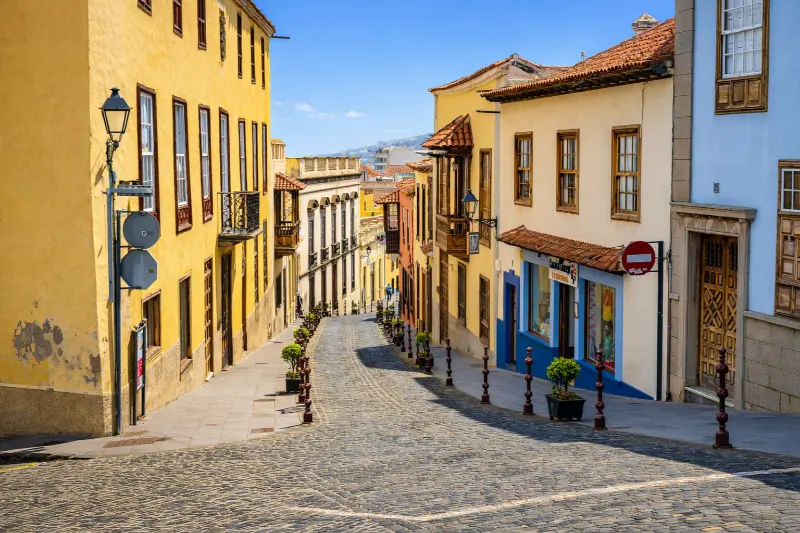
    La Orotava is one of the Tenerife towns I would visit even if it were nowhere near the island’s beaches. Set above the north coast in the Orotava Valley, it combines steep historic streets, traditional Canarian architecture, gardens and broad views toward the Atlantic and Teide. It is also a town where geography matters: the historic centre climbs, so walking slowly is part of the experience.

    The municipality is much larger than the urban centre and extends high into the island; roughly 78% of Teide National Park lies within La Orotava’s municipal territory according to official Tenerife tourism information. That connection between cultivated valley, forest and high volcano explains why La Orotava feels like a natural bridge between the north coast and Teide.

    Why visit La Orotava?

    I come for architecture and atmosphere rather than a single must-see sight. The historic centre is protected and contains mansions, churches, gardens and wooden balconies that reflect the wealth of the valley’s agricultural past. It is close to Puerto de la Cruz, so even travellers without a full day can include it easily.

    If your Tenerife itinerary already includes La Laguna, do not assume the towns are interchangeable. La Laguna has a planned colonial street grid and university energy; La Orotava is steeper, more aristocratic in character and visually tied to the valley. I think both are worth visiting on a culture-focused trip.

    Casa de los Balcones

    Casa de los Balcones is the best-known architectural stop and a useful place to look closely at traditional wooden balconies and domestic design. It is also heavily visited, so I would not make it the only reason to come. The surrounding streets and neighbouring historic buildings create the context that makes the house meaningful.

    Opening arrangements and ticketed areas can change, so check current information if an interior visit is important. Even without entering every building, the old streets reward walking.

    Historic streets and churches

    Comfortable shoes are essential because the centre is built on a slope. I would begin high enough that I can wander downhill through the main historic area, then decide how much climbing I want to repeat. Church towers, stonework, colourful façades and glimpses of the valley appear between narrow streets.

    Do not plan the visit by driving from sight to sight. Park once, walk and accept the gradients. The town is more coherent that way.

    Gardens and viewpoints

    La Orotava is known for formal gardens and planted spaces that reflect the north’s greener climate. They make a useful pause between historic buildings and provide elevated views. On clear days, Teide can dominate the skyline; on cloudier days, the lush vegetation becomes the stronger feature.

    Corpus Christi carpets

    La Orotava is famous for its Corpus Christi celebrations and elaborate carpets made from flowers and coloured natural materials, including the monumental sand artwork in the town-hall square. If your trip coincides with the event period, expect a very different visitor experience with crowds and restricted movement. Check official local dates because the calendar changes each year.

    Outside the festival, you can still understand the tradition through local displays and interpretation, but do not expect the full street spectacle year-round.

    Food and the Orotava Valley

    The valley is an excellent place to focus on Canarian food and wine. Agriculture and vineyards shape the surrounding landscape, and nearby rural restaurants or guachinches can add much more to the day than another rushed monument. I would plan lunch as part of the itinerary, not as a gap between sights.

    For dishes and local dining habits, use my Tenerife food guide.

    La Orotava and Puerto de la Cruz

    These two places are close enough to combine easily. I would visit La Orotava first, while energy for hills and historic streets is high, then descend to Puerto de la Cruz for lunch, seafront walking or an evening in La Ranilla. That creates a natural movement from valley town to coast.

    My Puerto de la Cruz guide gives several options for the second half of the day.

    La Orotava and Garachico

    A longer north-coast culture day can continue west to Garachico. The two towns show different parts of Tenerife’s historical story: La Orotava’s valley wealth and Garachico’s port history shaped by the 1706 eruption. I would skip Puerto de la Cruz on that day or keep it only for dinner.

    See my Garachico guide before deciding how much to combine.

    La Orotava and Teide

    Roads from the Orotava Valley climb toward Teide through forest and changing vegetation, making this one of the island’s great vertical journeys. However, I would not squeeze a full La Orotava visit and a serious Teide hiking plan into the same day. A short old-town walk can precede a scenic drive, but cable-car reservations, summit permissions and high-mountain routes deserve their own schedule.

    La Orotava Historic Center And Mountains Tenerife

    Use my Mount Teide guide for the mountain rules and altitude planning.

    Getting there and parking

    La Orotava is easy to reach from Puerto de la Cruz and the TF-5 corridor, but parking in the historic centre is not where I want to spend my time. I look for a sensible public car park or legal space outside the tightest old streets, then walk. Buses also connect the town with nearby northern destinations.

    For a car-free trip or broader transport questions, see getting around Tenerife.

    Where to stay

    Most visitors stay in Puerto de la Cruz and visit La Orotava during the day, but the town can suit travellers looking for a quieter historic base. You will trade immediate beach access for atmosphere and valley views. A rural property outside the centre can also work if you have a car.

    If that appeals, compare accommodation in La Orotava and pay close attention to parking and walking gradients.

    How long do you need?

    TimePlan
    2 hoursCore historic streets and one major building
    Half dayHistoric centre, gardens and lunch
    Full dayAdd Puerto de la Cruz or valley food/wine
    OvernightSlow town experience plus Teide or north-coast day trips

    I think half a day is ideal for a first visit. It is long enough to stop, enter a building or two and have lunch without reducing the town to photographs.

    My ideal La Orotava visit

    I would arrive in the morning, park once, walk through the historic centre at a deliberately slow pace, visit one interior that genuinely interests me, spend time in a garden or viewpoint and then have a long lunch. After that I would choose either Puerto de la Cruz for the coast or Garachico for more history—not both unless the day is long and relaxed.

    For updated municipal information and visitor ideas, see the official Tenerife tourism page for La Orotava.

    Respecting the historic centre

    La Orotava’s balconies and courtyards are part of a living town. I avoid blocking doorways, entering private patios or treating residents’ homes as open exhibits. A slower visit is naturally more respectful because you are less tempted to stop abruptly in the street or cross traffic for a photograph.

    A valley day for food lovers

    If food matters as much as architecture, I would use the town as the first half of an Orotava Valley day. Walk the centre in the morning, then move toward a rural lunch or winery experience with a designated driver. Finish in Puerto de la Cruz rather than returning to the car repeatedly. This creates a day with a clear geographic flow from hillside town to valley and coast.

    Practical planning notes I would save before the trip

    For La Orotava travel guide, I save the accommodation address, parking or bus information, one official information link and the route back to my base before leaving. Tenerife is easy to travel around, but mountain roads, microclimates and busy coastal areas can turn a simple day into a slower one. I therefore keep one optional stop that can be removed without losing the main purpose of the day.

    I also carry water, sun protection and a light layer whenever the day leaves the immediate coast. Even short journeys can move from warm sunshine to wind, cloud or cooler high ground. That small amount of preparation makes it easier to respond to the island as it actually is rather than force a schedule created before arrival.

    Finally, I avoid judging a destination by the busiest thirty minutes of the day. Arriving earlier, staying later, walking one street beyond the obvious viewpoint and sitting down for a proper meal often changes the experience completely. My goal with these guides is not to collect attractions but to make each place easier to understand and enjoy at a realistic pace.

    I also keep the final hour of the day deliberately open. Traffic, parking, weather and a meal that lasts longer than expected are normal parts of travel in Tenerife, not problems to solve by rushing. Leaving that margin means I can stop at an unexpected viewpoint, wait for safer sea conditions, or simply stay longer in a town that I am enjoying. It also makes the return drive more comfortable because I am not trying to recover time lost earlier in the itinerary. For me, that flexibility is one of the most useful habits on an island where short distances can hide very different roads and conditions.