
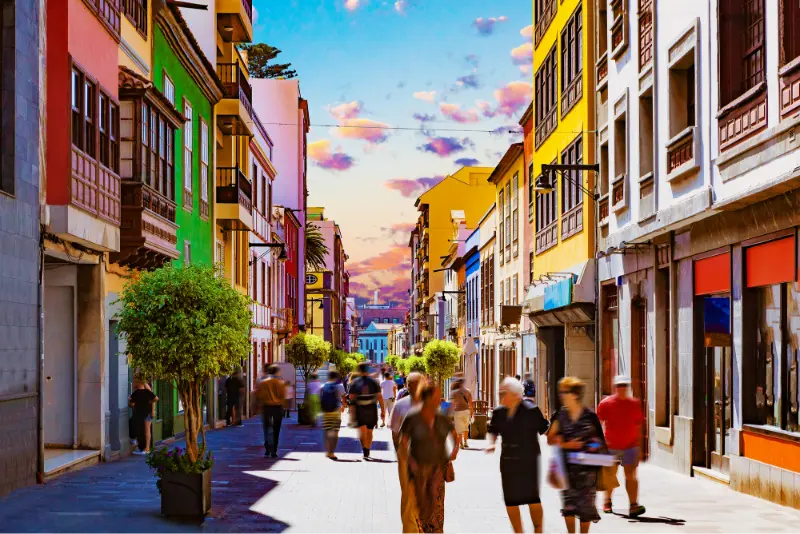
San Cristóbal de La Laguna is the Tenerife town I recommend when someone tells me they want history, architecture and local life rather than another resort afternoon. Its historic centre is compact enough to explore on foot, yet it rewards slow attention: wooden balconies, inner courtyards, churches, colourful façades, university energy and cafés all sit inside a street plan with global historical importance.
UNESCO inscribed La Laguna as a World Heritage Site in 1999. The city is often described as the first non-fortified Spanish colonial town whose planned layout later influenced settlements in the Americas. You do not need to be an architecture specialist to appreciate it. The key is to walk rather than drive through, because much of the experience comes from the relationship between streets, squares and building fronts.
Why La Laguna belongs in a first Tenerife itinerary
Tenerife’s landscapes are so dramatic that cultural stops can get pushed aside. La Laguna fixes that imbalance. It gives context to the island’s colonial history and creates a natural gateway to Anaga. I would often combine the two: La Laguna in the morning, lunch in or near the city, then a carefully chosen Anaga route or viewpoint in the afternoon.
Because the city sits at roughly 600 metres above sea level, it can feel noticeably cooler than the southern coast. A light layer is useful even when you leave a warm beach resort. This north–south and coast–altitude contrast is one of the recurring themes of Tenerife; see my Tenerife weather guide for more.
How to explore the historic centre
I would start near Plaza del Adelantado and walk toward the main pedestrian streets without worrying about a perfect route. Calle Obispo Rey Redondo, often called La Carrera, and Calle Herradores are natural axes. From them, detour into courtyards, churches and quieter side streets as they catch your attention.
The city is best when you give yourself permission to stop for coffee. A two-hour march through landmarks misses the university-town atmosphere that makes La Laguna feel lived-in rather than preserved behind glass.
Cathedral and Iglesia de la Concepción
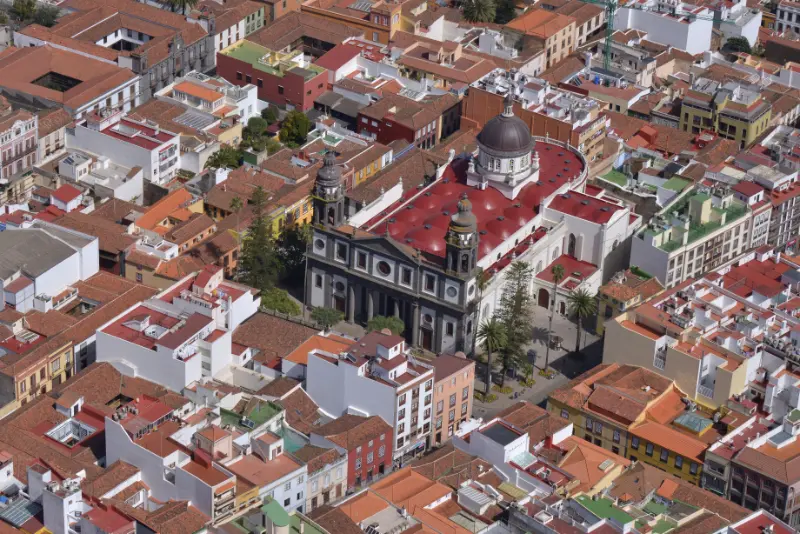
The Cathedral of San Cristóbal de La Laguna and the Church of La Concepción are two of the historic centre’s main religious landmarks. Opening hours can change around services, events and restoration work, so I check locally rather than building a rigid schedule around interior access. Even from outside, they help orient a walk through the old town.

The tower of La Concepción is also one of the city’s recognisable vertical landmarks. If access is available and you are comfortable with the climb, it can add a different perspective over the tiled roofs and urban grid.
Historic houses and courtyards
La Laguna’s real architectural pleasure is in its domestic buildings. Look for wooden balconies, stone portals, patios and the way houses turn inward around courtyards. Some historic buildings are public institutions or cultural spaces, while others remain private, so respect access signs rather than assuming every photogenic doorway is open.
This is where a guided walking tour can add value. The stories of merchants, religious orders, political power and Atlantic trade explain details you might otherwise pass without noticing.
University atmosphere, cafés and shopping
La Laguna is home to the University of La Laguna, the first university in the Canary Islands, and that student population keeps the centre energetic. Cafés, bars, bookstores and independent shops prevent the World Heritage area from feeling like a museum. I like visiting on a weekday when normal city life is active.
For lunch, this is a good place to look beyond resort menus. Try Canarian dishes or modern restaurants using island ingredients. For a food checklist, use what to eat in Tenerife.
La Laguna and Anaga
The pairing is almost too obvious to ignore. From La Laguna, roads climb quickly toward Cruz del Carmen and the laurel forests of Anaga. The landscape can change from urban streets to misty woodland in a remarkably short time. I would choose one trail or a few viewpoints, not try to cover the entire rural park after lunch.
Some Anaga areas require reservations and temporary closures are possible, so check Tenerife ON before setting off. My Anaga Rural Park guide explains how I plan the nature half of the day.
Getting to La Laguna
The tram from Santa Cruz is one of the easiest transport options and avoids parking. Tenerife North Airport is nearby, which makes La Laguna a practical first or last-night base for some itineraries. Buses connect it with other towns and parts of Anaga. If you drive, I prefer to park outside the pedestrian core and explore the centre on foot.
My Tenerife transport guide covers buses, airports and rental-car strategy across the island.
Where to stay
Staying overnight changes the experience. Day visitors leave, restaurants settle into an evening rhythm and the streets feel more local. I would stay here for a culture-focused city break, an early Tenerife North Airport flight, several Anaga hikes or a split itinerary that includes both north and south.
Accommodation choice is smaller than in the major resorts, which is part of the appeal. Look for a central guesthouse, boutique hotel or apartment within walking distance of the historic core. You can compare accommodation in La Laguna after checking the exact street and parking arrangements.
How long do you need?
| Time available | What I would do |
|---|---|
| 2–3 hours | Historic-centre walk, coffee and one interior visit |
| Half day | Add lunch, courtyards and slower shopping |
| Full day | Combine with a light Anaga visit |
| 1–2 nights | Use La Laguna as a base for Anaga and Santa Cruz |
For a first visit, half a day is enough to understand why the city matters. A full day is better if architecture and food interest you. Staying overnight makes sense when you want to explore the northeast without repeatedly driving from the southern resorts.
La Laguna with children
The pedestrian centre is easier with children than a car-based sightseeing day, but younger children may lose interest in a long architectural route. I would keep the history portion short, add a pastry or ice-cream break, and then move to an outdoor stop. Combining the town with a very short Anaga walk can work better than expecting children to appreciate every historic house.
For family pacing across the island, see Tenerife with kids.
What to wear and weather
Do not dress for La Laguna based only on the weather at Costa Adeje. Its elevation and northeastern position make it cooler and sometimes mistier. Comfortable walking shoes are more useful than beach sandals on old streets, and a light waterproof or wind layer can save the day before heading into Anaga.
My ideal La Laguna visit
I would arrive in the morning, walk slowly from Plaza del Adelantado through the pedestrian core, choose one or two buildings to explore properly, have lunch somewhere that serves island produce and then decide whether the weather favours Anaga. If clouds are thick in the mountains, stay longer in the city rather than forcing a scenic drive with no visibility.
For official background and current visitor information, use the Tenerife tourism page for San Cristóbal de La Laguna.
Photography without missing the city
La Laguna is extremely photogenic, but I try not to experience it entirely through a camera. Courtyards, doorways and balconies deserve attention, yet many are private spaces. I photograph from public streets, respect signs and spend at least part of the walk without trying to collect every façade. The city makes more sense as a whole than as a sequence of isolated Instagram frames.
A cooler base in summer
Travellers who struggle with summer heat may appreciate La Laguna’s elevation, particularly in the evening. It is not a guarantee of cool weather, but conditions often feel different from the coast. That can make it a useful split-stay base when a trip includes both beach days and serious walking in the northeast.
Practical planning notes I would save before the trip
For La Laguna Tenerife guide, I save the accommodation address, parking or bus information, one official information link and the route back to my base before leaving. Tenerife is easy to travel around, but mountain roads, microclimates and busy coastal areas can turn a simple day into a slower one. I therefore keep one optional stop that can be removed without losing the main purpose of the day.
I also carry water, sun protection and a light layer whenever the day leaves the immediate coast. Even short journeys can move from warm sunshine to wind, cloud or cooler high ground. That small amount of preparation makes it easier to respond to the island as it actually is rather than force a schedule created before arrival.
Finally, I avoid judging a destination by the busiest thirty minutes of the day. Arriving earlier, staying later, walking one street beyond the obvious viewpoint and sitting down for a proper meal often changes the experience completely. My goal with these guides is not to collect attractions but to make each place easier to understand and enjoy at a realistic pace.