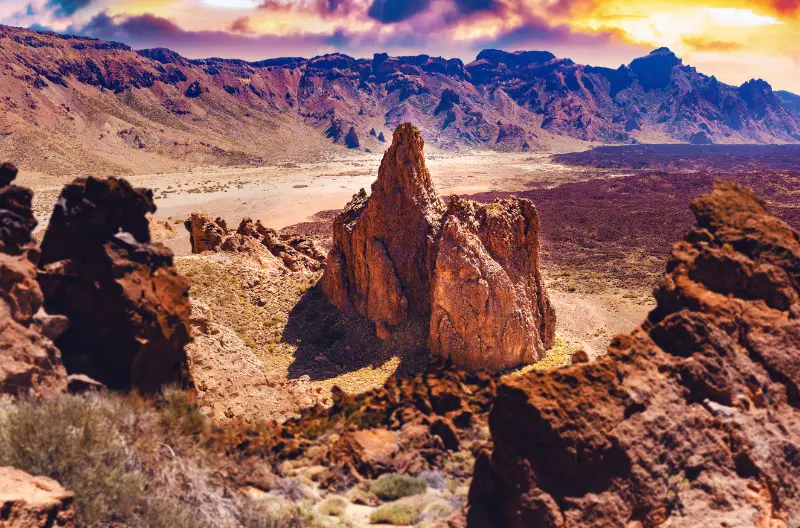
Roques de García is the Teide walk I recommend when someone wants a genuine volcanic trail without committing to a summit-style hike. Trail 03 begins and ends at Mirador de La Ruleta beside the famous rock formations, and Turismo de Tenerife currently lists it as a 3.5 km circular route of low difficulty taking about two hours, with roughly 211 metres of ascent. The numbers are modest, but the entire walk sits above 2,000 metres, so altitude, sun and fast-changing mountain weather still deserve respect.
Why this trail works so well for a first Teide visit
The route starts in one of the national park’s most recognisable settings. Roque Cinchado and the surrounding formations rise beside the road, but walking the loop reveals how different they look from behind and below. The trail also opens views toward Llano de Ucanca, where the scale of the caldera becomes much easier to understand.
I prefer this to spending the entire Teide visit moving between car parks. Even a short walk gives me silence, texture and distance from the road.
Official distance and difficulty
Trail 03 is currently listed at 3.5 km, about two hours, with a high point around 2,187 metres and a low point around 2,025 metres. The official rating is low difficulty, but the route includes a descent and climb rather than remaining flat throughout.
I use the two-hour estimate as a planning minimum. Photo stops, crowding near the start and the effects of altitude can easily stretch the outing. There is no prize for finishing quickly.
Altitude changes how an easy walk feels
At more than 2,000 metres, I may feel breathless sooner than expected, especially if I have driven directly from sea level. I slow the first twenty minutes, drink water and do not compare my pace with hikers who have already spent several days at altitude.
Sun exposure is also stronger while wind can make the air feel cold. I carry a layer and sunscreen regardless of what the temperature was in Costa Adeje. My Mount Teide guide covers the wider high-altitude planning in more detail.

Parking at La Ruleta
The main practical challenge is often parking rather than the path. Roques de García is one of Teide’s most popular roadside stops, so spaces near La Ruleta can fill quickly. I arrive earlier in the day and keep the itinerary flexible instead of circling aggressively for a space.
I never park outside marked areas or on vegetation. A few extra minutes of walking are preferable to damaging protected ground or narrowing the road.
Walking direction and terrain
The official description circles the formations and descends toward the plain before returning. The surface is volcanic, uneven and exposed, so shoes with grip make the walk more comfortable. I stay on the trail even where footprints suggest shortcuts.
Because the route is circular, navigation is straightforward in clear conditions, but fog or poor visibility can make landmarks disappear. I check the forecast before committing.
No permit for Trail 03, but rules still matter
Turismo de Tenerife currently states that no authorisation is required for Trail 03. That is different from some regulated Teide routes, especially those connected with summit access. I do not generalise one trail’s rules to the entire national park.
My hiking permits and trail rules guide explains why checking the exact trail number is essential in Teide.
Photography and the famous Roque Cinchado
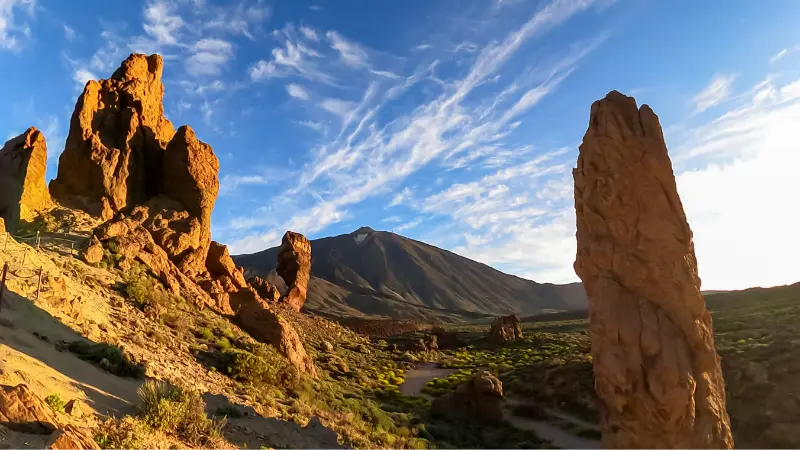
Roque Cinchado is an obvious subject, but I also photograph the plain, layered lava and the way Teide changes position as I move around the formations. Morning and late afternoon usually give more texture than the harshest midday light.
I avoid blocking the trail at narrow points for photos. Popular landscapes work better when everyone gives other walkers space to pass.
Who I recommend this trail to
Roques de García suits first-time visitors, families with walking experience, photographers and travellers who have limited time in the national park. It is a meaningful walk without the logistics of the cable car or summit permit.
Anyone with mobility limitations can still enjoy the initial viewpoint area, and the park has an accessible section nearby. I cover those options in my accessible Tenerife guide.
How I would plan it
I would arrive early, walk Trail 03 at an unhurried pace, spend time at the viewpoints and then continue through the national park without trying to add another demanding hike.
The official Trail 03 page is where I confirm current status and route information before the trip.
Combining the trail with a scenic drive
Roques de García fits naturally into a Teide driving day because it sits beside the main national-park road. I still limit the number of additional stops. My Tenerife by car guide explains why mountain driving times are easier when I leave margin rather than building a minute-by-minute loop.
Where to stay for an early Teide day
Vilaflor is convenient from the south, while La Orotava works from the north. Resort bases are perfectly possible, but an inland night can make sunrise or early-morning access calmer. I compare Vilaflor accommodation when a mountain-focused day is the priority.
What I would check before leaving
Before setting out for Roques de García trail, I check the current weather, any trail or beach alerts, road access and the amount of daylight I realistically have left. Tenerife can change character quickly between the coast and higher ground, so I do not assume that conditions at my hotel describe the place I am about to visit. I save the route offline, carry more water than I expect to need and keep one nearby alternative in mind rather than relying on a single perfect plan.
How I fit it into a wider Tenerife itinerary
I would place Roques de García trail on a day that already focuses on the same part of the island. That sounds obvious, but it prevents a lot of unnecessary driving. I prefer one strong natural experience plus a nearby town, viewpoint or meal rather than trying to cross Tenerife for a second headline attraction. This approach leaves enough time to stop when the light is good, deal with parking calmly and follow local instructions without feeling that the schedule is collapsing.
The pace I recommend for a first visit
For a first visit to Roques de García trail, I deliberately allow more time than the minimum duration shown on a map. Natural places are enjoyable because I can slow down, look at the terrain and adapt to wind, cloud or sea state. Rushing encourages poor decisions, especially near exposed coasts or on volcanic ground. If the visit ends earlier than expected, I use the spare time for a café, a short village walk or another nearby stop rather than adding a distant attraction.

What I would avoid
I would avoid treating Roques de García trail as a location that has to work in every condition. Strong sun, wind, swell, low cloud or a temporary closure can change the experience completely. I also avoid leaving marked routes for a better photograph, parking where access is clearly restricted and assuming that quiet places have no rules. Tenerife’s most memorable landscapes are often protected precisely because they are fragile, so the best visit is the one that leaves the setting looking unchanged.
A useful backup plan
My backup plan for Roques de García trail stays geographically close. If the weather or access is wrong, I choose a nearby village, museum, promenade, sheltered beach or viewpoint rather than driving across the island. This makes the day more resilient and keeps the trip enjoyable even when the original idea has to change. Tenerife offers enough variety within each region that a cancelled walk or rough sea does not need to become a wasted day.
Why I verify operational details again
Conditions connected with Roques de García trail can change after any article is published. Trail status, parking arrangements, lifeguard services, road restrictions and weather warnings are operational details rather than permanent facts. I use this guide to understand the place, then check the relevant official source shortly before going. That final check is especially important after storms, heat alerts, wildfires or periods of heavy swell.
A note on footwear and small practical details
For Roques de García trail, small practical choices usually matter more than specialist equipment. I wear footwear that matches the surface, carry sun protection and keep hands free on rough ground. I also avoid bringing more gear than I need. A lighter bag makes climbs, steps and beach access easier, and it reduces the temptation to leave belongings unattended while I move closer to water or viewpoints.
Why I leave room for the unexpected
One of the reasons I enjoy Roques de García trail is that the best moment is not always the one I planned. A cloud may lift, the light may improve, wildlife may appear or a quiet corner may simply deserve more time. I therefore avoid booking the next activity too tightly. Leaving an hour of margin is often what lets a natural place feel like an experience rather than another appointment on the itinerary.