
La Guancha is a north-Tenerife municipality I use to connect mountain villages with the lava coast. It stretches from the higher slopes toward the Atlantic between San Juan de la Rambla, Icod de los Vinos and La Orotava. Official tourism highlights its chapels, rural character, El Pinalete recreation area and Charco del Viento, one of the most photogenic natural bathing places in this part of the island. I would not rush through it as another pin on a map. The appeal is the gradual change in landscape as I move from pine and farmland down to black lava.
La Guancha town: a small centre rather than a tourist attraction
The municipal centre is useful for seeing ordinary north-island life away from the main resort strip. Churches, chapels, local shops and residential streets create a very different rhythm from Puerto de la Cruz. I spend enough time for a coffee and short walk, then continue into the surrounding landscape. This is not a place where I expect a major ticketed sight; the interest comes from context and from understanding how communities sit between the coast and upper slopes.
This is the point where I slow the itinerary down. I leave enough time for parking, a short walk and a change of plan if weather or opening conditions are different from what I expected. Tenerife rewards flexibility, and I would rather enjoy one place properly than rush through three stops because they looked close together on a map.
Charco del Viento: beautiful but dependent on the Atlantic
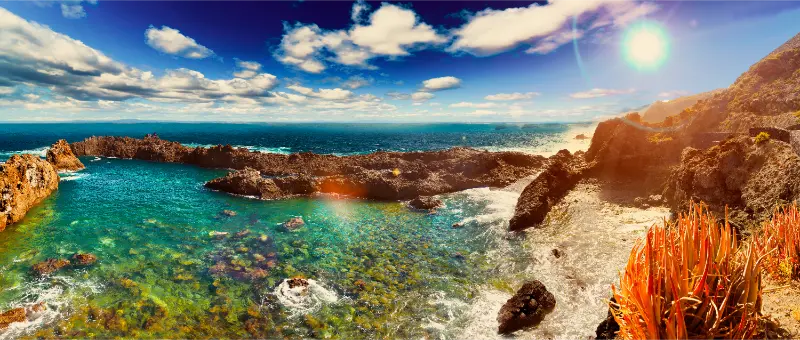
Charco del Viento is the coastal stop that draws most visitors. Lava formations create natural pools and channels, but I never translate the word pool into guaranteed safe swimming. North-coast swell can make conditions dangerous even on a sunny day. I check local warnings, watch the water for several minutes and skip swimming if waves are breaking strongly over the outer rocks. The view alone can justify the stop.

In practical terms, I check this again on the morning of the visit. Opening hours, sea state, wind and local access can change, especially on an island where coast, forest and high ground behave very differently. I also keep one nearby alternative so a small change never means crossing Tenerife unnecessarily.
El Pinalete and the higher forest
Official tourism points to El Pinalete as a recreation area suited to a family day in the forest. The change from coast to pine is one of the reasons I enjoy La Guancha: within a relatively small municipality, temperature, vegetation and light can shift dramatically. I pack a layer and food rather than assuming facilities will match a resort park. Fire-risk restrictions also matter in dry periods, so I check current notices before planning a barbecue or forest activity.
I would build the rest of the day around this stop rather than squeeze it between two distant attractions. That usually means choosing a nearby lunch, beach, viewpoint or town and accepting that driving time is part of the experience. The result is a calmer day and a much better sense of place.
The road between coast and high ground
Driving through La Guancha requires patience. Local roads can be steep and narrow, and navigation apps sometimes prefer a technically shorter route that is less comfortable than the main road. I do not treat every rural shortcut as a recommendation. If I am nervous about gradients, I stay on broader roads and accept a few extra minutes. Parking is also easier when I am willing to walk into a village centre rather than search for the closest possible space.
For first-time visitors, the useful question is not only whether this is worth seeing, but whether it fits the base and transport plan. I compare the route with my Tenerife transport guide and avoid creating a day with repeated north-south crossings just to tick off one more place.
Combining La Guancha with San Juan de la Rambla
The most natural pairing is with San Juan de la Rambla. Both municipalities offer lava-coast scenery, traditional centres and a quieter north-Tenerife atmosphere. I would choose one main swimming stop according to sea conditions rather than trying every charco in a day. That reduces backtracking and gives more time for lunch or a short inland walk.
I also think about the time after the main activity. A museum, flight, paddle or village visit is more enjoyable when I have not booked a rigid dinner on the opposite side of the island. I keep the final hours loose enough for an unexpected viewpoint, traffic, changing weather or simply staying longer somewhere I like.
Combining La Guancha with Icod de los Vinos
Icod is the stronger choice when I want a major attraction such as the Drago area or Cueva del Viento. La Guancha then becomes the quieter half of the day. My Icod de los Vinos guide helps organise that combination. I avoid booking a timed cave visit too close to an uncertain coastal swim because road, parking and sea decisions can all take longer than expected.
My planning rule here is simple: use current information rather than copying an itinerary from an older trip report. Tenerife manages natural areas, sports zones and public facilities actively, so the best plan is the one that can absorb a closure or timetable change without becoming stressful.
Food and local produce
This part of Tenerife is agricultural, and I use meals to reinforce that character. I look for Canarian dishes, local potatoes, cheese, meat and seasonal produce rather than expecting a large international restaurant scene. If wine or guachinches are important, I use my guachinches guide and Tenerife wine guide to decide whether I should continue toward other north-island municipalities.
If I am travelling with children or a mixed-age group, I shorten the visit before anyone gets tired. That is particularly useful in Tenerife, where a sunny morning can turn into a windy afternoon at altitude or a rougher sea on the coast. I prefer leaving with energy for the next stop.
Who I think will enjoy La Guancha most
Repeat visitors, photographers, road trippers and travellers who enjoy small towns are the best fit. Someone with only three days in Tenerife will probably prioritise Teide, Anaga and a major coastal base. With a week or more, however, La Guancha becomes valuable precisely because it is not a headline attraction. It creates a day that feels less packaged and shows how quickly Tenerife changes away from the tourist centres.
I treat this as part of a wider area rather than an isolated attraction. Linking places geographically creates better travel days: less driving, more time on foot and more chances to notice the cafés, promenades, architecture and landscapes that never make a top-ten list.
My final planning advice
I would keep a La Guancha day weather-led. If the sea is rough, I emphasise the town, forest and nearby Icod; if the coast is calm, Charco del Viento becomes the natural highlight.
For a quieter north stay, compare current accommodation around La Guancha with Puerto de la Cruz and Icod before deciding how rural you want the evenings to feel.
How I keep this day realistic
I do not turn this guide into a checklist. I choose the two or three elements that matter most, leave the rest optional and build in time for a proper meal or a slower walk. Tenerife often looks compact on a map, but elevation changes, winding roads and parking can make a short distance consume more of the day than expected. A realistic plan also makes it easier to respond to cloud, wind or heat without feeling that the trip has gone wrong.
What I check before leaving accommodation
Before heading out I check the exact destination, current weather at that location rather than at the hotel, and any notice from the official operator or municipality. I also carry water, sun protection and a light layer because conditions change quickly between the coast and higher ground. If the activity is time-sensitive, I save the booking confirmation offline and keep enough battery for maps and transport information.
Why I leave a backup option nearby
A backup does not need to be another major attraction. It can be a beach, historic centre, market, café or viewpoint in the same part of Tenerife. That small amount of preparation prevents a closure or rough sea from turning into a long cross-island drive. It is one of the habits that makes independent travel here much easier, especially when several people have different interests and energy levels.
The pace I would choose
I would rather finish this day feeling that I could have stayed longer than arrive back exhausted. Many of Tenerife’s best experiences depend on atmosphere: sitting by the sea after an activity, walking a town at dusk, watching cloud move across a ridge or finding a local restaurant without a schedule. Leaving space for those moments is more valuable than adding another stop simply because it appears in a guidebook.
How I keep this day realistic
I do not turn this guide into a checklist. I choose the two or three elements that matter most, leave the rest optional and build in time for a proper meal or a slower walk. Tenerife often looks compact on a map, but elevation changes, winding roads and parking can make a short distance consume more of the day than expected. A realistic plan also makes it easier to respond to cloud, wind or heat without feeling that the trip has gone wrong.