
The Castillo de San Cristóbal is one of Santa Cruz de Tenerife’s easiest historic sights to miss because the surviving walls are underground, directly beneath Plaza de España. That hidden setting is exactly what makes it interesting. The interpretation centre turns fragments uncovered during modern redevelopment into a compact story about the city’s coastal defences, the 1797 British attack and the famous cannon known as El Tigre. This guide is built around the details I would want before leaving my accommodation: what is actually worth my time, how I would get there, where the friction points are, and what I would combine with the visit without turning the day into a race.
Quick planning facts
| Location | Beneath Plaza de España, Santa Cruz de Tenerife |
|---|---|
| Admission | Free |
| 2026 hours | Monday–Saturday 10:00–18:00 |
| Last access | 15 minutes before closing |
| Closed | 24, 25 and 31 December; 1 and 6 January |
| Historic timeline | Fortification begun in 1575; demolished in 1928; surviving walls rediscovered in 2006 |
The first thing I would do is open the official Castillo de San Cristóbal visitor page. I use the official source for the elements most likely to change — opening times, admission, access restrictions or temporary closures — and use the rest of my itinerary as a flexible framework. I treat opening times, show schedules and prices as planning data rather than promises carved in stone. Tenerife attractions can adjust operations for maintenance, weather, capacity or special events, so I always re-check the official page on the morning of the visit. That small habit is especially useful when a visit depends on a particular presentation, planetarium slot or animal activity.
Why I would put Castillo de San Cristóbal on an itinerary
I like sights that change the way I read the city around them. After visiting the underground remains, Plaza de España is no longer just an open square by the port; it becomes the site of a defensive structure that once faced the sea. That kind of context is more valuable to me than collecting another photograph of a monument façade.
The centre is also free and centrally located, so it has almost no logistical cost. I can add it to a Santa Cruz day without reserving half the itinerary, and the indoor setting makes it useful when the weather is hot, windy or briefly wet.
What the experience is really like
The visit is compact. I descend below the modern plaza, see portions of the original wall and follow interpretation about Tenerife’s defensive system and the fortifications that protected Santa Cruz and other coastal settlements. The museum is less about decorative objects and more about understanding place, conflict and urban change.
The best-known object is the bronze cannon El Tigre. Popular tradition links it to the shot that injured Admiral Horatio Nelson during the failed British attack in July 1797, but the museum itself treats that specific attribution with appropriate caution. I would tell the story as tradition and symbolism, not as an unquestioned fact.
The surviving fortress walls
The walls are the reason the centre exists. They were found in 2006 during work on Plaza de España and incorporated into an underground gallery rather than removed from public view.
I spend time looking at the relationship between the masonry and the modern structure above. It is a rare chance to see archaeology preserved directly inside the everyday city.
El Tigre cannon
El Tigre is a large eighteenth-century bronze cannon associated in local memory with the defence of Santa Cruz. It has enormous symbolic importance even though the claim that it fired the shot that wounded Nelson cannot be demonstrated conclusively.
That distinction actually makes the object more interesting: it opens a conversation about how communities remember events and how legends attach themselves to physical objects.
The 1797 attack in context
Nelson’s failed attack is one of the defining episodes in Santa Cruz history. I would understand it here first, then notice the references to 25 July and the city’s defensive past elsewhere in Santa Cruz.
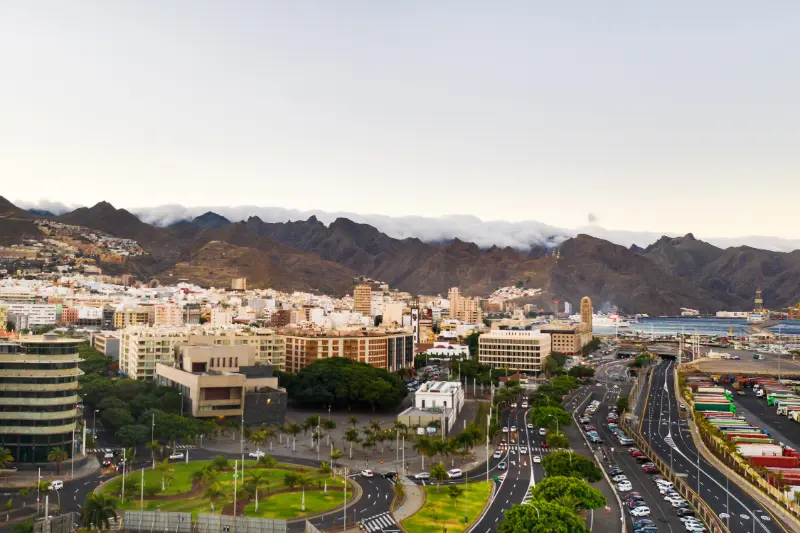
Rather than reducing the story to one famous admiral, I pay attention to the local militia, fortifications and broader geography that shaped the outcome.
A hidden museum under Plaza de España
The contrast between the bright open plaza and the underground remains is part of the appeal. Many visitors cross the square without realising the museum is below them.
Because admission is free, there is very little reason not to look inside if I am already exploring central Santa Cruz.
A good anchor for a walking route
From Plaza de España I can continue toward Calle del Castillo, the waterfront, TEA, Mercado de Nuestra Señora de África or Parque García Sanabria.
The centre therefore works best as a historical layer inside a broader city walk, not as an isolated destination that requires a special trip.
How I would get there
Plaza de España is one of the easiest places to reach in central Santa Cruz. The official museum information notes that it is around a 10–15 minute walk from the main bus interchange and close to the Fundación stop on tram line 1.
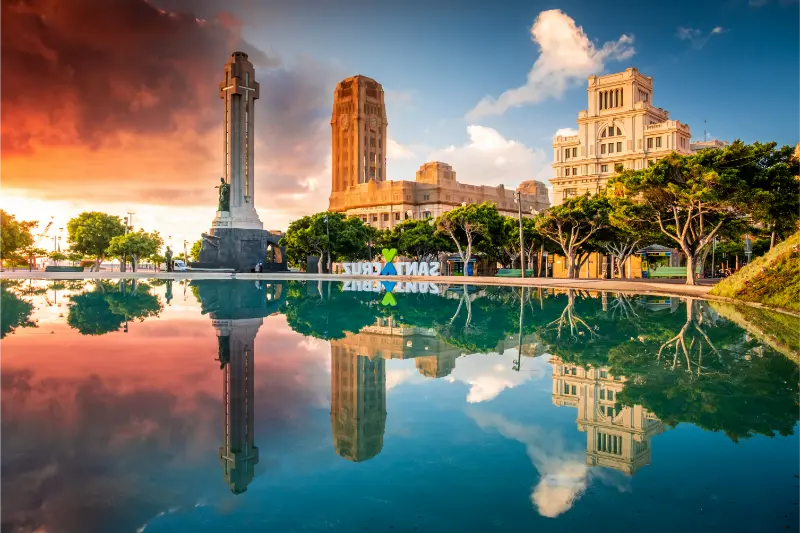
If I drive, I would use one of the central car parks listed by the museum rather than searching street by street. Parking under Plaza de España itself can be especially convenient for a city-centre day. If I am comparing transport options across the island, I use my getting around Tenerife guide and, for road-based days, my Tenerife by car guide rather than relying on a route estimate that ignores parking, mountain roads or the walk from the final stop.
How much time I would allow
I would allow 30 to 60 minutes for the interpretation centre, depending on how much text I read. The attraction is compact enough that rushing is unnecessary.
Because last access is 15 minutes before closing, I would not arrive at 17:45 expecting a meaningful visit. I prefer to use it as a morning or early-afternoon stop between other Santa Cruz sights.
When I would go
Any time of year works. In summer it provides a short indoor break from heat; in winter it can fill the gap between outdoor stops if showers pass over the capital.
I also like it early in a Santa Cruz visit because the historical context changes how I interpret the streets and waterfront afterwards. For the broader seasonal picture, my best time to visit Tenerife guide explains why conditions can differ so much between coasts and elevations.
Families, accessibility and different travel styles
With children, I would keep the history simple: a fortress once stood here to defend the harbour; pieces of it were found under the modern square; and one famous cannon became part of the city’s story. That is enough to make the space tangible without turning it into a lecture.
Because the centre is a modern interpretation space below the plaza, I would expect better access than in many historic fortifications, but I would still confirm current lift or step-free arrangements directly if they are essential to the visit. I never assume that the words “easy” or “accessible” mean the same thing for every traveller, so I check gradients, surfaces, toilets, shade and the distance from parking or public transport. My accessible Tenerife guide gives the wider planning context, while my Tenerife with kids guide is useful for family pacing.
What I would bring
I need almost nothing for the museum itself. A charged phone is useful for city navigation, and a light layer can be comfortable indoors if I have come from a hot waterfront walk.
I would keep the visit bag light because the real advantage of this stop is how easily it fits into a longer walking day in Santa Cruz. I keep the day bag small enough that I am not tempted to leave valuables visible in a parked car. My Tenerife packing list goes deeper into clothing and gear for mixed beach, city and mountain days.
What I would combine with it
My natural route is Plaza de España and the castle remains, then TEA or MUNA, followed by the market or lunch. Later I might continue to Parque García Sanabria.
If architecture is the priority, I can also include Auditorio de Tenerife. The key is to group central sights geographically instead of crossing Santa Cruz repeatedly.
Food and breaks nearby
I would plan food elsewhere in central Santa Cruz. The surrounding streets and market area offer much more choice than treating a small interpretation centre as a meal stop.
A market lunch creates a satisfying contrast: military and urban history first, then a very contemporary taste of the city. For local dishes and ordering habits, I use my what to eat in Tenerife guide and eating out in Tenerife guide.
Where I would stay
Staying in Santa Cruz makes this an effortless walk. La Laguna is also practical thanks to the tram connection and gives a different atmosphere for the evening.
I compare live accommodation around the area on Booking.com, then check the exact map position before booking. A hotel name can suggest one neighbourhood while the real walk to the beach, bus stop or attraction is much less convenient. My where to stay in Tenerife guide explains how I choose a base by trip style rather than star rating alone.
A realistic half-day or full-day plan
I would start at Plaza de España, spend 45 minutes underground, then walk through the central streets toward TEA or MUNA. Lunch would be around the market rather than next to the first sight I finish.
The afternoon can continue toward García Sanabria or the Auditorio depending on interests. This creates a coherent Santa Cruz day with history, art, food and architecture rather than a scattered list.
Mistakes I would avoid
- Walking across Plaza de España without realising the museum is underneath.
- Repeating the El Tigre/Nelson story as proven fact rather than local tradition.
- Arriving in the final 15 minutes before closing.
- Driving between central sights that are easier to connect on foot.
- Treating the centre as a standalone half-day attraction instead of part of a city route.
Most disappointing Tenerife days are not caused by choosing the wrong place; they come from mismatched expectations. I would rather do fewer things with enough time for parking, walking, weather and a proper meal than collect rushed stops that all blur together.
Frequently asked questions
Is admission really free?
Yes. The official visitor information currently lists free entry.
What are the opening hours?
Monday to Saturday 10:00–18:00, with last access 15 minutes before closing and specified holiday closures.
Where is the castle?
The surviving walls are in an underground interpretation centre beneath Plaza de España in central Santa Cruz.
Did El Tigre really wound Nelson?
Local tradition says so, but the specific attribution is not historically proven. I would present it as an important legend attached to the 1797 defence.
How long do I need?
Around 30–60 minutes is enough for most visitors, making it easy to combine with other Santa Cruz sights.
My final take
The Castillo de San Cristóbal is a small but meaningful Santa Cruz stop: free, central and layered directly beneath the modern city. I would visit early in my walking route, treat the El Tigre story with historical nuance and use the museum to understand why the waterfront looks the way it does today.