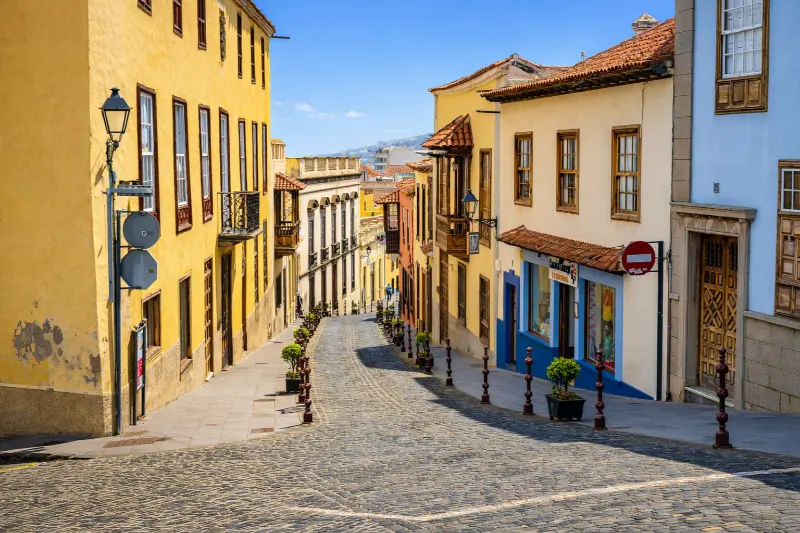
La Orotava is one of the Tenerife towns I would visit even if it were nowhere near the island’s beaches. Set above the north coast in the Orotava Valley, it combines steep historic streets, traditional Canarian architecture, gardens and broad views toward the Atlantic and Teide. It is also a town where geography matters: the historic centre climbs, so walking slowly is part of the experience.
The municipality is much larger than the urban centre and extends high into the island; roughly 78% of Teide National Park lies within La Orotava’s municipal territory according to official Tenerife tourism information. That connection between cultivated valley, forest and high volcano explains why La Orotava feels like a natural bridge between the north coast and Teide.
Why visit La Orotava?
I come for architecture and atmosphere rather than a single must-see sight. The historic centre is protected and contains mansions, churches, gardens and wooden balconies that reflect the wealth of the valley’s agricultural past. It is close to Puerto de la Cruz, so even travellers without a full day can include it easily.
If your Tenerife itinerary already includes La Laguna, do not assume the towns are interchangeable. La Laguna has a planned colonial street grid and university energy; La Orotava is steeper, more aristocratic in character and visually tied to the valley. I think both are worth visiting on a culture-focused trip.
Casa de los Balcones
Casa de los Balcones is the best-known architectural stop and a useful place to look closely at traditional wooden balconies and domestic design. It is also heavily visited, so I would not make it the only reason to come. The surrounding streets and neighbouring historic buildings create the context that makes the house meaningful.
Opening arrangements and ticketed areas can change, so check current information if an interior visit is important. Even without entering every building, the old streets reward walking.
Historic streets and churches
Comfortable shoes are essential because the centre is built on a slope. I would begin high enough that I can wander downhill through the main historic area, then decide how much climbing I want to repeat. Church towers, stonework, colourful façades and glimpses of the valley appear between narrow streets.
Do not plan the visit by driving from sight to sight. Park once, walk and accept the gradients. The town is more coherent that way.
Gardens and viewpoints
La Orotava is known for formal gardens and planted spaces that reflect the north’s greener climate. They make a useful pause between historic buildings and provide elevated views. On clear days, Teide can dominate the skyline; on cloudier days, the lush vegetation becomes the stronger feature.
Corpus Christi carpets
La Orotava is famous for its Corpus Christi celebrations and elaborate carpets made from flowers and coloured natural materials, including the monumental sand artwork in the town-hall square. If your trip coincides with the event period, expect a very different visitor experience with crowds and restricted movement. Check official local dates because the calendar changes each year.
Outside the festival, you can still understand the tradition through local displays and interpretation, but do not expect the full street spectacle year-round.
Food and the Orotava Valley
The valley is an excellent place to focus on Canarian food and wine. Agriculture and vineyards shape the surrounding landscape, and nearby rural restaurants or guachinches can add much more to the day than another rushed monument. I would plan lunch as part of the itinerary, not as a gap between sights.
For dishes and local dining habits, use my Tenerife food guide.
La Orotava and Puerto de la Cruz
These two places are close enough to combine easily. I would visit La Orotava first, while energy for hills and historic streets is high, then descend to Puerto de la Cruz for lunch, seafront walking or an evening in La Ranilla. That creates a natural movement from valley town to coast.
My Puerto de la Cruz guide gives several options for the second half of the day.
La Orotava and Garachico
A longer north-coast culture day can continue west to Garachico. The two towns show different parts of Tenerife’s historical story: La Orotava’s valley wealth and Garachico’s port history shaped by the 1706 eruption. I would skip Puerto de la Cruz on that day or keep it only for dinner.
See my Garachico guide before deciding how much to combine.
La Orotava and Teide
Roads from the Orotava Valley climb toward Teide through forest and changing vegetation, making this one of the island’s great vertical journeys. However, I would not squeeze a full La Orotava visit and a serious Teide hiking plan into the same day. A short old-town walk can precede a scenic drive, but cable-car reservations, summit permissions and high-mountain routes deserve their own schedule.

Use my Mount Teide guide for the mountain rules and altitude planning.
Getting there and parking
La Orotava is easy to reach from Puerto de la Cruz and the TF-5 corridor, but parking in the historic centre is not where I want to spend my time. I look for a sensible public car park or legal space outside the tightest old streets, then walk. Buses also connect the town with nearby northern destinations.
For a car-free trip or broader transport questions, see getting around Tenerife.
Where to stay
Most visitors stay in Puerto de la Cruz and visit La Orotava during the day, but the town can suit travellers looking for a quieter historic base. You will trade immediate beach access for atmosphere and valley views. A rural property outside the centre can also work if you have a car.
If that appeals, compare accommodation in La Orotava and pay close attention to parking and walking gradients.
How long do you need?
| Time | Plan |
|---|---|
| 2 hours | Core historic streets and one major building |
| Half day | Historic centre, gardens and lunch |
| Full day | Add Puerto de la Cruz or valley food/wine |
| Overnight | Slow town experience plus Teide or north-coast day trips |
I think half a day is ideal for a first visit. It is long enough to stop, enter a building or two and have lunch without reducing the town to photographs.
My ideal La Orotava visit
I would arrive in the morning, park once, walk through the historic centre at a deliberately slow pace, visit one interior that genuinely interests me, spend time in a garden or viewpoint and then have a long lunch. After that I would choose either Puerto de la Cruz for the coast or Garachico for more history—not both unless the day is long and relaxed.
For updated municipal information and visitor ideas, see the official Tenerife tourism page for La Orotava.
Respecting the historic centre
La Orotava’s balconies and courtyards are part of a living town. I avoid blocking doorways, entering private patios or treating residents’ homes as open exhibits. A slower visit is naturally more respectful because you are less tempted to stop abruptly in the street or cross traffic for a photograph.
A valley day for food lovers
If food matters as much as architecture, I would use the town as the first half of an Orotava Valley day. Walk the centre in the morning, then move toward a rural lunch or winery experience with a designated driver. Finish in Puerto de la Cruz rather than returning to the car repeatedly. This creates a day with a clear geographic flow from hillside town to valley and coast.
Practical planning notes I would save before the trip
For La Orotava travel guide, I save the accommodation address, parking or bus information, one official information link and the route back to my base before leaving. Tenerife is easy to travel around, but mountain roads, microclimates and busy coastal areas can turn a simple day into a slower one. I therefore keep one optional stop that can be removed without losing the main purpose of the day.
I also carry water, sun protection and a light layer whenever the day leaves the immediate coast. Even short journeys can move from warm sunshine to wind, cloud or cooler high ground. That small amount of preparation makes it easier to respond to the island as it actually is rather than force a schedule created before arrival.
Finally, I avoid judging a destination by the busiest thirty minutes of the day. Arriving earlier, staying later, walking one street beyond the obvious viewpoint and sitting down for a proper meal often changes the experience completely. My goal with these guides is not to collect attractions but to make each place easier to understand and enjoy at a realistic pace.
I also keep the final hour of the day deliberately open. Traffic, parking, weather and a meal that lasts longer than expected are normal parts of travel in Tenerife, not problems to solve by rushing. Leaving that margin means I can stop at an unexpected viewpoint, wait for safer sea conditions, or simply stay longer in a town that I am enjoying. It also makes the return drive more comfortable because I am not trying to recover time lost earlier in the itinerary. For me, that flexibility is one of the most useful habits on an island where short distances can hide very different roads and conditions.