
Cañada Blanca Visitor Centre is the Teide National Park visitor centre I would choose when I want to understand how people lived in Las Cañadas, not only how the volcanoes formed. It stands beside the Parador and faces the Roques de García, so it can add real context to one of the most photographed stops in Tenerife.
The park authority currently lists daily opening from 09:00 to 16:00, with closure on 25 December and 1 and 6 January. Admission is presented as part of the public visitor infrastructure; I still check the official page immediately before going because opening arrangements, parking and works can change.
Quick practical facts
| Where | Las Cañadas del Teide, beside the Parador and Roques de García |
|---|---|
| Current hours | Daily 09:00–16:00 |
| Annual closures | 25 December; 1 and 6 January |
| Main theme | Human life, land use and Guanche culture in Las Cañadas |
| Best paired with | Roques de García, Siete Cañadas, Parador area |
| Altitude | High-mountain environment; dress for Teide, not the coast |
Why I would give Cañada Blanca Visitor Centre its own stop
Many first-time visitors drive into Teide National Park, photograph Roque Cinchado and leave with a strong impression of geology but very little sense of human history. Cañada Blanca corrects that imbalance. Its interpretation focuses on the different ways people used this high landscape and how those uses shaped what visitors see today.

I also like the location because the museum does not require a separate detour. If I am already planning the Roques de García area, I can turn a scenic stop into a more complete visit without adding another long drive.
What to look for once you are there
The human story of Las Cañadas
The exhibition looks at ways of life in the highlands and the practical uses people made of the environment. That perspective helps explain why paths, grazing areas and historic structures appear where they do.
Guanche culture
The centre gives special space to Guanche culture. I would use it as context rather than treating any single display as the whole story of Tenerife’s Indigenous past; the MUNA and other archaeological collections can add depth later in the trip.
The view from the Cañada Blanca area
Outside, the setting itself is part of the visit: Teide, Roques de García and Guajara frame the centre. The official viewpoint information identifies Cañada Blanca as one of the park’s key panorama points.
A useful indoor pause at altitude
The centre can be especially valuable when wind, intense sun or a short weather change makes a long outdoor stop less appealing. It lets me keep learning instead of simply waiting in the car.
The context that makes the visit more interesting
Las Cañadas is not an empty volcanic bowl. Archaeology, pastoral history and historic travel routes show long-term human relationships with the highlands. The visitor centre helps put names and uses to a landscape that can otherwise look purely geological.
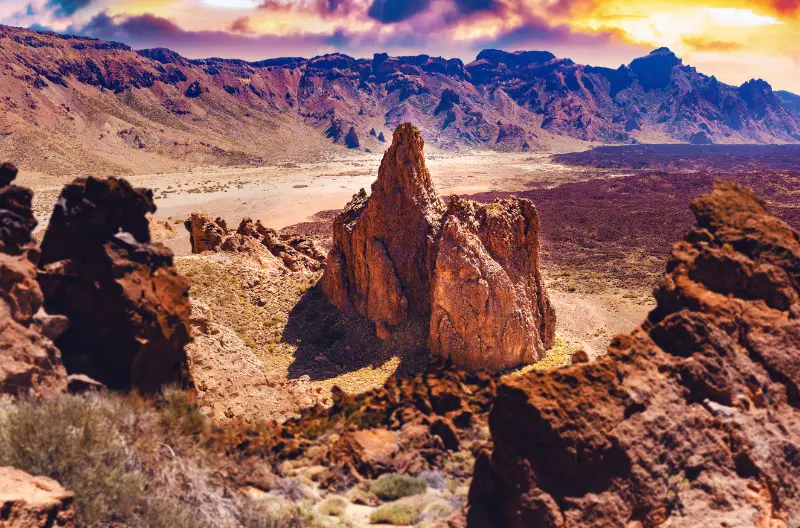
The nearby Roques de García are the visual magnet, but I would resist the temptation to treat them as a backdrop only. The caldera wall, lava formations and broad floor of Ucanca make much more sense after a few minutes of interpretation.
In 2026 the authorities have also been working on accessibility and parking improvements around La Ruleta and Cañada Blanca. That is another reason I verify the current parking layout rather than relying on an old photograph or map pin.
How I would plan the visit
I would arrive with a simple sequence: visitor centre first, then Roques de García if I am hiking, or the viewpoint platforms if I only want an easy scenic stop. Seeing the exhibition first changes what I notice outside.
If I want a longer walking day, the Siete Cañadas guide explains the linear trail that connects the El Portillo side with Cañada Blanca. I do not add that 16.6 km route casually to a museum visit; it needs its own transport and daylight plan.
How much time to allow
For the centre alone I would allow around 45–75 minutes rather than rushing through in ten. The exact time depends on whether I watch audiovisual material, read the interpretation closely and use the viewpoint.
For a combined Cañada Blanca and Roques de García stop, two to three hours is far more realistic. Parking, walking between areas and simply pausing for the landscape consume time that a map does not show.
Getting there without turning the visit into a transport problem
The centre is on the TF-21 at the Parador/Roques de García area. I plan the road approach according to where I am staying because Teide has several access roads and a route that looks short in kilometres can be slow through mountain bends and viewpoint traffic.
For a mountain-focused overnight I may compare stays in La Orotava or check southern bases depending on the next day’s route. I do not choose a hotel purely because it appears closest in a straight line.
Accessibility and comfort
The visitor centre is designed as public park infrastructure and is a much easier way to experience Teide than a steep hike. The surrounding area has been the subject of 2026 accessibility and parking works, so I check the current arrangement for mobility needs before travel.
Altitude still matters even when the building is accessible. Cold wind, sun and breathlessness can affect someone who would be perfectly comfortable at sea level, so I bring layers and take the walk from parking to the centre at an easy pace.
Is it worth visiting with children?
Yes. For families, this is one of the best ways to make Teide more than “a big volcano”. Displays about people, landscapes and Guanche culture give children specific things to look for once they step outside.
I would pair it with a short outdoor element rather than a demanding hike. The Roques de García guide helps me judge whether the full loop suits the family; otherwise the viewpoints alone are worthwhile.
Best time of day
Morning is my preference because it leaves more flexibility for a walk afterward and usually gives a calmer planning rhythm. The high plateau can be surprisingly bright, so the difference between indoor interpretation and outdoor glare is welcome.
Late afternoon can be beautiful, but I do not arrive close to closing time expecting a full museum visit. I also keep enough daylight for the mountain drive back to the coast.
Photography and respectful visiting
Inside, I follow the centre’s current photography rules. Outside, the most useful photographs are often wide contextual frames showing Roques de García, Teide and the caldera relationship rather than only a close-up of one rock.
I never walk onto fragile volcanic ground to remove people from a composition. The official paths and viewpoint platforms already give strong lines and scale without creating another informal track.
Useful nearby stops
A realistic half-day plan
A strong half-day is Cañada Blanca Visitor Centre, the Roques de García viewpoints and a short walk around the Parador area. That gives geology, human history and scenery without overloading the schedule.
If I am continuing toward Vilaflor or Boca Tauce, I add only one more viewpoint. Teide days become stressful when every lay-by becomes a compulsory stop.
Common mistakes I would avoid
- Arriving only for a photo of Roque Cinchado and skipping the interpretation.
- Assuming coastal temperatures apply at Cañada Blanca.
- Building a tight schedule around a specific parking space.
- Starting Siete Cañadas without solving the linear-route return.
- Relying on old parking photos during a period of access improvements.
Current information: what I would check again
The official park page currently lists the centre 09:00–16:00 daily, closed 25 December and 1 and 6 January. I treat those as current published details, not permanent promises.
Parking and pedestrian arrangements can be affected by ongoing improvements or high visitor pressure. Before driving up I check the park website and road information rather than assuming a previous trip’s layout is unchanged.
Official source
For opening hours and the visitor-centre description, I use Teide National Park – visitor centres and hours.

Frequently asked questions
Is Cañada Blanca the same as El Portillo Visitor Centre?
No. They are separate visitor centres in different parts of Teide National Park and have different interpretive emphases.
What is the main theme?
The centre focuses strongly on human life and land use in Las Cañadas, including a section on Guanche culture.
Can I combine it with Roques de García?
Yes. They are in the same general Parador/Cañada Blanca area and make a natural combined visit.
Do I need hiking gear just to visit the centre?
Not for the exhibition itself, but I still dress for a high-altitude environment and use shoes suitable for outdoor viewpoints if I plan to walk around.
Final thoughts
Cañada Blanca is one of the easiest ways to turn a Teide sightseeing day into something more meaningful. It explains the people who used this landscape and then lets you step outside into the exact terrain the exhibits describe.
I would not measure its value by the time spent indoors. The point is that an hour of context can improve every photograph, viewpoint and trail that follows.