
Stargazing in Tenerife is one of the experiences that makes the island feel bigger than a beach destination. Drive from the coast into the Teide highlands after sunset and the atmosphere changes completely: the temperature drops, much of the coastal light disappears below you and the volcanic landscape becomes almost abstract. On a clear night, even visitors who know little about astronomy can understand why Tenerife is internationally important for observing the sky.
I plan a stargazing night with the same care as a mountain hike. I think about weather, moonlight, warm clothing, road fatigue and where I am actually allowed to stop. The goal is not to chase darkness into an unsafe roadside location; it is to enjoy the sky from a sensible place and return comfortably.
Why Tenerife is so good for astronomy
Tenerife benefits from altitude, relatively clean high-level air and a location near 28 degrees north. The official tourism information highlights the transparency of the sky and notes that the Teide Observatory sits at around 2,400 metres. The sea of clouds that often forms below the summit area can also help separate the highlands from coastal light.
The island’s importance is scientific as well as touristic. The Teide Observatory is part of the Canary Islands’ astronomical infrastructure, and research teams from many countries use the archipelago’s observing conditions. For background, I use the official Tenerife astronomy page.
Best areas for stargazing
I focus on the Teide highlands rather than searching for darkness beside a resort. The official tourism site specifically mentions areas around the Parador and Montaña de Guajara as notable places for the night sky. I use established parking or observation areas and never leave the car on a blind bend or protected terrain.
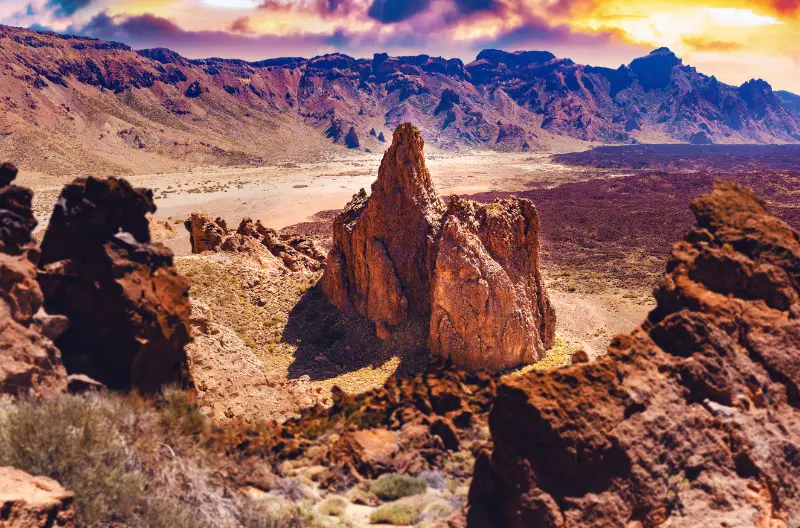
Vilaflor is useful as a base on the southern approach, while La Orotava gives access from the north. If I am staying in Costa Adeje, I allow enough time to climb gradually, enjoy sunset if conditions are right and stay after full darkness without rushing back. The mountain road is part of the plan, not dead time.
Should you book a stargazing tour?
A guided tour is worthwhile if you want telescopes, interpretation and less responsibility for choosing the observation point. A good guide can identify constellations, planets and deep-sky objects that a beginner might miss. Some tours combine sunset, astronomy and transport from the south, which can be especially useful if you do not want to drive mountain roads at night.
Self-guided stargazing is also possible. The official Tenerife tourism site notes that visitors can observe on their own, but that does not mean every location is appropriate. I still check protected-area rules, weather and access. If I want a structured experience, I book with a reputable astronomy provider rather than someone promising unrealistic sightings.
What you can see
The visible sky changes through the year and from hour to hour. Planets move, the Moon changes phase and seasonal constellations rotate through the night. From Tenerife’s latitude, observers can see a broad range of northern and some southern celestial objects. The official tourism material even highlights Omega Centauri as one of the notable objects visible from the island under suitable conditions.
I avoid writing a fixed list such as “you will see the Milky Way at 10 pm” because visibility depends on date, moonlight, clouds and direction. Before the trip I check an astronomy app or sky chart for the exact night.
Moon phase matters
A bright full Moon can be beautiful, especially over the volcanic landscape, but it washes out many faint stars. If my main goal is the Milky Way or deep-sky objects, I prefer a darker lunar phase. If my goal is simply a memorable night in Teide, I do not cancel because the Moon is bright; I change expectations.
This distinction is important for photographers too. A moonlit volcanic landscape can be easier to photograph than an extremely dark foreground. The “best” night depends on whether you want stars, landscape detail or a guided telescope session.
Weather and cloud
Tenerife’s microclimates are famous, and they matter at night. The coast can be cloudy while the highlands are clear above the cloud layer, or mountain cloud can spoil an evening that looked perfect from the beach. I check high-altitude forecasts rather than only the weather icon for Costa Adeje.
Wind matters as much as cloud. A clear but windy night can feel extremely cold and make long observation uncomfortable. I bring more insulation than I think I need and keep a flexible backup evening in the itinerary when stargazing is a high priority.
What to wear
I dress for mountains, not for a Tenerife beach holiday. Long trousers, closed shoes, a warm layer and a wind-resistant jacket are sensible year-round at altitude after dark. In colder periods I add hat and gloves. A thermos can be useful if you are staying out for hours.
I also bring a red-light mode or dim light instead of shining a bright phone torch at everyone. Your eyes need time to adapt to darkness, and one strong white light can ruin that adaptation for the whole group.
Driving at night
Night driving is the part I take most seriously. The roads are paved and manageable for many visitors, but darkness, bends, altitude and fatigue change the task. I avoid alcohol entirely, drive more slowly than in daylight and never stop suddenly because I see a good photograph.
If the driver is uncomfortable, an organised tour is a better choice. My Tenerife by car guide covers mountain-road habits, while Tenerife without a car explains why organised excursions can fill transport gaps.
Teide Observatory visits
The scientific observatory is not the same thing as a casual roadside stargazing stop. Visits, when available, operate through specific programmes and schedules. I book in advance and read the exact instructions rather than assuming I can arrive at the telescopes independently. Daytime observatory visits can complement a night-sky experience because they explain the science behind the location.
I also distinguish the observatory from the Teide cable car. They are separate experiences with separate logistics. For cable-car and summit planning, use my Mount Teide guide.

Astrophotography basics
For simple night-sky photography, stability matters more than expensive equipment. A tripod, manual control and a wide lens can produce excellent results. I focus carefully, use a timer or remote trigger and avoid walking with bright lights through another photographer’s frame.
Phone cameras have improved dramatically, but I still prioritise the experience over endless attempts to reproduce professional astrophotography. The best memory can be the moment your eyes adjust and the sky becomes visibly richer.
A good evening itinerary
If I am starting in the south, I might have an early dinner in Vilaflor, continue toward Teide before sunset, stop only at legal viewpoints and remain in one observation area after dark. I keep the return route simple. If I am staying in Puerto de la Cruz, I approach from the north and avoid crossing the whole island twice in one evening.
My Vilaflor guide is useful if you want a village stop before the night session. I do not combine a strenuous summit hike and a very late stargazing session unless the group is experienced and rested.
Respecting the night environment
Darkness is part of the resource you came to enjoy. I keep noise low, use minimal light, take rubbish away and stay on authorised surfaces. Protected landscapes are not empty spaces waiting for cars to spread out. If an area is closed, I choose another viewpoint.
For the latest general information about astronomical tourism, I check the official Tenerife stargazing page before the trip.
Where to stay
Vilaflor is the obvious rural choice for serious stargazing, but you do not need to sleep in the mountains. Costa Adeje, Los Cristianos, Puerto de la Cruz and La Orotava can all work if you plan transport. I choose the base for the whole holiday, then dedicate one evening to the sky.
You can compare accommodation across Tenerife and use the map to judge the drive to your preferred Teide approach.
Frequently asked questions
Can I stargaze in Teide without a tour?
Yes, in suitable publicly accessible areas, but I still follow road and protected-area rules and choose established viewpoints rather than improvising.
Is stargazing good every night?
No. Cloud, wind, haze and moonlight change the experience. A flexible itinerary gives you the best chance.
Is it cold at night?
It can be much colder than the coast, especially with wind. I always bring warm layers even in summer.
Do I need a telescope?
No. The naked-eye sky can be spectacular. A telescope or guided session adds detail and interpretation.
What is the biggest planning mistake?
Underestimating the return drive. A safe, comfortable journey back to the hotel is part of a successful stargazing night.
My simple checklist before leaving the hotel
Before a stargazing evening I check four things: high-altitude cloud, wind, moon phase and the return driving time. If two of those look poor, I move the experience to another night rather than forcing it. I also download the route and any sky map before climbing because mobile coverage can be inconsistent in mountain areas.

I carry water, a warm drink, spare layers and a small torch with a red setting. If I am joining a tour, I still dress independently for the cold because operators cannot control personal temperature tolerance. Finally, I tell someone in the group exactly when we plan to leave the observation area. Night photography and telescopes can make time disappear, and fatigue is the hidden risk at the end of an otherwise beautiful experience. The best stargazing night is one you remember for the sky, not for an exhausting drive home.