
Quick summary: A practical guide to Tenerife tides for beach and natural-pool days, explaining why tide height matters but must always be considered together with swell, wind, waves and local closures.
Tide planning is especially useful in Tenerife because volcanic coasts create natural pools, rock shelves and small beaches that can feel completely different a few hours apart. A low tide may expose more rock; a rising tide can refresh a pool; a high tide can also bring waves across walls that looked perfectly calm earlier.
The key lesson is that tide is only one variable. Swell direction, wave period, wind and local geometry can make a place dangerous even at a tide state someone online described as ‘best’. I never use a tide app as permission to swim.
At a glance
| Best for | Natural-pool swimmers, photographers, coastal walkers and beach planners |
|---|---|
| What matters most | Combine current tide data with swell, flags, closures and what you see on arrival |
| My approach | Check official forecasts, then make the final decision at the coast |
| Useful backup | Have a conventional sheltered beach as backup when exposed pools are rough |
What high tide and low tide actually mean
Tides are the regular rise and fall of sea level driven mainly by the gravitational effects of the Moon and Sun. High tide is the higher stage and low tide the lower stage within the cycle. The exact times shift each day.
For travellers, the practical point is not memorising astronomy. It is understanding that the same pool, ladder, beach access or rock platform can sit at a different relationship to the sea depending on the hour.
Tenerife has a meaningful tidal range
Official port information for Santa Cruz de Tenerife and Los Cristianos has documented a maximum tidal range on the order of a few metres, enough to noticeably change many rocky shorelines. Exact daily levels vary, so historical figures are not a substitute for a current tide table.
I use a current official or reputable tide forecast for the specific coast and date. A screenshot saved weeks earlier is poor planning because I may be looking at the wrong day or time zone.
Natural pools and why tide matters
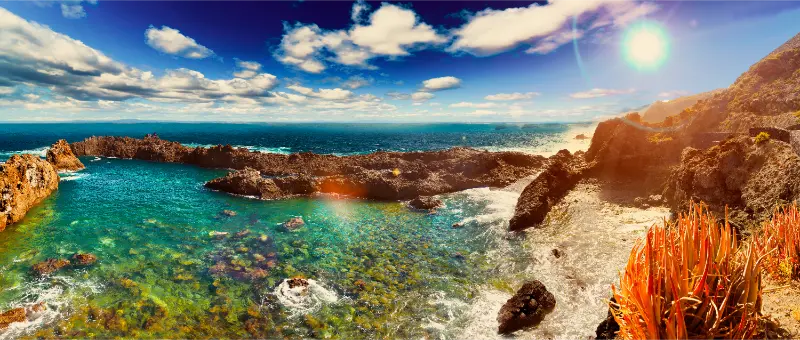
Some natural pools are protected by walls or volcanic rock that reduces wave energy, but they remain connected to the ocean. At certain tide and swell combinations, water can wash over the edge violently.
I watch the pool for several minutes before entering. If waves are repeatedly crossing the wall, people are being knocked around or lifeguards have closed access, I do not reinterpret the situation because an app says the tide should be favourable.

Swell is different from tide
Swell describes waves travelling across the ocean, while tide describes the background sea level. A low tide with large long-period swell can be far more dangerous than a high tide on a calm day.
This distinction explains many confusing travel posts. Someone may say a pool is ‘safe at low tide’, but that advice ignores the wave energy arriving that day.
Wind, local shape and wave direction
Tenerife’s coast faces different directions, so a north-coast pool and a sheltered south-coast bay can experience the same day very differently. Wind can also create chop or make exits difficult.
I check the exact coast rather than an island-wide ‘sea conditions’ summary. Micro-location matters at the water as much as microclimate matters in the mountains.
Beach size and access can change
On some beaches, low tide exposes more sand or rock, while high tide narrows the usable beach. A path around a headland or access across rocks can become more difficult as water rises.
I avoid leaving towels or bags on a patch that may be cut off later. If I need to cross rocks to return, I check the rising tide before committing.
Photography and tide planning
For photography, tide can transform reflections, rock textures and the amount of visible black volcanic shoreline. Low tide may reveal patterns; higher water may simplify the scene.
I still keep a safe distance from wet rock ledges. A dramatic wave photograph is not worth standing in the impact zone, especially when a larger set can arrive after several quieter minutes.
How I read a tide table
I note the predicted high and low times plus heights, then look at the trend: rising or falling during my visit. I do not obsess over the exact minute because local water movement and waves are continuous.
If I am unfamiliar with the coast, I arrive in daylight. Seeing access points, ladders, escape routes and wave behaviour is much easier than learning them after sunset.
Red flags, closures and local instructions override the app
Beach flags, barriers, lifeguard instructions and municipal closures are immediate local information. They always outweigh my personal interpretation of a tide graph.
If a pool is closed, I do not climb around the barrier because other people are inside. A closure can reflect swell, contamination, damage or another hazard that a tide app cannot show.
Before I go: my practical checklist
Before I build a day around Tenerife tides, I check the exact date, location and access information again. Cultural programmes, market-style events, sea conditions and night-sky plans can all change for different reasons, so I save the current source rather than relying on a screenshot from an old article. I also save the address or meeting point offline in case mobile data is weak.
I then look at transport in both directions. Getting somewhere is only half the plan: the last bus, evening road conditions, parking restrictions and walking distance back to the hotel can matter more after a late event or remote stop. If the day includes alcohol, darkness, mountain roads or swimming, I decide in advance who is driving—or remove driving from the plan completely.
For anything outdoors, I check weather for the exact area rather than Tenerife as a whole. The island’s altitude and exposure create very different conditions between a south-coast resort, the north coast and Teide. I pack one extra layer, water and sun protection even when the activity itself seems easy.
Finally, I keep the plan reversible. If the event is cancelled, the sea is rough, a venue is closed or cloud blocks the sky, I want an alternative nearby rather than an argument with reality. A museum, market, historic centre, sheltered beach or relaxed meal can rescue the day without turning it into a rushed cross-island chase.
How I fit this into a real Tenerife holiday
I check tides for one or two coastal days, not for every hour of the holiday. That is enough to improve natural-pool timing and photography without turning the trip into a spreadsheet.
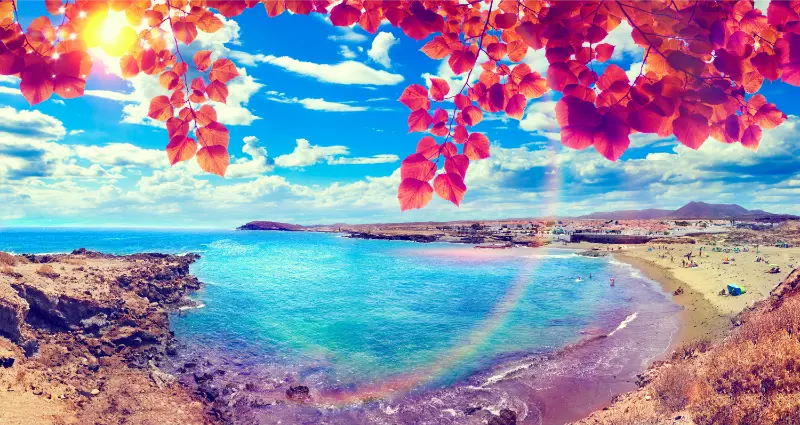
If conditions are rough, I move the swim rather than the rule. Tenerife has enough beaches and inland activities that there is rarely a reason to force one exposed pool.
Tenerife is compact, but the island is not flat and travel times can be deceptive. I group experiences by area rather than crossing from one end of the island to the other several times in the same day. That makes the cultural, food or nature stop feel like part of the trip instead of another box to tick.
I also keep one flexible half-day. Weather, sea conditions, event schedules and local opening patterns can change. A free block gives me room to move an activity rather than forcing it into poor conditions.
Where I would stay
I choose a base for the wider itinerary, not for this single activity. South-coast resorts are convenient for dependable holiday infrastructure, while Santa Cruz, La Laguna, Puerto de la Cruz and smaller northern towns can make culture, food and local events easier to weave into everyday plans.
I compare location, parking or public transport, cancellation terms and recent guest feedback before booking. Compare accommodation in Tenerife on Booking.com.
Bookable Tenerife experiences
For tours and activities I compare the meeting point, duration, cancellation terms and what is actually included. I do not assume that two products with similar titles offer the same route or level of guidance.
Useful related Tenerife guides
- Tenerife ocean safety guide
- Best natural pools in Tenerife
- Tenerife sea temperature guide
- Tenerife photography guide
Official and specialist sources I would recheck
For details that can change, I prefer primary or specialist sources over old screenshots and social-media posts. These are the pages I would reopen close to the trip.
Frequently asked questions
How often do tides change in Tenerife?
There are regular high and low tides each day, with times shifting. I check the current date and coast rather than using a permanent schedule.
Is low tide always safest for natural pools?
No. Swell, waves, wind, pool design and closures matter just as much, sometimes more.
Can I rely on a tide app for swimming safety?
No. It is a planning tool, not a safety guarantee. Observe conditions and follow lifeguards and closures.
Why does the same pool look different in photos?
Tide height, swell, light and recent weather can change the water level and amount of exposed rock dramatically.
Should I visit natural pools at night?
I prefer first visits in daylight so I can see access, ladders, wet rocks and wave behaviour.
My final advice
I use tide information to improve timing, never to overrule the ocean in front of me. The safest plan is the one that is easy to abandon when the coast looks stronger than expected.
The best Tenerife trips leave enough space to notice the island rather than rushing through it. I verify the details that can change, respect local rules and traditions, and then allow the experience itself to be the memorable part.