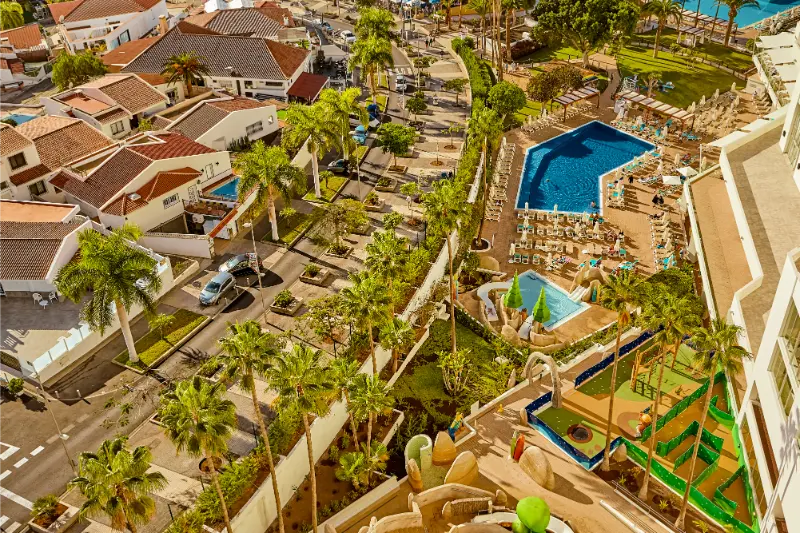
Where you stay can completely change the feel of a Tenerife holiday. The island is compact compared with many destinations, but the mountains, winding roads and different microclimates mean that two hotels only 40 kilometres apart can deliver very different trips. I would choose the area before choosing the property: first decide whether you want guaranteed resort convenience, nightlife, family beaches, local atmosphere, a greener climate or easy access to hiking.
This guide compares the main bases I would consider for different types of travellers. There is no single ‘best’ place to stay in Tenerife. Costa Adeje may be ideal for one week with children, Puerto de la Cruz can be far more rewarding for a couple who wants traditional towns and northern scenery, while El Médano appeals to travellers who prefer a breezy, low-key beach town.
Quick comparison: the main areas
| Area | Best for | Watch for |
|---|---|---|
| Costa Adeje | First-timers, couples, families | Higher prices in prime beachfront zones |
| Los Cristianos | Walkability, families, ferries | Busy central areas |
| Playa de las Américas | Nightlife, entertainment | Less quiet at night |
| Puerto de la Cruz | North coast, culture, scenery | Cloudier than the south at times |
| El Médano | Surf, relaxed atmosphere | Wind is part of the experience |
| Santa Cruz / La Laguna | City breaks, culture | Not a classic beach-resort base |
Costa Adeje: the easiest all-round base
For many first-time visitors, Costa Adeje is the most straightforward base. It has a long seafront, a wide range of hotels and apartments, restaurants at different price levels, beaches with services and easy access to excursions. Playa del Duque feels more polished, while areas closer to Puerto Colón are busier and useful for boat trips. Families appreciate the practical infrastructure; couples can choose quieter, higher-end properties; and first-time visitors rarely struggle to find what they need.
The main compromise is that Costa Adeje can feel like a destination designed around tourism rather than everyday Canarian life. That is not necessarily negative, but I would use it as a comfortable base and deliberately plan days in Teide, Anaga, La Laguna, Garachico or the Orotava Valley. Also check the elevation of your accommodation. Some hotels and apartments sit well above the waterfront, making the return walk much steeper than the map suggests.
Los Cristianos: practical and walkable
Los Cristianos has a more established town feel than parts of the neighbouring resort strip. The harbour is active, ferries leave for other islands, the promenade links into the wider southern coast and there are plenty of restaurants and everyday services. I like it for travellers who want to do a lot on foot and for families who value a relatively simple day-to-day routine.
It can be crowded, and the atmosphere around the centre is busy rather than secluded. If peace is a priority, look at the exact street and distance from nightlife or traffic. Los Cristianos is particularly useful when your itinerary includes a ferry day to La Gomera, because you can avoid an early cross-island transfer.
Playa de las Américas: nightlife and constant activity
Playa de las Américas is best when you want energy: bars, restaurants, entertainment, shopping and a busy seafront. It can suit younger travellers, groups and anyone who prefers to have something happening every evening. The resort also connects on foot with Los Cristianos and Costa Adeje, so you can move through a large stretch of the southern coast without a car.
I would be more selective here if travelling with small children or if sleep quality is a priority. A quiet room in the right part of the resort can work perfectly, but booking solely by price can put you closer to late-night venues than expected. Read the most recent accommodation reviews with location in mind, not just the overall score.

Puerto de la Cruz: my pick for a greener, more traditional feel
Puerto de la Cruz is a strong choice if you want the north’s landscapes and culture to be part of everyday life. It has a seafront, black-sand beaches, gardens, plazas and easy access to La Orotava, Icod and the northern coast. The town has a long tourism history but feels different from the purpose-built south. For travellers who enjoy cafés, walking streets and day trips through older towns, it can be an excellent base.
The trade-off is weather. The north is greener precisely because it receives more humidity and cloud than the south. You can still have beautiful sunny days, but travellers whose top priority is lying in the sun every afternoon may prefer the south. I see Puerto de la Cruz as a base for exploring, not just resort living.
El Médano: relaxed, windy and active
El Médano has a more casual atmosphere, a beach-town centre and a strong wind- and water-sports identity. It is close to Tenerife South Airport, yet feels less like a large resort complex. The beach and promenade are easy to use, and the landscape around Montaña Roja gives the area a distinctive setting.
The wind is not a minor detail; it is one of the reasons people come. If you love kitesurfing or windsurfing, that can be a major advantage. If you dream of completely still beach days, it may be a disadvantage. I would choose El Médano for independent travellers, active couples and repeat visitors who want a different southern base.
Los Gigantes and Puerto de Santiago: scenery and a slower west-coast rhythm
The west coast around Los Gigantes offers dramatic cliff views, boat-trip access and a quieter atmosphere than the largest southern resorts. It is appealing for couples and travellers who expect to spend more time around the west of Tenerife. Sunsets can be excellent, and the cliffs give even ordinary seafront walks a spectacular background.
The location is less central for eastern and northeastern sightseeing. If your plan includes several days in Anaga, Santa Cruz or La Laguna, you will spend more time driving. For a slow holiday focused on the coast, Teno and boat excursions, however, it makes sense.
Santa Cruz and La Laguna: best for an urban Tenerife trip
Santa Cruz is the island capital and works well for travellers interested in shopping, museums, city life and easy access to Playa de Las Teresitas. La Laguna, higher and cooler, is one of Tenerife’s most attractive historic environments and a natural gateway to Anaga. These areas are less obvious for a classic resort holiday but can be excellent for a short city-focused stay or a split trip.
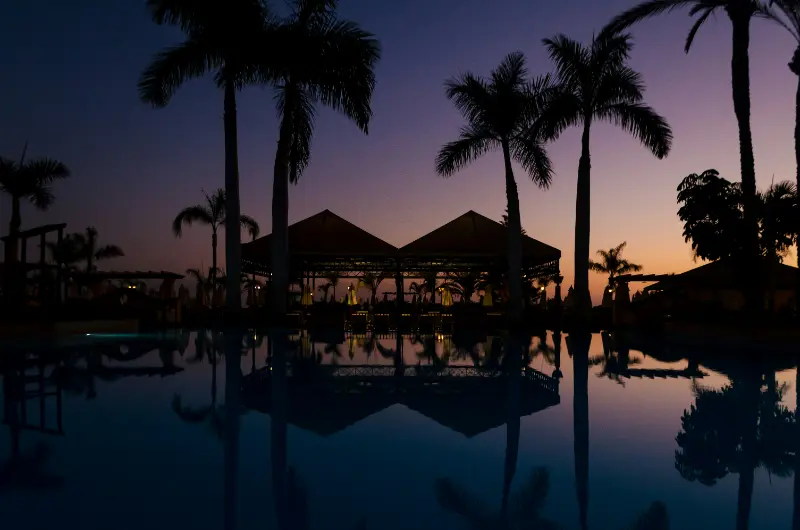
I especially like the idea of spending a few nights in the south and a few nights around La Laguna or the north on a longer trip. A split stay reduces repeated cross-island driving and lets you experience the climate and evening atmosphere of two distinct parts of Tenerife.
North or south Tenerife?
The decision is easier if you identify your non-negotiable priority. Choose the south for more consistent sunshine, broad tourist infrastructure, family attractions and resort convenience. Choose the north for greener landscapes, traditional towns, food, gardens and easier access to many northern sights. Neither side is objectively better; they are different tools for different trips.
The official tourism board highlights the same climatic contrast: the south generally has more sunshine and a drier environment, while the north receives more humidity and supports lush vegetation. That difference is one of the island’s strengths, not a flaw.
Do you need a car where you stay?
If you stay in Costa Adeje, Los Cristianos or Playa de las Américas and plan mostly organised excursions, you can manage without a car. TITSA buses connect the major tourist centres, airports and towns. A car becomes more valuable when you want sunrise viewpoints, remote trailheads, flexible Teide timing or a day that combines small villages and natural areas.
Parking should be part of the accommodation decision. In older towns and dense resort zones, free street parking can be competitive. A hotel with parking may save more time than a cheaper room several streets away. See the full Tenerife transport guide before deciding whether to rent for the whole trip or only selected days.
Where I would stay for different travel styles
- First visit: Costa Adeje or Los Cristianos for simplicity.
- Families: Costa Adeje for services and easy activity days; Los Cristianos for walkability.
- Couples: Costa Adeje for comfort, Puerto de la Cruz for atmosphere, Los Gigantes for scenery.
- Nightlife: Playa de las Américas.
- Hiking and nature: La Laguna, north Tenerife or a split stay.
- Surf and wind sports: El Médano.
- Local culture: La Laguna, Santa Cruz, Puerto de la Cruz or La Orotava area.
- Without a car: choose a central resort or town with strong bus connections and walkable services.
How I choose an actual hotel or apartment
I start with the map, not the photo gallery. I check walking distance to the beach or town centre, road gradient, bus stops, parking, supermarket access and the likely evening noise. Then I compare recent reviews for recurring problems: construction, poor soundproofing, difficult parking or long waits for lifts in large resort hotels. Only after that do I compare pools, breakfast and room design.

For current availability you can compare Tenerife hotels and apartments. Filter by neighbourhood rather than simply by ‘Tenerife’, because island-wide search results can mix properties that are more than an hour apart by road.
When a split stay is worth it
A split stay is useful on trips of ten nights or more. For example, five or six nights in Costa Adeje followed by four nights in Puerto de la Cruz or La Laguna creates two different holidays and shortens several sightseeing days. It is less useful on a five-night trip because moving accommodation consumes time and adds packing friction.
If you are following my 7-day itinerary, I would usually keep one base. If you have two weeks, I would seriously consider north plus south. That is one of the easiest ways to appreciate how much variety Tenerife packs into a relatively small island.
Final choice: match the base to the holiday you actually want
The biggest accommodation mistake in Tenerife is booking an attractive hotel in an area that does not match your plans. A luxury resort can still be inconvenient if every place you want to visit is on the opposite side of the island. Start by writing down your top five experiences, place them on a map, and then choose the base that reduces unnecessary driving while giving you the atmosphere you want in the evening.
For a first trip with mixed interests, I would keep the decision simple: Costa Adeje for easy resort comfort, Los Cristianos for walkability, Puerto de la Cruz for northern character, and La Laguna for culture and nature access. From there, refine by budget, exact neighbourhood and transport plan.