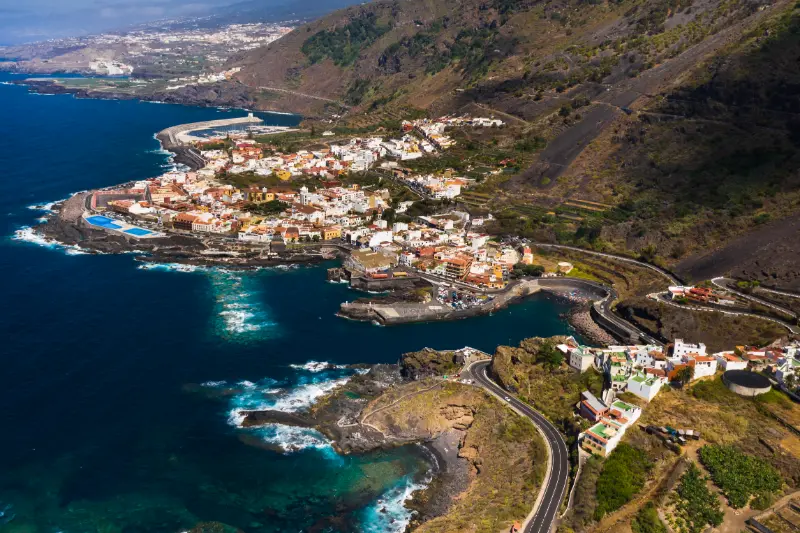
Puerta de Tierra Garachico is a place I would add when I want a Tenerife itinerary to explain the island rather than simply collect viewpoints. It fits naturally into a visit to Garachico and gives context that is easy to miss when I only stop at the most photographed landmark.
Puerta de Tierra is a surviving reminder of Garachico’s sixteenth-century port. The gate marked the passage through which people and goods moved between the harbour and the town during the period when maritime commerce shaped local prosperity.
Quick facts
| Place | Garachico |
|---|---|
| Type | Historic Park |
| Time I allow | 20–40 minutes as part of a longer Garachico walk |
| Address / area | Plaza Juan González de la Torre, Garachico |
| Best approach | Combine it with nearby sights on foot and verify current access before travelling |
Why this place is worth understanding
The eruption of 1706 destroyed the old harbour’s role and radically changed the coastline, but the gateway remained as a physical reference to the vanished port. For me, that makes it more than a decorative ruin: it is a surviving piece of transport infrastructure from a landscape that no longer exists.
The gate now sits within a small landscaped park. The municipal tourism information also highlights an old wine press from the Hacienda de San Juan Degollado, creating a useful link between port history and the agricultural products that were processed and traded through places like Garachico.
A corner of the park commemorates the poet Rafael Alberti, who visited Garachico in 1991. It is an unexpected cultural detail that adds another chronological layer to a site best known for much earlier history.
The mental exercise I find most useful here is to remove the modern road, gardens and present shoreline from the picture and imagine cargo, passengers and port controls passing through the same threshold. That shift makes the gate intelligible. Without the old harbour context it can look like a pleasant stone feature in a garden; with that context it becomes evidence of how Garachico worked before the eruption.
What I look for on the visit
I try to arrive with two or three details in mind instead of reading a long list while I am standing in front of the building. That keeps the visit focused and makes the history easier to remember. The details I would prioritize here are:
- The old gateway as a piece of port infrastructure.
- The garden layout around the surviving masonry.
- The historic wine press.
- The contrast between today’s inland-feeling park and the former harbour function.
I also step back and look at the surrounding streets. Historic buildings make more sense when I see their relationship with plazas, former transport routes, the coast and neighbouring institutions. A tight photograph of one doorway rarely explains as much as a wider view of how the place sits inside the town.
How I fit it into a Garachico day
Garachico is one of the places where I find it especially rewarding to slow down. The historic centre is compact, so the temptation is to photograph the church, the castle and the lava pools in quick succession and move on. I get more from it by reading the town as a sequence: the old port economy, the defensive structures, the religious buildings, the 1706 eruption and the way the settlement rebuilt around a changed coastline.

For practical planning, I usually park once and walk. The old centre is small enough that repeatedly moving the car makes little sense, and the most interesting details are between the headline sights: stone doorways, changes in street level, glimpses of courtyards and the relationship between the plazas and the seafront. Comfortable shoes are useful even for a short visit because paving can be uneven.
The weather on the northwest coast can be different from the resort south. Cloud, wind and sea conditions can change the feel of a visit quickly, so I keep the historic walk independent from any plan to swim at El Caletón. That way a rough sea does not ruin the day: the architecture and town history still make the trip worthwhile.
Garachico is also a good example of why I avoid building a Tenerife itinerary around isolated attractions. A single monument may need only twenty minutes, but the value comes from linking several nearby places. A two- or three-hour walk can tell a coherent story without long drives, and it leaves enough time for a meal or a coffee rather than turning the day into a checklist.
My preferred sequence is to start in the historic centre before the busiest part of the day, connect the civic and religious monuments on foot, then reach the seafront. I decide on swimming only after I see the actual sea conditions at El Caletón. If the coast is rough, I use the extra time for the castle, Puerta de Tierra, a longer lunch or another nearby town such as Los Silos instead of forcing a beach plan.

Access, opening hours and respectful behaviour
I treat permanent historical information and day-to-day visitor access as two different things. The building or site may be centuries old, but hours, exhibitions, restoration work and the availability of interior rooms can change. I therefore use the official source for the final check rather than relying on an old timetable copied by a third-party travel site.
For an outdoor heritage stop I still check for temporary works, festival closures or event installations. A public square or park can remain accessible while part of it is fenced, and a fortress or interpretation space can change interior opening arrangements even when the exterior is always visible.
Accessibility and visiting with children
Historic centres in Tenerife can combine slopes, steps, narrow thresholds and uneven paving. I never label a whole visit ‘accessible’ based only on the main street. For a wheelchair, mobility scooter or pushchair, I check the exact entrance and the route between stops, and I am prepared to enjoy an exterior view if the historic fabric creates unavoidable barriers.
With children I make the story concrete. A fort protecting ships, a gate controlling goods, a silver cross made in Havana, a volcanic eruption that changed a harbour or a cave adapted as a place of worship is easier to remember than a long sequence of dates. I keep indoor visits short and alternate them with plazas, gardens or the seafront.
Photography: the views that explain the place
My first photograph is usually a contextual one. I include the street, plaza, coastline or neighbouring building so the image shows where the monument belongs. After that I look for materials: basalt, carved stone, tea wood, plaster, metalwork or garden geometry. Side light in the morning or late afternoon often reveals texture better than flat midday sun.
I avoid blocking doors and narrow pavements while composing a shot. In churches and working civic buildings I follow photography rules and never use a tripod if it interferes with other visitors. The goal is to document the place without turning local daily life into a photo set.
A compact walking route nearby
Rather than sending myself across the island for unrelated stops, I build a small cluster around this page. These are the guides I would use next:
These links are deliberately local. I prefer a route where each stop adds another piece of the same story, because it reduces driving and makes the day feel less fragmented. It also leaves space for a meal, a market, weather changes and the small unplanned discoveries that usually become the most memorable part of a town visit.
Where I would stay
If I wanted to explore this part of Tenerife at a slower pace, I would compare accommodation in Garachico. Staying nearby can be useful for quieter morning streets and for avoiding a long return drive after a full day in the northwest or east of the island.
Official information
Before travelling I check the official information for Puerta de Tierra Garachico. I use the official page for current access, temporary closures, events and opening arrangements because those details can change after this article is published.
Common planning mistakes I avoid
- Treating a small historic site as a reason for a long cross-island drive instead of combining it with nearby places.
- Assuming an old opening-hours screenshot is still valid.
- Moving the car between attractions that are only a few minutes apart on foot.
- Focusing on the façade and missing the relationship with the square, street or former coastline.
- Packing too many churches or museums into one block until the details blur together.
- Ignoring local events, services or municipal activity that can temporarily change access.
Frequently asked questions
Is it worth visiting on a first trip to Tenerife?
Yes if I am already planning time in Garachico. I would not normally cross the island for this one stop alone, but it adds genuine depth to a town visit and helps me understand details that the general sightseeing route can otherwise miss.
How much time do I need?
I would allow 20–40 minutes as part of a longer Garachico walk. The exact time depends on interior access, events and how many nearby sights I connect. For a square, garden or exterior-only stop, I may stay less; for a church, historic house or cultural building I allow more.

Do I need a car?
Not for the monument itself once I am in the historic centre. A car can be useful for reaching the town from another part of Tenerife, but I prefer to park once and continue on foot. Bus travel is also possible in many cases, although I check the return timetable before starting the day.
Can I rely on published opening hours?
I use them as a starting point, not a guarantee. Religious services, holidays, restoration, municipal events and temporary exhibitions can alter normal access. The official link above is the source I check closest to the visit.
What should I combine with it?
I combine it with two or three nearby heritage stops and the seafront. If sea conditions are safe, El Caletón can be an optional final stop, but I never make the cultural visit dependent on swimming conditions.
Final thoughts
Puerta de Tierra Garachico works best for me as part of a connected story rather than as a stand-alone pin. I would keep the visit flexible, read the setting as carefully as the monument itself and use the surrounding streets to understand how Garachico changed over time. That slower approach is exactly what helps a Tenerife trip move beyond the standard highlights.