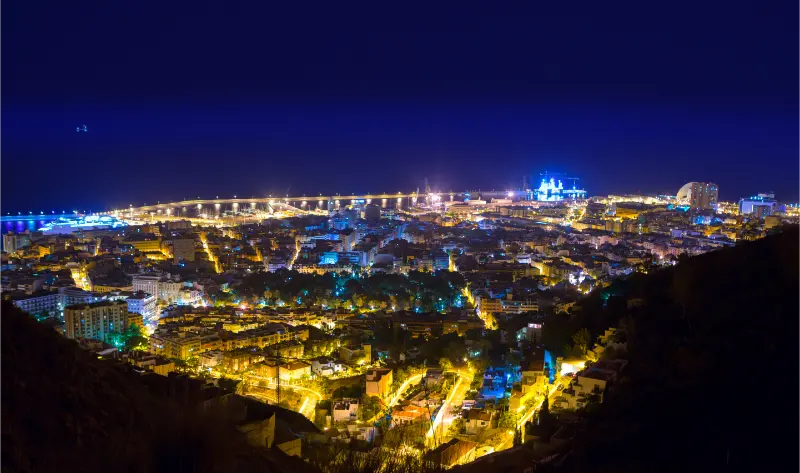
Plaza de la Candelaria is the square I use to move from the grand waterfront scale of Plaza de España into the older commercial heart of Santa Cruz. It began to take shape in the second half of the sixteenth century, and its most distinctive feature is the marble Triunfo de la Candelaria, installed in 1768 and carved in Genoa. The square is also framed by buildings such as Palacio de Carta and the Real Casino, making it a useful place to understand how commerce, religion and elite civic life overlapped in the old port town.
Quick visit facts
| Location | Immediately inland from Plaza de España |
|---|---|
| Origins | Developed from the second half of the 16th century |
| Main monument | Triunfo de la Candelaria, installed in 1768 |
| Material/origin | Marble monument carved in Genoa |
| Best use | Part of a walking route through the historic centre |
The monument at the centre
The Triunfo de la Candelaria represents the appearance of the Virgin of Candelaria and the later evangelisation of the Guanche population. I look at it as a historical object first, because the symbolism belongs to a colonial and religious context that deserves explanation rather than a quick photograph.
The Genoese workmanship also shows the commercial connections of eighteenth-century Santa Cruz. Imported marble and artistic commissions were possible because the port linked Tenerife with Atlantic and Mediterranean networks.
Palacio de Carta changes the character of the square
Palacio de Carta is one of the strongest architectural presences here. Its stone façade introduces a more formal eighteenth-century layer and makes the square feel different from the broad waterfront only a few steps away.
I like to look at the palace from across the plaza before approaching the doorway. The distance makes its proportions, balconies and masonry easier to read.
A square that still works as a meeting point
This is not a museum zone frozen in the past. Shops, cafés, pedestrians and events keep the square active. I find that useful because it lets me see how historic public space survives inside a modern capital.
When an event is taking place, barriers or stages can change the view. I do not consider that a ruined visit; it is part of how the square continues to function.
How I link it to the rest of the centre
I normally arrive from Plaza de España, continue toward Calle del Castillo, then loop through Plaza del Príncipe, San Francisco and Parque García Sanabria. The route is compact enough to do without a car.
If I have only a few hours in Santa Cruz, this square earns its place because it combines architecture, urban history and easy access without requiring a ticket.

How I fit this stop into a real Tenerife day
I rarely cross the island for a single small monument. I get much more from these places when I build a compact half-day around them: one main sight, two or three nearby stops, a local lunch or coffee and enough unscheduled time to notice streets, viewpoints and everyday life. That approach reduces driving and makes the historical context easier to understand.
I also separate permanent information from operational details. A building’s history, location and architectural features change slowly; opening hours, access conditions, temporary works and event schedules can change at short notice. If entering the interior is essential to my plan, I always recheck the official source shortly before travelling.
Getting there without creating unnecessary stress
In Santa Cruz I prefer to park once or arrive by tram or bus and continue on foot through the centre. The historic core is compact, but traffic, one-way streets and underground parking entrances can make repeated short car journeys inefficient. In Los Realejos, a car is useful for combining the historic centres with Rambla de Castro, although buses serve several main stops.
When I use public transport, I check the return journey first. This is especially important for coastal viewpoints and walking routes, where a missed connection can turn a simple visit into a long wait. I also leave margin around church services, local festivals and municipal events because these can change normal access patterns.
Accessibility and family planning
I do not assume that a historic site is fully step-free because the entrance looks easy. Old pavements, thresholds, terraces, steep slopes and interior staircases can all matter. For wheelchairs, reduced mobility or a pushchair, I verify the exact route rather than relying on a generic accessibility label.
With children, I keep the history practical. One memorable story, a visible detail and a nearby open space usually work better than a long explanation. Squares, gardens and viewpoints are particularly useful because they let me alternate cultural stops with movement and breaks.
Photography and respectful visiting
I first look at the place before photographing it. A wide view often explains more than a close-up: the way a palace faces a square, how a church anchors a neighbourhood, or how an industrial ruin sits on a cliff. In active religious buildings I avoid flash, lower my voice and never treat a service as a tourist performance.
At viewpoints and ruins I stay behind barriers and on established paths. A dramatic photograph is not worth stepping onto unstable masonry, cliff edges or protected vegetation. This is particularly important on the north coast, where wet surfaces and steep drops can be deceptive.
Weather and timing
Santa Cruz is often warmer and drier than the north coast, but shade between buildings can still make mornings pleasant. Los Realejos can change quickly from bright sun to low cloud or light rain. I carry water, sun protection and a light layer even when the day starts clear.

Morning is my favourite time for urban heritage because streets are quieter and light is softer. Late afternoon can be better for coastal viewpoints. If an attraction is free and outdoors, I keep it flexible and move it around the day according to weather and crowds.
Common mistakes I avoid
- Assuming a heritage building is always open inside.
- Driving between sights that are only a few minutes apart on foot.
- Using an old blog timetable instead of the current official source.
- Arriving at a church during a service only to take photographs.
- Underestimating stairs, cobbles or steep coastal paths.
- Trying to fit too many similar monuments into one day.
How I read Santa Cruz beyond a checklist
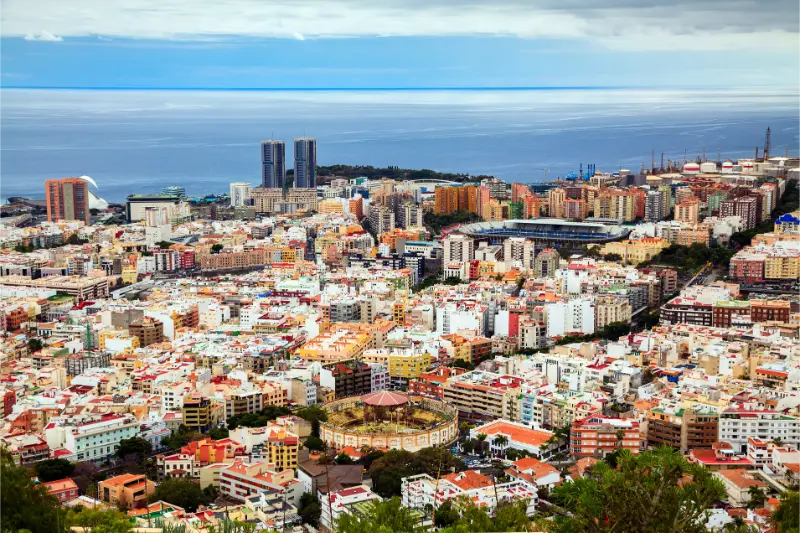
Santa Cruz makes more sense when I follow the relationship between port, squares and civic buildings. The old settlement grew because of the harbour, then expanded inland as military, commercial and administrative power increased. The result is a centre where a plaza can explain shipping, defence, politics and social life at the same time.
I therefore walk slowly between the waterfront and the older streets rather than treating each monument as an isolated pin on a map. Plaza de España, Plaza de la Candelaria, the lower end of Calle del Castillo and the streets around San Francisco form a particularly useful sequence. Distances are short, but the historical layers change quickly.
Food, shade and practical breaks
The centre has plenty of cafés, bakeries and restaurants, so I do not carry a rigid lunch plan unless I have a reservation. I prefer to stop when the route naturally needs a break. Mercado Nuestra Señora de África works well for a food-focused detour, while Parque García Sanabria gives me a greener pause if the day becomes too urban.
On cruise-ship days some central areas can feel busier around late morning. I respond by visiting the smaller streets first and returning to the main squares later. Because most of these sights are free, changing the order rarely creates a problem.
What makes these small stops worth an article of their own
A famous city guide tells me what not to miss; a dedicated page helps me understand why a place matters and whether it deserves ten minutes or an hour. For repeat visitors, these smaller stops are often where Santa Cruz becomes more than a transit point on the way to beaches or Anaga.
What I would combine nearby
I use these nearby stops to build a geographically compact route. The aim is not to collect attractions but to let each place add a different layer—architecture, landscape, food, everyday city life or local history.
Where I would stay
If I wanted more time in this part of Tenerife, I would compare accommodation in Santa Cruz. Staying nearby is especially useful when I want early streets, evening atmosphere and enough time to explore without turning every day into a long drive.
Official information
For current access, opening hours, temporary closures and local events I check Turismo de Tenerife – Plaza de la Candelaria shortly before travelling. I use the official source for operational details because these can change after an article is published.
Frequently asked questions
Where is Plaza de la Candelaria?
It is immediately inland from Plaza de España in the historic centre.
What is the main monument?
The Triunfo de la Candelaria, a marble monument installed in 1768.
Do I need a ticket?
No. The square is a public outdoor space.
What should I combine with it?
Plaza de España, Palacio de Carta, Calle del Castillo and the San Francisco area all fit naturally into the same walk.
Final thoughts
Plaza de la Candelaria Santa Cruz is the kind of place I value more when I understand its context. I would not rush it, but I also would not over-plan it: a focused visit, a few nearby stops and enough flexibility for local life usually produces a better Tenerife day than a long checklist.