
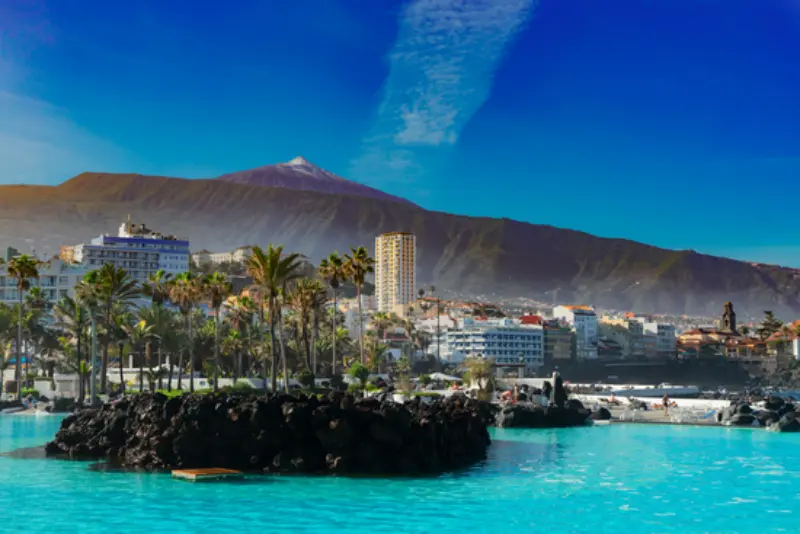
Playa Jardín is one of the clearest examples of how Puerto de la Cruz blends black volcanic sand with designed public space: beach, gardens, waterfalls and stonework were shaped into a single seafront landscape associated with César Manrique.
What the Playa Jardín complex includes
The official tourism authority describes Complejo Playa Jardín as including Playa Jardín, Playa Chica and Punta Brava. The environment was designed by César Manrique and integrates gardens with endemic plants, water features and stone caves. I therefore think of the area as more than one rectangular beach; moving along the complex is part of the appeal.
Black sand and north-coast atmosphere
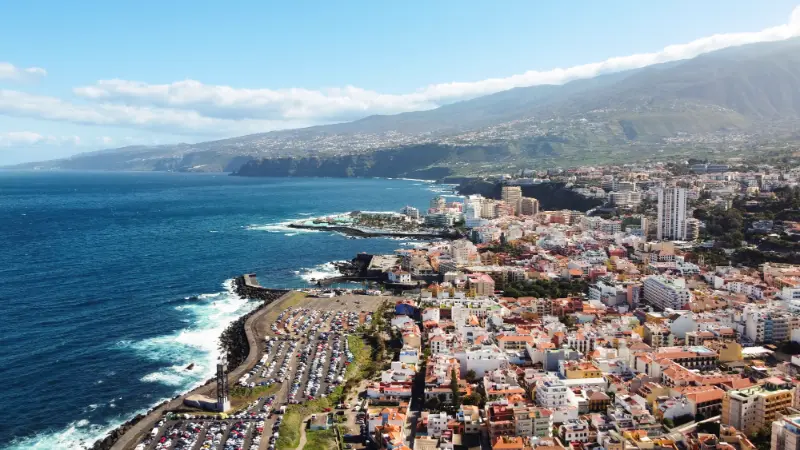
The volcanic sand immediately distinguishes Playa Jardín from the light-sand resort beaches of Costa Adeje. On a clear day the green Orotava Valley backdrop can make the contrast even stronger. The north coast, however, is exposed to Atlantic energy, and visual drama is often linked to conditions that require more caution in the water.
Breakwaters help, but they do not eliminate risk
The official page notes that several breakwaters create more comfortable swimming areas but warns that outside their protection the swell can be stronger. I follow lifeguard directions and flags rather than deciding that the water “looks fine.” Even inside an urban beach with services, the Atlantic deserves respect.
Facilities and an easy city-beach day
Playa Jardín has the services expected from a major tourist beach, and the surrounding area makes it easy to combine swimming with food, walking and shopping. This is one reason I recommend it to visitors staying in Puerto de la Cruz who do not want a car-dependent beach day.
Close to Loro Parque
The complex is near Loro Parque, but I would think carefully before combining a major attraction and a proper beach day. It is geographically convenient, yet both can absorb more time than expected. If I do combine them, I decide in advance which is the main event and keep the other deliberately short.
Walking from central Puerto de la Cruz
From many central areas I prefer to walk along the seafront. That makes the transition from city to beach part of the day and removes parking from the equation. My Puerto de la Cruz guide maps out the broader town experience, while my black-sand beaches guide gives alternatives around the island.

Official information I use
I check the official Tenerife tourism page for Complejo Playa Jardín for current services and safety context.
Photography and the black-sand contrast
Dark sand can make white surf, green planting and colourful buildings look especially strong. I photograph when side light gives texture rather than at the harshest noon hour. After rain or heavy swell the beach can look completely different, so I treat each visit as a changing landscape rather than expecting a postcard duplicate.
Who should choose Playa Jardín
I recommend it most to travellers staying in Puerto de la Cruz, people who want black sand without a remote drive, and visitors who value services. Someone seeking calm, reliably gentle water may prefer a managed pool such as Lago Martiánez on a rough-sea day.
How I fit Playa Jardín into a Tenerife itinerary
I would not plan Playa Jardín in isolation. I first look at the geography of the day and decide what belongs naturally before or after it. I would combine Playa Jardín with Punta Brava and a walk back through Puerto de la Cruz. Loro Parque can fit geographically, but I do not force both into one day unless I am happy with a short beach stop. That approach keeps driving or bus time under control and leaves enough margin for weather, queues, a longer lunch or simply staying somewhere because it is better than expected. For wider planning I use my Puerto de la Cruz travel guide and then build the day around one main experience rather than a collection of unrelated pins.
When I would go
I prefer a bright, settled morning or early afternoon when the beach flag is favourable. North-coast cloud is not a problem for walking, but it changes a sunbathing day. Tenerife is a year-round destination, but the best hour for a specific place can matter more than the best month. I think about light, heat, wind, crowds and whether the surrounding streets are lively or congested. I also check the exact local forecast instead of relying on a forecast for the island as a whole; altitude and exposure create very different conditions over short distances.
How long I would allow
Two to four hours is enough for a swim, garden walk and lunch; a dedicated beach day can of course be longer. I prefer a realistic visit that includes arrival, orientation and a few pauses. The number printed on a map rarely includes parking, walking from a bus stop, buying a ticket, using changing facilities or finding lunch. Building those small transitions into the plan is one of the easiest ways to make a Tenerife day feel relaxed rather than rushed.
Getting there without wasting half the day
Walking is ideal from central Puerto de la Cruz. Buses also serve the area, while drivers should use legal public parking rather than enter narrow neighbourhood streets. If I use public transport, I check both the outward and return timetable before leaving, not when I am ready to go home. If I drive, I save a legal parking option and a second choice on the map. Tenerife distances can look short, but urban traffic, steep roads and limited parking can change the real journey time. My getting around Tenerife guide explains the wider trade-offs between car, bus and taxi.
What I would bring
I bring swimwear, towel, sunscreen and footwear comfortable on warm dark sand and promenade paving. A light layer can be useful when cloud or breeze develops. I keep the day bag light: water, sun protection, a charged phone, and a thin layer if the visit may continue into evening or a higher area. For swimming places I add footwear suitable for hot paving or rough surfaces and never assume lockers or shaded space will be available. For museums or religious buildings I prefer simple, respectful clothing and a small bag that is easy to carry.
Accessibility and travelling at a slower pace
I verify the current accessible route and seasonal beach assistance if required, because specific equipment and staffing may change. Accessibility is not only about a wheelchair symbol: slopes, cobbles, stairs, distance from parking, toilets and shaded seating all matter. When step-free access is essential I confirm the current arrangements directly before travelling. My accessible Tenerife guide is a useful starting point for broader planning.
Where I would eat nearby
The surrounding urban area gives me many choices. I often walk a few minutes away from the most obvious beach frontage before deciding where to eat. I usually separate the attraction from lunch unless there is a genuinely good reason to eat on site. That gives me more choice and prevents a queue at the café from dictating the day. I look for a local restaurant, bakery or simple bar within the same area and keep one backup saved. For context on island dishes and restaurant habits, see my what to eat in Tenerife guide and eating out in Tenerife guide.
Where to stay if this place is a priority
Puerto de la Cruz is the natural base for Playa Jardín and gives access to the wider north without needing to move hotels. I choose accommodation by map position rather than marketing description. A property that looks close can still be awkward on foot if there is a steep road, motorway barrier or long detour. I compare live options with Puerto de la Cruz accommodation and then cross-check the neighbourhood in my where to stay in Tenerife guide.
Common mistakes I would avoid
- Swimming outside protected areas when the swell is stronger.
- Assuming black sand means a wild beach with no services.
- Trying to squeeze a full Loro Parque visit and a full beach day together.
- Forgetting that dark sand can become very hot in strong sun.
The common thread is simple: I try not to turn Playa Jardín into a box-ticking stop. Tenerife rewards a little spare time, especially in places where the surrounding promenade, historic streets, gardens or coastline are part of the experience.
What I check on the day
Before leaving I verify the official opening or access information, local weather, any temporary closure and the route back. I check the beach flag and local sea conditions first; if swimming is restricted, I turn the visit into a coastal walk rather than arguing with the ocean. I save the official page and any ticket or reservation offline. This takes only a few minutes and is much more reliable than assuming that an old screenshot, blog post or map listing is still correct.
My final take
Playa Jardín is at its best when I use it as a Puerto de la Cruz city beach with artistic landscaping and Atlantic character. The gardens and black sand are memorable, but respecting the sea is what makes the day work.
Frequently asked questions
Is it a good swimming place every day?
No beach or ocean pool in Tenerife is guaranteed safe every day. I check flags, lifeguard instructions, swell and wind on the day and change plans if conditions are poor.
Do I need a car?
Not necessarily. The answer depends on where I stay. I compare the direct bus or walking option with the real cost of driving and parking, not only the distance on a map.
Can I combine it with another beach?
Yes, but I usually prefer one main swim and one secondary coastal stop. Moving repeatedly between beaches can turn a relaxed day into a parking exercise.