
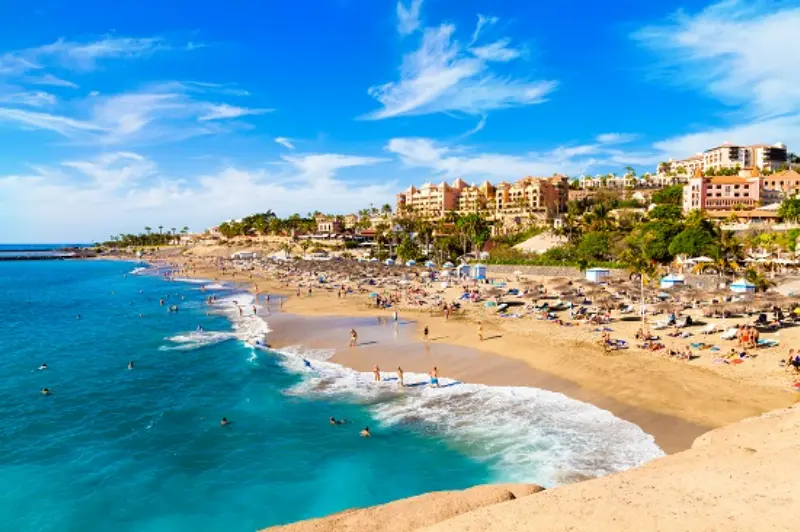
Playa del Duque is the polished side of Tenerife’s south coast: an urban beach with extensive services, easy promenade access and a location that makes it one of Costa Adeje’s simplest beaches to build into a resort holiday.
What the official beach information says
Playa del Duque is in Adeje and the official tourism page currently lists it at about 390 metres long and 60 metres wide. It has a Blue Flag and a broad range of services including toilets, foot showers, showers, changing facilities, cleaning, bars, restaurants and sunbed/umbrella rental. The same listing identifies accessible beach access and parking with more than 100 spaces.
Why it feels different from Tenerife’s wild beaches
This is not Benijo, El Bollullo or a remote black-sand cove. The beach sits in one of the island’s most developed high-end resort areas and is bordered by hotels, restaurants, shops and a landscaped promenade. I choose it when convenience matters: families, older travellers, a short beach day between other activities, or anyone who wants facilities close at hand.
The promenade is part of the experience
The official tourism authority notes that the coastal promenade connects Playa del Duque with more than eight beaches. That means I can turn a beach visit into a long, easy coastal walk rather than staying on one patch of sand all day. My best coastal walks guide gives broader ideas, while the Costa Adeje guide explains the resort area.
Swimming conditions
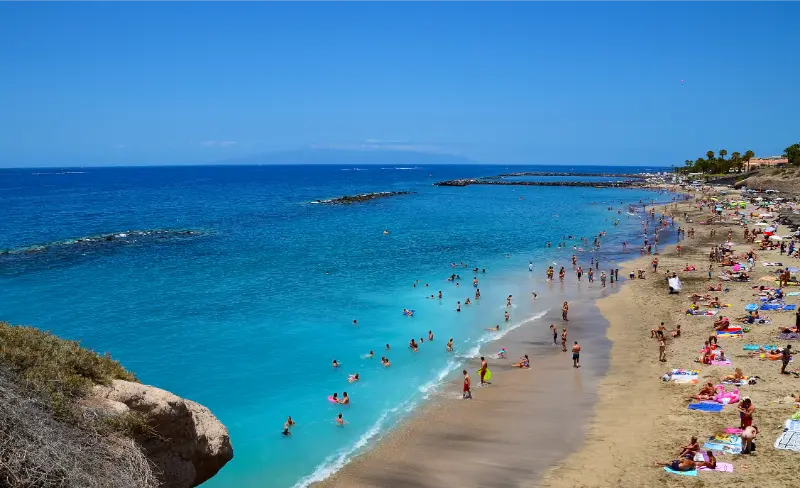
Playa del Duque is developed and generally easier for recreational bathing than many exposed northern beaches, but I still check the beach flag and lifeguard instructions every time. A Blue Flag is not a promise that the ocean is safe under every condition. Atlantic swell, wind and local currents can change the day, and I never use yesterday’s conditions as evidence for today.
Accessibility
The official listing marks the beach as accessible, which makes it one of the more useful south-coast options to investigate for travellers with reduced mobility. I still verify the exact seasonal services I need—such as amphibious chairs, assisted bathing times or accessible changing facilities—because those operational details can change even when the physical access remains.
Parking versus walking
If I stay in Costa Adeje, I would walk. Driving a short distance to search for a prime parking space often creates more stress than it saves. If I arrive from elsewhere, the official page lists parking and interurban bus access. I aim for a legal car park, accept a few minutes on foot and avoid waiting for a perfect curbside space.
Official information I use
I check the official Tenerife tourism page for Playa del Duque for current services, access and beach characteristics.
Families, couples and solo travellers
Families benefit from services and a promenade, couples may prefer late afternoon and dinner nearby, and solo travellers can use the area without needing a car if they stay in Costa Adeje. I would not pay a premium to stay here simply because it is called exclusive; I pay for location when I will actually walk to the beach repeatedly.
Sunbeds versus bringing my own setup
Rental loungers can be convenient, but I do not assume availability or price. A towel and minimal beach kit give me more flexibility to move along the promenade. On very sunny days shade matters more than aesthetics, so I prioritise protection rather than trying to spend every minute in direct sun.
How I fit Playa del Duque into a Tenerife itinerary
I would not plan Playa del Duque in isolation. I first look at the geography of the day and decide what belongs naturally before or after it. I would combine the beach with a promenade walk toward Fañabé or La Caleta, a relaxed lunch and perhaps an evening in Costa Adeje. I would not waste the day driving to another beach simply to add a second name. That approach keeps driving or bus time under control and leaves enough margin for weather, queues, a longer lunch or simply staying somewhere because it is better than expected. For wider planning I use my Costa Adeje travel guide and then build the day around one main experience rather than a collection of unrelated pins.
When I would go
Morning gives me a calmer start and easier choice of space. Late afternoon is excellent for a promenade and sunset atmosphere, especially when I no longer need a full day of sunbathing. Tenerife is a year-round destination, but the best hour for a specific place can matter more than the best month. I think about light, heat, wind, crowds and whether the surrounding streets are lively or congested. I also check the exact local forecast instead of relying on a forecast for the island as a whole; altitude and exposure create very different conditions over short distances.
How long I would allow
For swimming and relaxing I allow half a day; for a swim plus promenade and meal I can easily spend most of the day in the area. I prefer a realistic visit that includes arrival, orientation and a few pauses. The number printed on a map rarely includes parking, walking from a bus stop, buying a ticket, using changing facilities or finding lunch. Building those small transitions into the plan is one of the easiest ways to make a Tenerife day feel relaxed rather than rushed.
Getting there without wasting half the day
Walking is best if I stay in Costa Adeje. From elsewhere, buses and car both work, but parking demand rises at popular times. If I use public transport, I check both the outward and return timetable before leaving, not when I am ready to go home. If I drive, I save a legal parking option and a second choice on the map. Tenerife distances can look short, but urban traffic, steep roads and limited parking can change the real journey time. My getting around Tenerife guide explains the wider trade-offs between car, bus and taxi.
What I would bring
Swimwear, sunscreen, water and sandals are enough for most visitors because facilities are close. I still carry a light cover for restaurants and stronger sun protection than I think I need. I keep the day bag light: water, sun protection, a charged phone, and a thin layer if the visit may continue into evening or a higher area. For swimming places I add footwear suitable for hot paving or rough surfaces and never assume lockers or shaded space will be available. For museums or religious buildings I prefer simple, respectful clothing and a small bag that is easy to carry.
Accessibility and travelling at a slower pace
The official listing identifies accessible access, but I confirm the exact assisted-bathing or equipment service if that is required on my date. Accessibility is not only about a wheelchair symbol: slopes, cobbles, stairs, distance from parking, toilets and shaded seating all matter. When step-free access is essential I confirm the current arrangements directly before travelling. My accessible Tenerife guide is a useful starting point for broader planning.
Where I would eat nearby
This is one of the easiest beaches for food choices because restaurants line the wider resort area. I compare menus a little inland as well as directly on the promenade. I usually separate the attraction from lunch unless there is a genuinely good reason to eat on site. That gives me more choice and prevents a queue at the café from dictating the day. I look for a local restaurant, bakery or simple bar within the same area and keep one backup saved. For context on island dishes and restaurant habits, see my what to eat in Tenerife guide and eating out in Tenerife guide.
Where to stay if this place is a priority
Staying near Playa del Duque suits travellers who prioritise a polished beach environment and walkable resort services. I choose accommodation by map position rather than marketing description. A property that looks close can still be awkward on foot if there is a steep road, motorway barrier or long detour. I compare live options with hotels around Playa del Duque and then cross-check the neighbourhood in my where to stay in Tenerife guide.

Common mistakes I would avoid
- Assuming a Blue Flag means the sea is always safe.
- Driving from a nearby Costa Adeje hotel instead of walking.
- Paying only for the beachfront location without checking menu value.
- Ignoring the long promenade and treating the beach as an isolated strip of sand.
The common thread is simple: I try not to turn Playa del Duque into a box-ticking stop. Tenerife rewards a little spare time, especially in places where the surrounding promenade, historic streets, gardens or coastline are part of the experience.
What I check on the day
Before leaving I verify the official opening or access information, local weather, any temporary closure and the route back. I check the beach flag, wind and swell forecast and any current service notice, especially if accessible bathing support is essential. I save the official page and any ticket or reservation offline. This takes only a few minutes and is much more reliable than assuming that an old screenshot, blog post or map listing is still correct.
My final take
Playa del Duque is not the beach I choose for wilderness; it is the beach I choose when I want comfort, services and a smooth day. Used that way, it is one of the strongest urban-beach options in Tenerife.
Frequently asked questions
Is it a good swimming place every day?
No beach or ocean pool in Tenerife is guaranteed safe every day. I check flags, lifeguard instructions, swell and wind on the day and change plans if conditions are poor.
Do I need a car?
Not necessarily. The answer depends on where I stay. I compare the direct bus or walking option with the real cost of driving and parking, not only the distance on a map.
Can I combine it with another beach?
Yes, but I usually prefer one main swim and one secondary coastal stop. Moving repeatedly between beaches can turn a relaxed day into a parking exercise.