
Mirador de Chipeque is one of the Tenerife viewpoints I would choose when the journey itself matters as much as the photograph. Officially known as Mirador de Cumbres del Norte or Chipeque, it sits by the TF-24 in the high forest above Santa Úrsula. On a clear day the viewpoint looks across the Orotava Valley toward Teide; when the trade-wind cloud layer fills the valley, the scene can become a broad white “sea of clouds”. Turismo de Tenerife lists parking and adapted access at the viewpoint but no bus stop, so I plan it primarily as a driving stop.
What I can see from Chipeque
The classic view looks toward Teide over the northern slope, often with cloud below. Official tourism information also notes visibility toward the Teno Massif and, in clear conditions, the silhouette of La Palma. I do not expect all of those elements on every visit; mountain visibility changes quickly.
The uncertainty is part of the appeal. Chipeque is a place I visit because conditions can transform the same landscape from one hour to the next.
The sea of clouds
The cloud layer forms when moist trade-wind air meets Tenerife’s terrain and is capped by warmer, drier air above. From the coast this can feel like a grey day; from Chipeque I may be standing in sunshine above the clouds. That inversion is one of the island’s defining climate experiences.
I never treat it as guaranteed. If the cloud level is too high, the viewpoint may sit inside mist; if it is too low or absent, the valley may be completely clear. Both can be beautiful.
Driving the TF-24
Chipeque is reached from the high ridge roads rather than from a town-centre promenade. The TF-24 is scenic but can be winding, foggy and dark after sunset. I allow extra time and avoid driving it when tired.
There is no regular bus stop listed at the viewpoint, which makes a rental car the practical choice for most visitors. My Tenerife driving guide covers mountain-road habits and parking in more detail.
Parking and roadside safety
Turismo de Tenerife lists parking at the viewpoint. I use the formal space and keep children close because the environment remains roadside and mountainous even though access is easy. I do not stop in the traffic lane when the car park is full.
Popular sunset times can create pressure. Arriving earlier is more enjoyable than chasing the last light and then searching for a space.
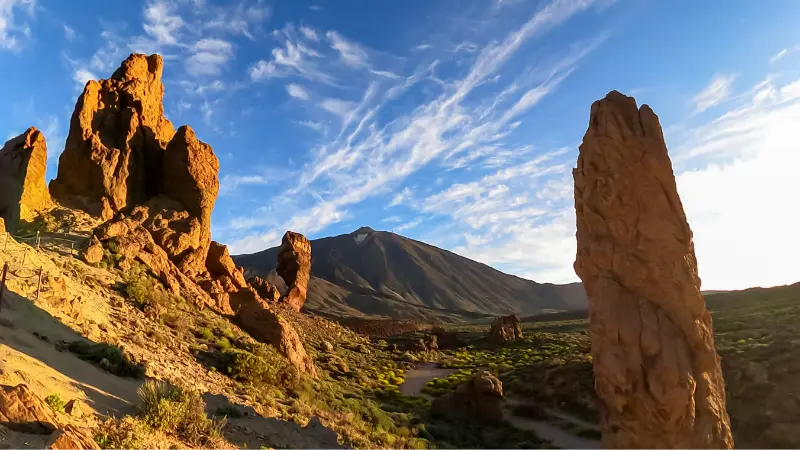
Sunset at Chipeque
Sunset can be spectacular when Teide catches warm light above cloud, but it also means the return drive happens in darkness. I bring a warm layer, because temperature drops quickly once the sun disappears, and I have the route home saved before phone signal becomes inconsistent.
I stay only as long as I am comfortable driving afterward. A viewpoint should not turn into a risky descent simply because the sky remained colourful for another ten minutes.
Photography tips
A telephoto lens compresses Teide and the cloud layer beautifully, while a wider lens includes pines and foreground. I expose carefully because bright cloud can fool automatic metering. A small tripod is useful after sunset if wind is moderate and space allows.
I keep equipment inside the viewpoint area and never step beyond barriers for an unobstructed composition. My Tenerife photography guide covers similar decisions at other mountain viewpoints.
Weather and clothing
Chipeque can be much colder and windier than Puerto de la Cruz or Santa Cruz on the same day. I carry a jacket even if I left the coast in shorts. In wet or foggy conditions, road visibility matters more to me than whether the viewpoint might clear later.
After storms or unusual weather, I check road and official alerts before driving high into the forest.
Combining Chipeque with other stops
I would combine it with La Esperanza, another high-ridge viewpoint or a Teide day rather than with distant southwest resorts. If I am coming from the north, La Orotava or Puerto de la Cruz can fit naturally before or after.

My best viewpoints in Tenerife helps build a route without turning the day into a sequence of car parks.
How I would plan it
For sunset I arrive well before golden hour, enjoy the changing cloud rather than chasing a single photograph, then descend before fatigue sets in.
I use the official Chipeque viewpoint page for the current location and facilities information.
When a disappointing forecast can still work
A cloudy forecast for Puerto de la Cruz does not necessarily mean Chipeque will be cloudy. The viewpoint can sit above the inversion layer. I check mountain forecasts and webcams where available, but I still accept that the final few kilometres may reveal conditions no app predicted perfectly.
A quiet alternative to attraction-heavy days
Chipeque works well when I want a memorable evening without tickets or a long hike. For accommodation on the northern side, I compare La Orotava accommodation with Puerto de la Cruz depending on whether mountain access or nightlife matters more.
What I would check before leaving
Before setting out for Mirador de Chipeque, I check the current weather, any trail or beach alerts, road access and the amount of daylight I realistically have left. Tenerife can change character quickly between the coast and higher ground, so I do not assume that conditions at my hotel describe the place I am about to visit. I save the route offline, carry more water than I expect to need and keep one nearby alternative in mind rather than relying on a single perfect plan.
How I fit it into a wider Tenerife itinerary
I would place Mirador de Chipeque on a day that already focuses on the same part of the island. That sounds obvious, but it prevents a lot of unnecessary driving. I prefer one strong natural experience plus a nearby town, viewpoint or meal rather than trying to cross Tenerife for a second headline attraction. This approach leaves enough time to stop when the light is good, deal with parking calmly and follow local instructions without feeling that the schedule is collapsing.
The pace I recommend for a first visit
For a first visit to Mirador de Chipeque, I deliberately allow more time than the minimum duration shown on a map. Natural places are enjoyable because I can slow down, look at the terrain and adapt to wind, cloud or sea state. Rushing encourages poor decisions, especially near exposed coasts or on volcanic ground. If the visit ends earlier than expected, I use the spare time for a café, a short village walk or another nearby stop rather than adding a distant attraction.

What I would avoid
I would avoid treating Mirador de Chipeque as a location that has to work in every condition. Strong sun, wind, swell, low cloud or a temporary closure can change the experience completely. I also avoid leaving marked routes for a better photograph, parking where access is clearly restricted and assuming that quiet places have no rules. Tenerife’s most memorable landscapes are often protected precisely because they are fragile, so the best visit is the one that leaves the setting looking unchanged.
A useful backup plan
My backup plan for Mirador de Chipeque stays geographically close. If the weather or access is wrong, I choose a nearby village, museum, promenade, sheltered beach or viewpoint rather than driving across the island. This makes the day more resilient and keeps the trip enjoyable even when the original idea has to change. Tenerife offers enough variety within each region that a cancelled walk or rough sea does not need to become a wasted day.
Why I verify operational details again
Conditions connected with Mirador de Chipeque can change after any article is published. Trail status, parking arrangements, lifeguard services, road restrictions and weather warnings are operational details rather than permanent facts. I use this guide to understand the place, then check the relevant official source shortly before going. That final check is especially important after storms, heat alerts, wildfires or periods of heavy swell.
A note on footwear and small practical details
For Mirador de Chipeque, small practical choices usually matter more than specialist equipment. I wear footwear that matches the surface, carry sun protection and keep hands free on rough ground. I also avoid bringing more gear than I need. A lighter bag makes climbs, steps and beach access easier, and it reduces the temptation to leave belongings unattended while I move closer to water or viewpoints.
Why I leave room for the unexpected
One of the reasons I enjoy Mirador de Chipeque is that the best moment is not always the one I planned. A cloud may lift, the light may improve, wildlife may appear or a quiet corner may simply deserve more time. I therefore avoid booking the next activity too tightly. Leaving an hour of margin is often what lets a natural place feel like an experience rather than another appointment on the itinerary.
My final rule for a better visit
My final rule for Mirador de Chipeque is simple: I would rather leave with one strong memory than with proof that I visited every nearby stop. I keep the route realistic, respect the setting and change plans when conditions suggest it. That approach usually produces better photographs, safer decisions and a much more relaxed day, while also leaving a reason to return to this part of Tenerife on a future trip.