
Lago Martiánez is one of the places that explains Puerto de la Cruz better than a normal swimming pool ever could: Atlantic water, volcanic textures, palms and César Manrique’s design all meet on the seafront.
Why Lago Martiánez is more than a place to swim
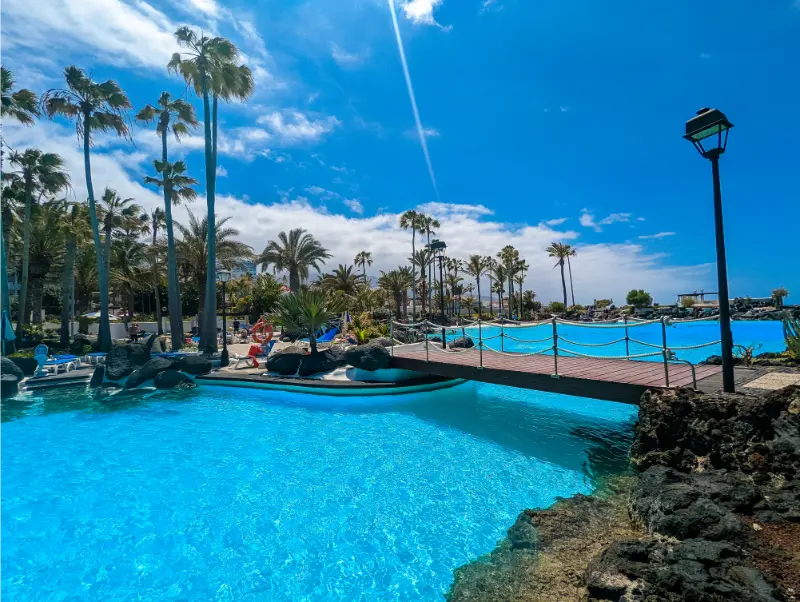
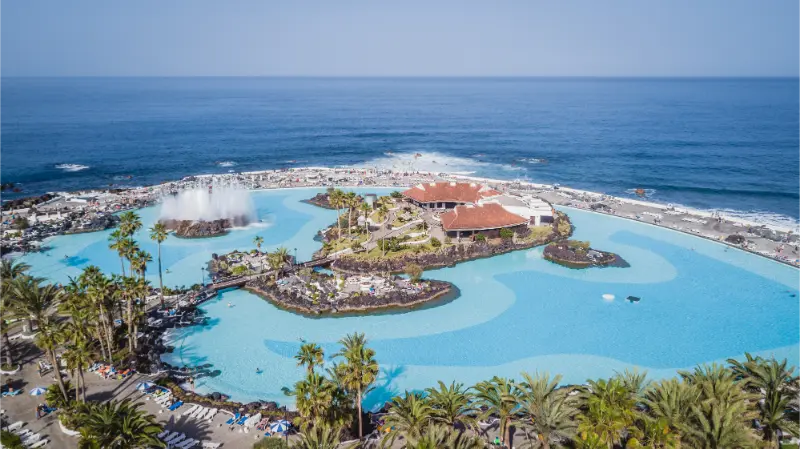
The complex sits beside the ocean in Puerto de la Cruz and is closely associated with the Canarian artist and architect César Manrique. I think of it as landscape architecture first and a bathing complex second. Curved pools, black volcanic material, white surfaces, gardens and sculptural elements turn the visit into part of the city’s cultural identity. In 1995 the complex was declared a Bien de Interés Cultural. That context changes the way I use it: I do not arrive only to find a lounger, but also to walk slowly, notice the relationship with the Atlantic and understand why the place became an icon of the north coast.
The setting on the Atlantic
The most memorable contrast is between controlled seawater pools inside the complex and the much more powerful ocean just beyond them. Puerto de la Cruz can have real Atlantic swell, which is one reason a designed bathing environment is useful here. Nearby Playa de Martiánez is a black-sand-and-pebble beach with a surf area and can experience strong waves, so I treat the beach and the Lago as two different experiences rather than interchangeable swimming spots.
César Manrique and the visual language
Manrique’s work across the Canary Islands often tries to make architecture feel like an extension of volcanic landscape rather than an object placed on top of it. At Lago Martiánez I look for the same vocabulary: lava-coloured rock, organic curves, palms, water, white surfaces and art integrated into movement. Even travellers who do not normally visit architecture attractions can appreciate this because the design affects how the day feels, where views open, where people pause and how the sea remains present.
How I would spend the time inside
I would not race immediately to the largest pool. I first make a short orientation loop, choose a base and then alternate swimming with walking. The complex rewards a few slow circuits because different angles reveal the seafront, Teide-side skyline on clear days and details that disappear when I stay in one place. Families can treat it as an easy pool day, while adults who enjoy design can make the visit partly architectural.
What changes the experience
Wind, cloud and air temperature matter more here than at a sheltered hotel pool. North Tenerife can be sunny and warm, but it can also feel cooler than Costa Adeje, particularly when a breeze comes off the Atlantic. I check the Puerto de la Cruz forecast on the morning itself. If conditions are grey but dry, the Lago can still work well; if the main goal is sunbathing, I stay flexible.

Combine it with Puerto de la Cruz
The best reason to dedicate a page to Lago Martiánez is that it sits inside a city-resort you can explore on foot. I would pair it with the promenade, the older streets and a meal in town rather than drive away immediately. My Puerto de la Cruz guide gives the wider context, while the Jardín Botánico guide offers a very different nearby half-day.
Current information
Lago Martiánez is still actively used as a cultural and event venue in 2026, not simply preserved as a historic design. Because opening arrangements and maintenance closures can change, I check the Puerto de la Cruz municipal information before the visit rather than publishing a fixed timetable here. The tourism authority continues to describe the complex as an iconic Manrique project on the Atlantic seafront.
Photography without losing the pool day
I get the best photographs by moving rather than trying to stage the entire visit from one lounger. Wide views show the relationship between pools and Atlantic, while lower angles bring out lava textures, palms and white sculptural forms. I photograph early, then put the phone away for a while. Reflections and moving water are usually more interesting than crowded midday scenes. Because the complex is also a working leisure facility, I avoid photographing other swimmers closely without permission.
Who I think will enjoy it most
Families appreciate a structured swimming environment, design fans see a major Manrique work, and couples can combine the pools with a long seafront lunch. It may be less compelling to travellers who want remote nature or snorkelling. I match the place to the traveller rather than calling every famous attraction “unmissable.”
How I fit Lago Martiánez into a Tenerife itinerary
I would not plan Lago Martiánez in isolation. I first look at the geography of the day and decide what belongs naturally before or after it. I would normally pair it with central Puerto de la Cruz, the seafront and one additional stop such as the Botanical Garden. I would not combine it with a long Teide drive unless swimming is only a brief add-on. That approach keeps driving or bus time under control and leaves enough margin for weather, queues, a longer lunch or simply staying somewhere because it is better than expected. For wider planning I use my Puerto de la Cruz travel guide and then build the day around one main experience rather than a collection of unrelated pins.
When I would go
For a pool-focused visit I prefer a settled, bright day and arrive early enough to choose my pace before the middle of the day becomes busier. Late afternoon can be beautiful, but I do not rely on it if swimming time matters. Tenerife is a year-round destination, but the best hour for a specific place can matter more than the best month. I think about light, heat, wind, crowds and whether the surrounding streets are lively or congested. I also check the exact local forecast instead of relying on a forecast for the island as a whole; altitude and exposure create very different conditions over short distances.
How long I would allow
For a genuine bathing day I allow at least half a day; for architecture, photos and a shorter swim I still give it two to three hours. I prefer a realistic visit that includes arrival, orientation and a few pauses. The number printed on a map rarely includes parking, walking from a bus stop, buying a ticket, using changing facilities or finding lunch. Building those small transitions into the plan is one of the easiest ways to make a Tenerife day feel relaxed rather than rushed.
Getting there without wasting half the day
The complex is on the seafront of Puerto de la Cruz and works particularly well for travellers staying in town because it can be reached on foot from many central hotels. From elsewhere on the island, buses and car are both practical depending on the base. If I use public transport, I check both the outward and return timetable before leaving, not when I am ready to go home. If I drive, I save a legal parking option and a second choice on the map. Tenerife distances can look short, but urban traffic, steep roads and limited parking can change the real journey time. My getting around Tenerife guide explains the wider trade-offs between car, bus and taxi.
What I would bring
Swimwear, towel, sunscreen, sandals with good grip and a light layer are my basics. I also bring a reusable water bottle and avoid carrying valuables I do not need. I keep the day bag light: water, sun protection, a charged phone, and a thin layer if the visit may continue into evening or a higher area. For swimming places I add footwear suitable for hot paving or rough surfaces and never assume lockers or shaded space will be available. For museums or religious buildings I prefer simple, respectful clothing and a small bag that is easy to carry.
Accessibility and travelling at a slower pace
The urban seafront setting is generally easier than a wild coastal charco, but I still confirm the current accessible entrances, pool access aids and changing facilities if they are essential to the visit. Accessibility is not only about a wheelchair symbol: slopes, cobbles, stairs, distance from parking, toilets and shaded seating all matter. When step-free access is essential I confirm the current arrangements directly before travelling. My accessible Tenerife guide is a useful starting point for broader planning.
Where I would eat nearby
Puerto de la Cruz has enough restaurants that I rarely feel forced to eat at the first convenient place. I prefer to walk a little away from the busiest seafront strip if I want a more local lunch. I usually separate the attraction from lunch unless there is a genuinely good reason to eat on site. That gives me more choice and prevents a queue at the café from dictating the day. I look for a local restaurant, bakery or simple bar within the same area and keep one backup saved. For context on island dishes and restaurant habits, see my what to eat in Tenerife guide and eating out in Tenerife guide.
Where to stay if this place is a priority
If Lago Martiánez is central to the holiday, staying in Puerto de la Cruz makes more sense than commuting from the south. I choose accommodation by map position rather than marketing description. A property that looks close can still be awkward on foot if there is a steep road, motorway barrier or long detour. I compare live options with Puerto de la Cruz accommodation and then cross-check the neighbourhood in my where to stay in Tenerife guide.
Common mistakes I would avoid
- Treating the complex as an ordinary hotel pool and missing the design.
- Assuming north-coast weather will match Costa Adeje.
- Trying to combine a full pool day with a packed cross-island itinerary.
- Ignoring strong ocean conditions at nearby Playa de Martiánez.
The common thread is simple: I try not to turn Lago Martiánez into a box-ticking stop. Tenerife rewards a little spare time, especially in places where the surrounding promenade, historic streets, gardens or coastline are part of the experience.
What I check on the day
Before leaving I verify the official opening or access information, local weather, any temporary closure and the route back. I especially check for maintenance notices or partial pool closures, because a large aquatic complex can change operations temporarily. I save the official page and any ticket or reservation offline. This takes only a few minutes and is much more reliable than assuming that an old screenshot, blog post or map listing is still correct.
My final take
I would recommend Lago Martiánez to travellers who want a relaxing day that still feels unmistakably Tenerife. It is most rewarding when I see the pools, the Atlantic and Manrique’s design as one experience rather than three separate attractions.
Frequently asked questions
Do I need to book in advance?
It depends on the venue and ticket type. I check the official page close to the visit; where timed tickets or guided experiences are offered, advance booking can be useful even if basic admission is available at the door.
Is it worth visiting if I only have a few days in Tenerife?
I would include it when the subject genuinely matches my interests and it fits geographically with the rest of the day. On a short first trip, I avoid adding an attraction simply because it appears on a long checklist.
Can I visit with children?
Usually yes, but I adjust the duration and expectations. A shorter, focused visit with food or outdoor time afterwards works better than making children absorb every exhibit or historical detail.