
The Jardín de Aclimatación de La Orotava is one of those Tenerife names that confuses first-time visitors: despite the historic name, the famous botanical garden is in Puerto de la Cruz.
Why the name says La Orotava but the garden is in Puerto de la Cruz
The garden was created by royal order of Carlos III in 1788 to acclimatise tropical plants before possible transfer to mainland royal gardens. Its historic name refers to the wider Orotava Valley; administratively the garden is in Puerto de la Cruz. Knowing that prevents a very practical navigation mistake.
A genuinely historic botanical garden
Government sources describe it as the second-oldest botanical garden currently existing in Spain after Madrid’s Real Jardín Botánico. The historic enclosure is around 20,000 square metres and holds mature tropical and subtropical collections developed over more than two centuries. The sense of age is one of its strongest qualities.
The plants I slow down for
I look for the monumental figs and other mature specimens rather than trying to identify everything. Collections include palms, bromeliads, aroids, mulberries and many tropical trees. The famous Ficus macrophylla subsp. columnaris is especially memorable for its aerial-root architecture. Barriers around major specimens are there to protect both roots and visitors, so I never step beyond them for photographs.
Current opening time
A recent Government of the Canary Islands visitor sheet lists daily opening from 09:00 to 18:00. Because institutional hours can change for works, holidays or operational reasons, I still confirm the current information before the visit rather than treating 18:00 as permanent.
How long I would spend
For a casual visitor, about 60–90 minutes can be enough to walk slowly and enjoy the strongest specimens. A plant enthusiast can easily stay much longer. I would not combine the garden with a tightly timed attraction immediately afterward; the pleasure is in stopping when a canopy, root system or flowering plant catches my attention.
Where it fits in a Puerto de la Cruz day
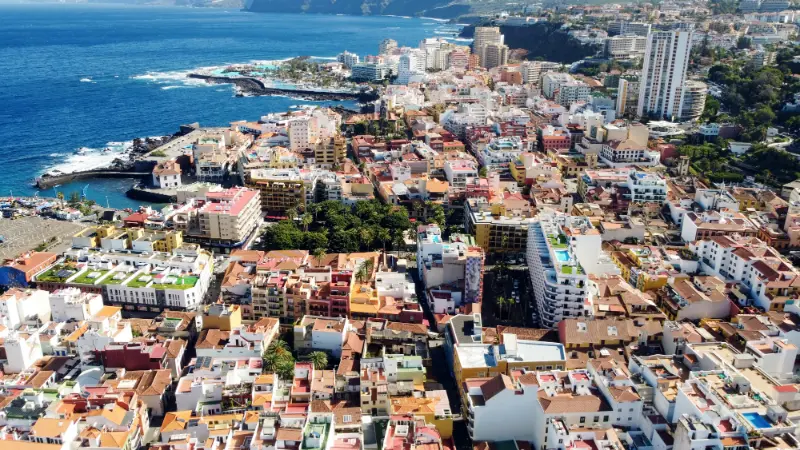
I pair the garden with my Puerto de la Cruz guide, choosing one other major stop rather than every attraction in town. It works particularly well on a cloudy north-coast day when a long beach session is less appealing.
Historic atmosphere versus the Palmetum
The Jardín Botánico feels older, denser and more enclosed than the Palmetum. The Palmetum tells a modern regeneration story and specialises in palms from islands; this garden is about acclimatisation history and mature tropical specimens. Plant lovers can justify both.
How much time I would allow
I would not rush the Jardín Botánico. For a focused visit I allow enough time to look rather than only photograph, and I add a buffer for the entrance, orientation and any temporary display or guided element. The right duration depends on interest: a specialist can spend much longer than someone adding it to a broader city day. I plan the rest of the day around one or two nearby places, not around an unrealistic chain of timed attractions.
How I fit it into the surrounding city
the Jardín Botánico works best when it is part of a coherent local route. I use my Puerto de la Cruz guide to decide what belongs before and after it, keeping lunch and transport on the same side of town whenever possible. This is especially useful in Santa Cruz, where several major cultural sites sit within a relatively compact urban area but traffic and parking can still waste time if I keep moving the car.
Tickets, opening hours and the one rule I never skip
Anything operational can change, so I verify the official website shortly before the visit. I do not build a trip around an opening time copied months earlier from a travel article. Temporary exhibitions, guided tours, holiday closures and special events can all alter normal access. When a timed activity matters, I book it; when the visit is flexible, I still save the official page on my phone.
Getting there and parking
For the Jardín Botánico, I decide whether public transport is simpler than driving. In central Santa Cruz and Puerto de la Cruz, walking from another attraction or using urban transport can remove the stress of finding a space. If I drive, I choose a public car park first rather than searching for free kerbside parking immediately beside the entrance. The wider transport picture is covered in my getting around Tenerife guide.

Accessibility and comfort
Most of the experience is a garden walk, so surface condition, route gradients and accessible toilets are more important than step-free access to one building. I verify current arrangements if mobility is a priority. I still verify the exact access route if step-free movement, seating, adapted toilets or assistance is essential. Accessibility can be affected by temporary works or by the route between the car park and entrance, not only by the building itself. My accessible Tenerife guide covers the broader island context.
Visiting with children
For children, the giant roots, unusual leaves and shaded paths can be more engaging than botanical labels. I set a short “find the strangest tree” challenge rather than turning the visit into a lesson. I avoid assuming that a place is either “for children” or “not for children”; the age, attention span and interests matter. A shorter visit with one clear objective often works better than forcing a family to complete every room or garden path. I combine cultural stops with an outdoor break, snack or nearby park when that helps the day feel balanced.
Photography without losing the experience
I take photographs at the Jardín Botánico where permitted, but I do not let the phone dictate the visit. I look for context — architecture, planting, light, material and scale — rather than photographing every information panel. In galleries, museums or performance spaces I respect any restrictions on flash, video or specific rooms. If a guided visit has special rules, the guide’s instructions take priority.
A rainy-day and hot-day advantage
the Jardín Botánico can be useful when Tenerife weather does not match a beach plan, but I still check conditions around the journey. On a very hot day, an indoor or shaded cultural stop can be a welcome reset; on a wet north-coast day it can rescue an itinerary. I keep the day flexible rather than moving across the island purely to chase a forecast.
Where I would stay
I would not choose a hotel solely for the Jardín Botánico, but if several nearby attractions matter, staying in the same urban area can be efficient. I compare current accommodation nearby with my where to stay in Tenerife guide, paying more attention to walkability, evening atmosphere and parking than to being a few hundred metres closer to one entrance.
Who I think will get the most from it
the Jardín Botánico is strongest for travellers who enjoy understanding Tenerife beyond beaches and viewpoints. I would include it when the subject genuinely interests me, not because every attraction needs to be checked off. A well-chosen museum, garden or cultural building can add more depth to a trip than another rushed stop, especially when it explains the island’s landscape, history or contemporary life.
What I check immediately before going
Before leaving, I check the official page for opening hours, ticketing, closures and temporary programming. I also check the route from my current location and one nearby alternative. This takes only a few minutes and is the best protection against outdated information. If the Jardín Botánico is the main reason for the day, I save proof of any reservation offline.
Official information I use before visiting
For current access, opening information and notices, I use Government/ICIA information about the Jardín de Aclimatación. I recheck it close to the visit because practical details can change after this article is published.
A simple half-day structure
If I only had half a day, I would make Jardín Botánico Puerto de la Cruz the anchor rather than the excuse for a complicated circuit. I would arrive early enough to avoid feeling rushed, spend time on the part that genuinely interests me, then add one nearby walk or food stop. I keep the final hour loose so a longer conversation, exhibition, view or lunch does not create stress. This is the way I prefer to travel in Tenerife: the plan has a shape, but it is not a timetable that punishes me for enjoying a place.
What I would do on a repeat visit
On a repeat trip, I would use Jardín Botánico Puerto de la Cruz as a reason to look at the surrounding area in more detail. First visits naturally concentrate on Teide, major beaches and the most famous towns. Later trips are where smaller museums, municipal centres, gardens and quieter streets become especially rewarding. I would check for temporary events, seasonal planting, a new exhibition or a local festival and let that determine the exact timing rather than repeating the same route from the first visit.
Responsible visiting
I try to leave Jardín Botánico Puerto de la Cruz and its surrounding neighbourhood exactly as I found them. In natural or planted spaces that means staying on paths, not collecting material and respecting barriers. In museums and historic areas it means following photography rules, keeping noise appropriate and treating residential streets as places where people live. Buying a coffee, lunch, local product or ticket where relevant is also a simple way to let some of the value of tourism remain in the area.