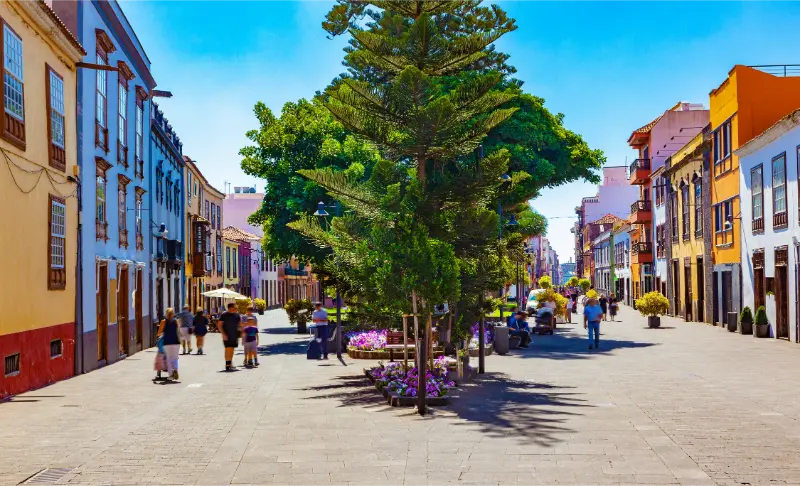
Iglesia de Nuestra Señora de la Concepción is one of the buildings that helps me understand the older “Villa de Arriba” side of La Laguna. Tourism material describes it as the first church founded in Tenerife and the mother parish from which later island parishes developed, although the earliest church stood in a different location from the present building. What I see today is the result of centuries of enlargement, reconstruction and restoration. The stone tower is the landmark, but I would not reduce the visit to climbing or photographing it: the changing fabric of the church tells a broader story about the growth of the city.
Quick visit facts
| Location | Historic centre of San Cristóbal de La Laguna |
|---|---|
| Present-site rebuilding | New three-nave church planned from 1511; major works completed in the 16th century |
| Tower | Current main construction 1694–1697 |
| Heritage protection | Historic-Artistic Monument from 1948; BIC protection expanded in 2012 |
| Visit type | Active church; tourist access should respect liturgical use |
From first parish to the present building
Local tradition links the earliest parish community to the first years after the Castilian conquest and the foundation of La Laguna. The tourism office notes that the first parish church occupied another site, while in 1511 a new three-nave temple was planned closer to the developing upper town.
Construction moved slowly and later centuries repeatedly altered the church. This is why I read the building as an architectural palimpsest rather than a perfectly preserved sixteenth-century monument.
The tower
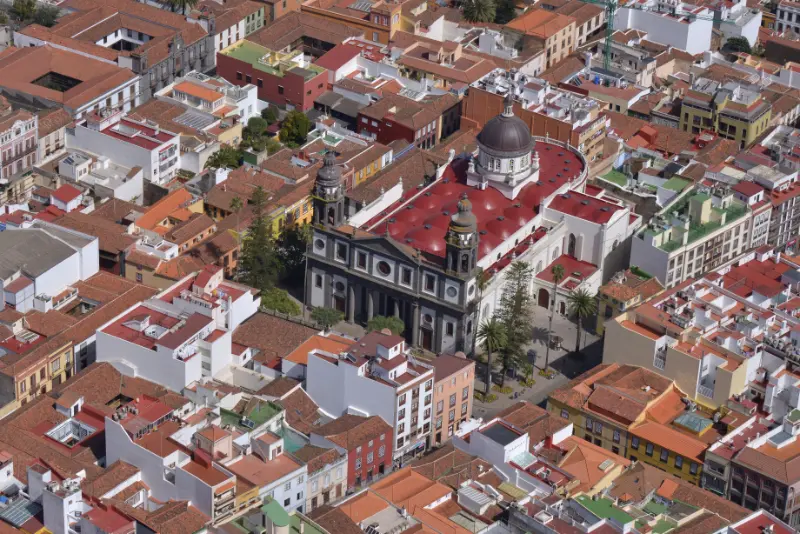
The tower is the most recognisable element. Earlier tower attempts dated to the sixteenth and seventeenth centuries, while the principal surviving construction was carried out from 1694 to 1697. Built in stone on a square base and finished with an upper pavilion, it anchors views along the surrounding streets.
At the base is the baptistery with a ribbed vault of Gothic inspiration. Even if tower access is not available when I visit, the exterior is worth walking around because the proportions change from different streets.
Inside: three naves and later interventions
The present interior has three naves separated by round arches on cylindrical columns of red tuff with varied capitals. The chancel was modified in the late eighteenth century, bringing neoclassical language into a building whose earlier layers include Gothic and Mudéjar references.
A roof collapse in 1972 led to restoration that changed some interior elements, while later conservation campaigns from 2000 onward have continued to protect the building. I would keep this complicated restoration history in mind rather than assuming every visible surface is ancient.
How I visit an active church
I do not treat an active parish like a museum with guaranteed entry every minute. Mass, funerals, weddings and parish activity can affect access, and exact tourist hours are not clearly published on the municipal heritage page I use for history. I therefore check locally on the day, dress respectfully and enter quietly if the church is open.
If access is limited, the exterior and tower still make the stop worthwhile as part of a La Laguna architectural walk.
How I would plan the visit
I treat this as a cultural attraction, not as a box to tick between two unrelated stops. The useful question is how much context I want before I arrive. If I already know the basic history of San Cristóbal de La Laguna, I can focus on details inside the building or site. If it is my first day in the area, I prefer to walk the surrounding streets first so the architecture, urban position and historical references make more sense when I enter.
I also leave a little flexibility around the visit. Cultural buildings in Tenerife can host services, rehearsals, exhibitions, private events, restoration work or municipal activities that temporarily change access. A plan with a 30–60 minute buffer is more realistic than an itinerary where every door has to open at the exact minute shown in an old search result.
Getting there without turning the visit into a parking problem
For central San Cristóbal de La Laguna sights, I generally prefer public transport or a single car park followed by walking. Historic centres were not designed around modern traffic, and driving from one monument to the next often wastes more time than it saves. If I am arriving from another part of Tenerife, I check the nearest tram, TITSA or municipal parking option before setting off and then build a compact walking loop.
If I want an early start or an evening event, I sometimes compare accommodation in San Cristóbal de La Laguna rather than drive across the island twice. That is not necessary for every visitor, but it can make a culture-heavy day much calmer, especially when the programme includes a performance, a temporary exhibition or dinner in the historic centre.

How long I would allow
I separate “door-to-door time” from “time inside”. A small museum can take 45 minutes but still occupy two hours once I include the walk from transport, reading exterior interpretation, a coffee and a nearby square. A theatre may be a ten-minute façade stop on an ordinary day and a full evening if I have a ticket. A church can be a brief architectural visit or much longer if I want to understand its chapels and historical layers.
My rule is to avoid stacking more than three substantial indoor visits in the same half-day. After that, attention drops and collections blur together. Tenerife’s historic towns work particularly well when I alternate an interior with streets, courtyards, markets, viewpoints or a meal.
Photography and respectful behaviour
I assume that photography rules can vary by room, exhibition and event. I look for signs before using a camera, keep flash off around artworks and documents, and never photograph people in a religious setting without permission. In theatres I do not assume that the rules for the lobby also apply during a performance. In active churches and convents, worship always takes priority over sightseeing.
I also travel light inside older buildings. Narrow corridors, historic furniture and delicate surfaces are easier to enjoy without a large backpack. If a site has staff at reception, I ask before leaning a bag against a wall, using a tripod or filming extensively. Those small habits protect the place and make the visit more comfortable for everyone.
Accessibility: what I check rather than assume
Historic architecture can create a mismatch between a site’s cultural importance and its physical accessibility. A restored building may have lifts and ramps; another may still have thresholds, steps or narrow historic openings. I check the current official accessibility information when mobility, stroller access or fatigue is important, and I contact the venue if a specific route through the building matters.
I also distinguish between getting to the entrance and seeing every space. A central pedestrian street can be easy to reach while an upper gallery, tower or heritage room remains difficult. That distinction is useful when planning with a wheelchair user, an older traveller or a young child.
Visiting with children
I would not automatically exclude a cultural stop from a family itinerary. The key is scale. One strong object, a courtyard, a fortress wall, a theatre interior or a story about a historical character can be more memorable to a child than a long sequence of display cases. I keep the visit shorter, explain what to look for before entering and give children a simple mission such as finding a coat of arms, a cannon, a painted ceiling or a particular architectural detail.
For very young children, I pair the indoor stop with a nearby square or park. That changes the rhythm of the day and makes it easier for adults to enjoy the site without expecting a child to behave like a museum researcher for two hours.
What I would combine nearby
I prefer combinations that explain the same place from different angles. A history museum plus a historic street, or a fortress plus the old port, usually feels more coherent than crossing the island for a second attraction just because it has a high review score. These clusters also reduce driving and make it easier to stop for lunch somewhere local rather than eating according to the car park.
Current status: what I would verify again
The municipal tourism page provides detailed history and heritage information but does not give a simple permanent tourist timetable. Because this is an active church, I would verify same-day access locally and never plan a tight itinerary around assumed opening hours.
Because this is information that can change, I save the official page on my phone and check it again on the morning of the visit. I do not rely on a photo of an opening-hours board from an old review, particularly around public holidays, Carnival, local fiestas or renovation periods.
Official source
For the latest practical information I use La Laguna Tourism’s official Iglesia de Nuestra Señora de la Concepción page rather than a third-party timetable.

Frequently asked questions
Is this the oldest church in Tenerife?
La Laguna tourism describes it as the first church founded in Tenerife and the mother parish, while also explaining that the earliest church stood on a different site from the present building.
When was the tower built?
The principal surviving tower dates from 1694–1697 after earlier tower constructions.
Can I always enter?
No. It is an active church, so services and parish use can affect access.
Is it protected heritage?
Yes. It was declared a Historic-Artistic Monument in 1948, with BIC protection expanded in 2012.
Final thoughts
La Concepción is most rewarding when I stop looking for a single construction date. The church grew with La Laguna, suffered failures, was rebuilt and restored, and still functions as a parish. That continuity is more interesting than a perfectly frozen monument—and the tower remains one of the historic centre’s essential visual markers.