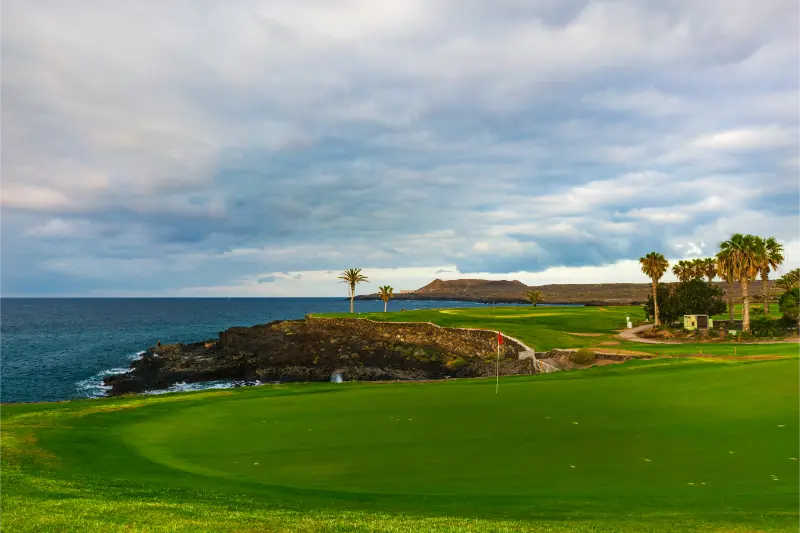
San Miguel de Abona is one of the most useful municipalities for understanding how different inland and coastal Tenerife can be within a short drive. The historic town sits above the southern resorts with traditional architecture and local streets, while the municipal coastline includes Golf del Sur, Amarilla Golf and Marina San Miguel. Official tourism information describes the historic centre as one of the best-preserved traditional urban cores in southern Tenerife. I would visit San Miguel not as a substitute for La Laguna or La Orotava, but as a quieter south-island day that combines heritage, volcanic scenery and an easy connection to the coast.
Start in the historic centre
The traditional centre follows the old royal road around Calle de la Iglesia. I begin near Casa del Capitán and continue toward El Calvario, the church of San Miguel Arcángel and the civic buildings along the route. The scale is small enough for an unhurried walk, which is exactly the appeal. I pay attention to doors, courtyards and the relationship between houses and the sloping street rather than looking only for monumental landmarks.
The town is inland and higher than the coast, so the air can feel different from Golf del Sur on the same day. I bring a light layer and do not assume resort weather applies at every elevation.
Casa del Capitán and local history
Casa del Capitán is one of the buildings that gives the old centre context. The official tourism material presents it as a historic residence now used as a museum, and I would check current opening hours before making it the centrepiece of the visit. Even when an interior is closed, the surrounding streets still make the trip worthwhile.
I like small local museums because they explain agricultural life and migration patterns that large resort areas often hide. San Miguel becomes more interesting once I see the coastal development as only one recent layer of a much older municipality.
Church of San Miguel Arcángel and the old road
The parish church anchors the historic centre and reflects the late Canarian Baroque tradition described by official tourism sources. I use it as the point around which to orient the walk rather than trying to follow a rigid sightseeing route. From there, short side streets reveal a quieter town that feels far removed from the TF-1 corridor.
I visit respectfully around services and local events. This is an active parish, not a museum set, and the best experience is often simply sitting in the square for a few minutes.
Golf del Sur and Amarilla Golf
The coastal part of San Miguel is much more international. Golf del Sur and Amarilla Golf are established golf areas with apartments, hotels and holiday infrastructure. My Tenerife golf guide covers course planning in more detail, but the important point here is that a traveller can stay on the coast and still reach the historic town quickly by car.

The environment is drier and more open than the inland streets. It suits travellers who want golf, marina activity and airport convenience more than a traditional beach-resort promenade.
Marina San Miguel and the volcanic shoreline
Marina San Miguel gives the coast a working leisure-harbour character and supports sailing, diving and other water activities. The shore around this part of Tenerife is volcanic and often more rugged than the broad beaches of Los Cristianos or Las Américas. I come for sea views, walking and activity access rather than expecting a long sandy bay.
For swimming I choose designated, safe access and pay attention to conditions. The south coast can be sunny but wind-exposed, particularly around open headlands.
Montaña Amarilla and nearby nature
Montaña Amarilla lies close to the municipal boundary and is one of the south’s most distinctive volcanic coastal landscapes. If I include it, I treat the protected terrain carefully and stay on appropriate paths. It pairs well with San Miguel because the contrast between ochre coastal geology and the traditional inland centre is exactly what makes this area interesting.
My Las Galletas and Costa del Silencio guide provides the practical coastal context if I want to extend the day eastward.
Market, food and local produce
The municipality’s farmers’ market is a useful stop when opening times align with the trip. Official tourism currently lists morning opening on selected midweek and weekend days, but I verify the schedule rather than hard-coding it into the itinerary. I look for seasonal fruit, vegetables, cheese, bread and local products rather than expecting a souvenir market.
This is also a good area to explore Canarian food away from the busiest resort strips. My Tenerife food guide explains dishes and ingredients worth recognising on menus.
Who should stay in San Miguel de Abona
I would stay here for golf, a quieter southern base, airport convenience or a longer trip with a rental car. Golf del Sur and Amarilla Golf have the most visitor infrastructure; the historic town is better for local atmosphere but has fewer tourist services. Travellers whose priority is a classic sandy beach and nightlife will find stronger choices farther west.

For prices and availability I compare San Miguel de Abona accommodation with El Médano and Costa Adeje before deciding what kind of south-Tenerife experience I actually want.
How I would plan it
I would give San Miguel half a day for the historic centre and another half for the coast rather than rushing both in two hours. The municipality makes sense when I allow its inland-coastal contrast to be the theme of the day.
Official San Miguel de Abona tourism information is worth checking for current opening hours, routes and municipal points of interest.
A simple day route
I would begin inland before the strongest afternoon heat, walk the historic centre, stop for lunch and then descend toward the marina and coast. If I want a sunset, I continue west only as far as necessary rather than turning the day into a full southern-island road trip.
Parking and getting around
A car is the easiest way to connect the old town with Golf del Sur and the coast. I still park considerately on narrow historic streets and walk the final section when possible. Buses serve the municipality, but combining several dispersed points takes more timetable planning than visiting one compact resort.
Planning San Miguel de Abona around the rest of the trip
I would not let San Miguel de Abona dominate every day of the holiday. Tenerife works best when active or detailed plans are balanced with a slower meal, a short walk or time by the sea. I group nearby places together, leave a realistic margin for parking and changing conditions, and avoid crossing the island simply to add one more stop. That makes this part of the trip feel intentional rather than squeezed between unrelated attractions.
What I check the evening before
The evening before this part of the trip, I confirm weather, access, opening information and the exact route from my accommodation. For San Miguel de Abona, small practical changes can matter more than they appear on a static itinerary. I save essential information offline, charge the phone and keep a nearby alternative in mind. That preparation means a closure, stronger wind or slower traffic changes the plan without ruining the day.
How I keep the day geographically sensible
I build this day around one section of Tenerife. Even when san miguel de abona guide: historic centre, golf del sur and local tenerife sounds easy to combine with several famous attractions, mountain roads and elevation can turn short map distances into long travel times. I prefer adding one nearby village, beach, viewpoint or lunch stop. The result is less time in the car and more time actually experiencing the area.

The pace I recommend for a first visit
For a first experience of San Miguel de Abona, I deliberately leave more time than the minimum suggested by a map or booking page. I want room to stop, understand the setting and adapt to local conditions. Tenerife rewards that slower approach because weather, light and atmosphere change quickly. Finishing with spare energy is more useful than proving that I managed to fit another distant attraction into the same day.
A useful backup plan
My backup plan for San Miguel de Abona is always something close by and simple: a town centre, sheltered café, promenade, museum, market or viewpoint that does not depend on the same conditions. I do not choose an alternative on the opposite coast. Keeping the backup local prevents a weather change or closure from becoming an exhausting cross-island drive and makes the itinerary much more resilient.
Why I would verify details again on arrival
Information connected with San Miguel de Abona can change after an article is published, especially where permits, natural areas, operating hours or transport are involved. I therefore use this guide to understand the trip and then verify the final operational details shortly before going. That habit is more reliable than treating any travel article, including this one, as a permanent timetable.
What I would avoid
I would avoid turning San Miguel de Abona into a race against the clock. The common mistakes are leaving too late, adding distant stops, relying on a single parking option and assuming conditions will match the coast where the day began. A simpler route with time for one proper break is usually more memorable. It also leaves enough flexibility to follow local signs and instructions instead of feeling pressured by a schedule.