Tenerife’s natural pools and volcanic charcos are one of the best ways to understand the island’s coastline. Instead of a conventional sandy beach, you swim in seawater held between lava formations, sometimes in a carefully adapted pool with steps and facilities and sometimes in a much wilder rock basin shaped by the Atlantic. The photographs can make every charco look calm; reality is more nuanced, because waves, tides and local closures decide whether a place is suitable on a particular day.
I therefore plan natural-pool days differently from beach days. I choose one or two places, check conditions, keep an alternative nearby and never assume that a rock barrier makes the water automatically safe. The official Tenerife tourism site maintains a useful overview of natural pools and charcos around the island.
Why Tenerife has so many natural pools
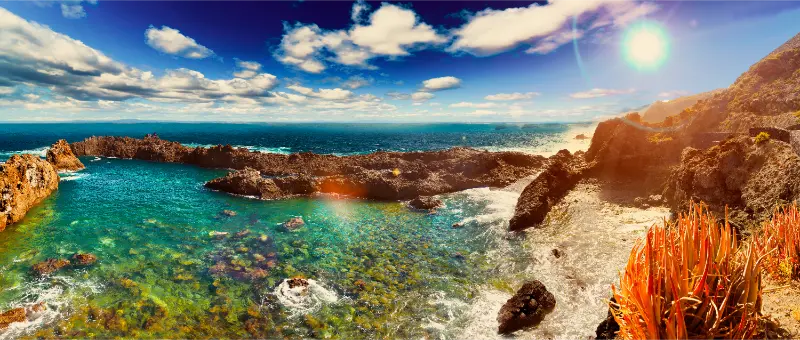
Volcanic eruptions created an irregular coast of lava flows, ledges and cavities. In many places the sea enters these formations and leaves behind protected or semi-protected pools. Some were later adapted with steps, terraces and changing facilities, while others remain almost completely natural. That distinction matters because the level of comfort and supervision varies enormously.
I like natural pools because they combine swimming with geology. You can literally see how lava met the ocean. But I also respect them more than a hotel pool: a large wave can cross a wall that looked high a minute earlier. My rule is to observe the water before entering and follow any local signs, barriers or staff instructions.
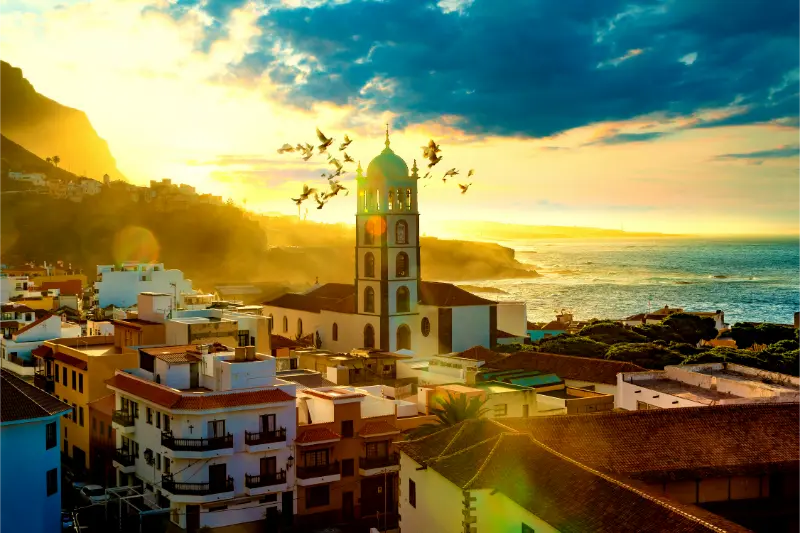
El Caletón in Garachico
El Caletón is the natural-pool experience I recommend most often to a first-time visitor because it sits in the historic town of Garachico. The pools are formed in lava on the waterfront, so you can combine a swim with old streets, churches, cafés and viewpoints without dedicating the entire day to bathing.
Garachico was dramatically reshaped by the 1706 Trevejo eruption, and the volcanic coast is part of the town’s identity. On a calm day, El Caletón can feel surprisingly accessible compared with wilder charcos. On a rough day, however, sections may be unsafe or closed. I never climb around barriers for a photograph. My Garachico guide covers the town in more detail.
Bajamar pools
Bajamar, on the north coast near La Laguna, has adapted seawater pools that are easier to understand for families than an undeveloped rock charco. The setting still feels strongly Atlantic, but there are structured bathing areas and a promenade. I like Bajamar when I want the natural-pool atmosphere without the same level of scrambling over rocks.
The north coast is exposed, so waves can be impressive even when the pool itself looks protected. That is part of the visual drama, but it is also why local safety instructions matter. I check the sea first, then decide how long to stay rather than committing the entire afternoon in advance.
Jóver and the northeast coast
Jóver is another place I consider when exploring the northeast. It feels less like a major tourist attraction and more like a local coastal stop, which is exactly the appeal. The trade-off is that services and parking can be more limited, and a place that feels wonderfully quiet at one hour can become awkward if everyone arrives at once.
I would combine Jóver with La Laguna, Bajamar or Punta del Hidalgo instead of driving from the south solely for the pool. That produces a richer day and gives me alternatives if the sea is not cooperative. For the cultural half of the itinerary, see my La Laguna guide.
Charco del Viento and other north-coast rock pools
The coast around La Guancha, Icod and neighboring municipalities contains beautiful volcanic bathing places, including Charco del Viento. These are the locations where I pay the closest attention to swell and access. A wild charco can look completely different depending on tide and ocean energy, so yesterday’s social-media video is not a safety forecast for today.
If the sea is active, I switch the plan to viewpoints, towns or a conventional beach. There is no prize for entering a natural pool in marginal conditions. The north is full of alternatives: Icod de los Vinos, La Orotava, Puerto de la Cruz and Garachico all work well as backup sightseeing.
Natural pools near Los Gigantes and the west
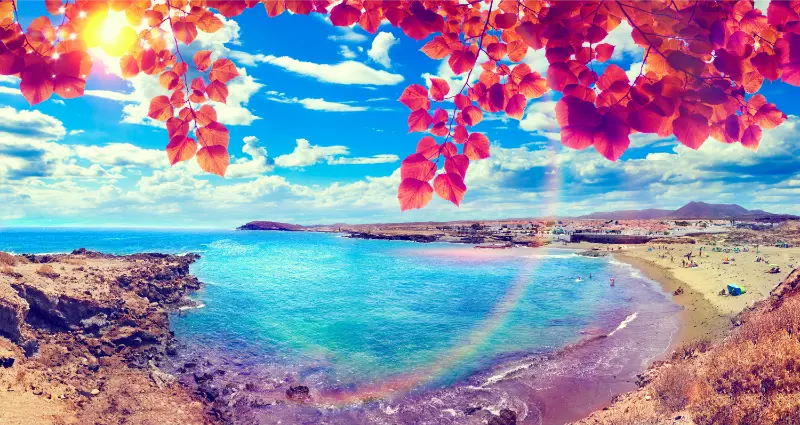
Western Tenerife also has volcanic bathing areas and rock pools, although I choose carefully because exposed coastlines can receive strong swell. Around Los Gigantes and Puerto de Santiago, the cliffs are the main attraction, and I prefer to make swimming a bonus rather than the only purpose of the day. If conditions are wrong, a coastal walk or whale-watching trip can replace the swim.
My Los Gigantes guide explains how I structure a west-coast day without overloading it. This is particularly useful if you also want to see Masca or Punta de Teno.
How I check safety before swimming
I look at the ocean for several minutes before approaching the water. I watch where waves break, whether water is washing across the pool edge and whether local swimmers are avoiding a section. I obey closure signs and do not assume that good swimmers are immune to impact from waves or slippery rock.
Footwear matters too. Volcanic surfaces can be sharp, wet algae can be extremely slippery and access ladders may be exposed to surge. Water shoes can help in suitable places, but they do not make dangerous sea conditions safe. With children, I choose adapted pools, stay within arm’s reach where appropriate and avoid wild charcos in rough weather.
What to bring
- Secure footwear for wet volcanic surfaces.
- A towel and dry layer, especially on the breezier north coast.
- Water and sun protection.
- A small waterproof bag for essentials, while leaving valuables at the accommodation.
- A flexible itinerary with a nearby town or beach as Plan B.
Natural pools versus beaches
I do not see one as better than the other. Beaches such as Las Teresitas, El Médano or the southern resort bays are easier for long swimming and sunbathing days. Natural pools are more about landscape and the sensation of being inside Tenerife’s volcanic coast. On a one-week trip I would include both.

If you are choosing between locations, my best beaches in Tenerife article covers the conventional options, while this guide is for days when rock, lava and the Atlantic are the main attraction.
Best natural-pool itinerary in the north
A relaxed route could start in La Laguna, continue to Bajamar for a swim if conditions are good, then follow the north coast on another day toward Garachico and Icod. I would not try to visit six charcos in one day. The pleasure comes from staying long enough to swim, dry off and explore the surrounding town.
For travellers using a rental car, I also avoid leaving bags visible in the vehicle while swimming. Natural pools often involve parking a short walk away, and a car full of luggage is unnecessary risk. My Tenerife by car guide includes broader road-trip and parking advice.
Where to stay
Puerto de la Cruz is a good base if north-coast pools are a priority because it puts several towns within manageable reach and gives you restaurants and evening life afterward. La Laguna is better for the northeast, while Garachico suits a slower rural-style trip. The south is still possible, but you will spend more time driving.
You can compare Tenerife accommodation and then judge the route from the exact property rather than the resort name. On Tenerife, altitude and winding roads can make apparently short distances misleading.
Frequently asked questions
Are Tenerife’s natural pools free?
Many are free public bathing areas, but facilities and access arrangements vary. I always check the current local information for the specific pool.
Are they safe in winter?
Safety depends on the sea on that day, not simply the season. Winter can bring energetic Atlantic swell to the north coast, so flexibility matters.
Which pool is easiest for a first visit?
I like El Caletón because it combines well with Garachico, and adapted complexes such as Bajamar are more straightforward than wild rock pools.
Can children use them?
Some adapted pools can work very well for families in calm conditions. Wild charcos require much more caution and are not places where I would relax supervision.
What is the main rule?
If the ocean looks wrong, do something else. Tenerife offers enough towns, beaches and viewpoints that there is never a reason to force a swim.
How I choose a pool on the day
I make the final choice in the morning rather than weeks in advance. I check the weather on the specific coast, look at sea conditions and then decide whether I want a structured pool such as Bajamar or a wilder charco. If I am travelling with older relatives or children, I give accessibility and easy entry far more weight than how photogenic the rocks look online.
I also time the visit around the rest of the day. A natural pool is ideal after sightseeing because you can swim for an hour, dry off and continue to dinner without committing to a full beach day. On the north coast I keep a dry change of clothes in the car because wind can make wet swimwear uncomfortable quickly. This simple flexibility is what turns Tenerife’s charcos from a risky checklist into one of the island’s most enjoyable coastal experiences.