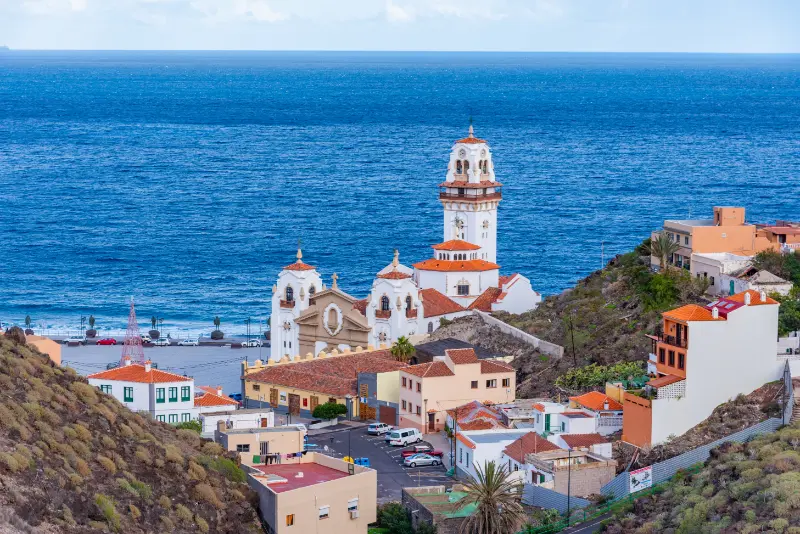
Dominican Convent Candelaria is one of those Tenerife places I include when I want a trip to go beyond beaches and headline attractions. It is specific enough to reward a curious visitor, but it works best when connected with the surrounding town, landscape and local history rather than treated as an isolated pin on a map.
In this guide I separate documented facts from practical planning. Historical and descriptive details come from official Tenerife tourism sources; suggestions about timing, combinations and pace are my travel-planning approach. I do not invent fixed opening hours, guaranteed access, prices or services when the responsible source does not publish dependable current information.
At a glance
| Where | Paseo San Blas, 7, beside the Basilica of Candelaria |
|---|---|
| Best for | religious history, pilgrimage context and the story behind the sanctuary complex |
| Time to allow | 20–40 minutes for the exterior and context, longer with the basilica and Cueva de Achbinico |
| Best approach | Combine it with nearby heritage or landscape stops, verify current access and leave room for local events, traffic or weather. |
Why this place deserves a dedicated guide
Tenerife is often planned through a familiar set of names: Teide, Anaga, Los Gigantes and the resort coast. Those places deserve attention, but they do not explain the whole island. Smaller civic buildings, houses, churches, plazas and living heritage sites show how communities developed and how people used the landscape long before modern tourism.
Dominican Convent Candelaria belongs to that second layer of the island. I would not oversell it as a universal must-see. Its value comes from context, especially when I place it inside a coherent half-day route through the same municipality. That is also a better way to travel: less driving, more walking and more time to notice details.
This style of planning is especially useful in Tenerife because short map distances can hide steep roads, difficult parking and large altitude changes. I prefer one compact cluster over a checklist that jumps from north to south and back again.
What the official record confirms
- The Dominican friars have been responsible for the care of the Virgin of Candelaria since 1530.
- The present convent was built fourteen years after the earlier building was left in ruins by a fire in 1789.
- The convent later suffered serious damage in the same storm associated with the disappearance of the original image of the Virgin.
- After the Mendizábal confiscations the Dominicans left, the building later served as a prison, and the friars returned in 1922; the former chapel is now used as an events room and small auditorium for sacred-music concerts.
Why the convent changes the way I understand the basilica
Visitors naturally focus on the image of the Virgin and the basilica itself, but the Dominican presence explains how the sanctuary was maintained, organised and renewed over centuries. The convent is therefore not just an adjacent building. It represents the institutional history behind one of the most important pilgrimage destinations in the Canary Islands.
The sequence of fire, storm damage, confiscation, alternative civic use and eventual Dominican return gives the site a much more complicated biography than a simple “historic monastery” label suggests. I find that chronology useful because it shows how religious buildings can change function dramatically while remaining central to local identity.
I keep in mind that this is an active religious residence. I do not expect unrestricted access to residential areas, and I distinguish the public sanctuary zone from spaces used by the community. If there is a concert or cultural event in the former chapel, I check the current programme and entry arrangements rather than assuming access.
What I would look for during the visit
- The physical connection between convent and basilica.
- Architectural evidence of rebuilding and later adaptation.
- The former chapel area when publicly accessible for cultural events.
- How the convent sits within the pilgrimage route linking Plaza de la Patrona and Cueva de Achbinico.
How I plan access
I enter the official place name in navigation and then use local signs for the final approach. In historic centres I would rather park legally a little farther away than squeeze into a narrow street, block a doorway or stop on a bend. A short walk usually improves the visit because it reveals the surrounding urban fabric.
For buses I check TITSA on the actual travel date. Routes, frequencies and stop patterns can change, and a stop that looks close on a map may involve a steep climb. I also separate “I can reach the location” from “the interior is open”. Working churches, civic buildings, cultural rooms and historic houses can follow local schedules or close for events and maintenance.
Best time of day
For compact heritage stops I usually prefer the morning. Streets can be calmer, light is often comfortable for walking and I have more flexibility if one interior is closed. Late afternoon can also work well for plazas and viewpoints, especially when the site opens toward the coast or surrounding landscape.
Tenerife’s microclimates matter even on simple urban days. A cool morning in the north can become bright and warm quickly, while the southeast may feel much drier. I carry water and sun protection, and I avoid building an itinerary that depends on one exact weather condition.
How I connect this stop with the rest of Tenerife
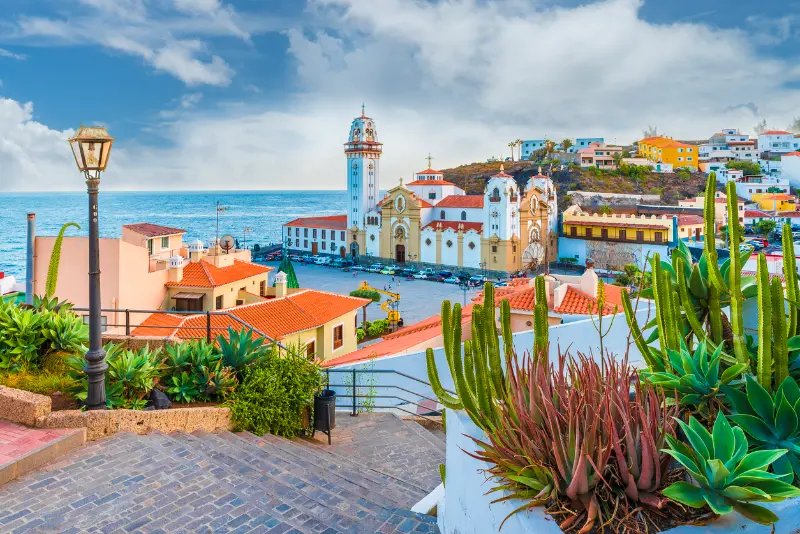
The easiest way to make this visit worthwhile is to keep the day geographically coherent. In the same broader cluster I would consider Basílica de Candelaria guide, Plaza de la Patrona de Canarias, Old Town Hall Candelaria, Cueva de Achbinico guide. These are options, not a checklist to complete at speed.
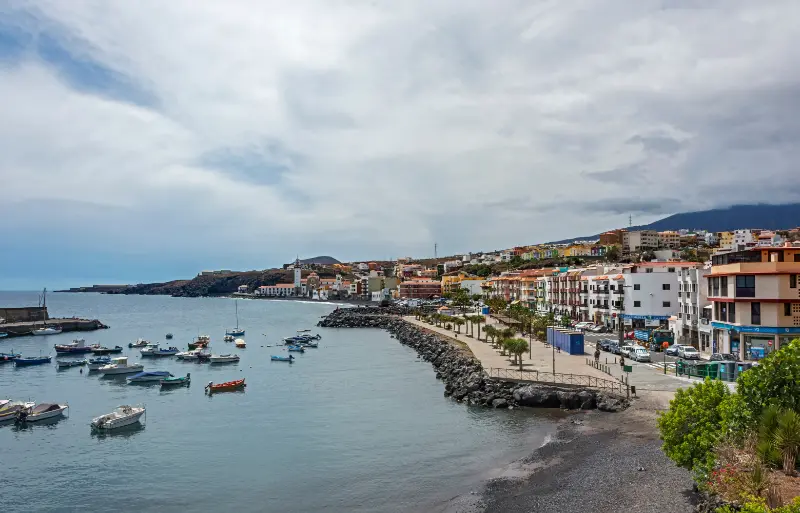
When I have a car, I group stops by municipality and altitude. Without a car, I simplify even more: one town with several nearby points is usually a better day than trying to reproduce a driving itinerary by bus. This also leaves time for cafés, small shops and unplanned discoveries.
How much time I would really spend here
The headline time in the table is deliberately modest. Small heritage sites do not become more valuable because I spend two hours staring at them. I read the story before arriving, notice the important details, then let the wider neighbourhood complete the visit.
For photographers or architecture enthusiasts I would add time, especially if the light is difficult or the site sits inside a larger historic ensemble. Families may move faster, while travellers with reduced mobility may need extra time to negotiate paving, slopes or parking. I prefer flexible ranges to false precision.
Food, breaks and local spending
I leave part of the day unscheduled for a café, bakery, guachinche, small restaurant or picnic depending on the area. Local spending is most useful when it fits the route naturally rather than when I chase a famous venue across the island. In smaller towns I also check opening patterns because kitchens and shops can close between meal periods or on weekly rest days.
I avoid assuming that every historic plaza has toilets, shade or a full set of visitor services. A bottle of water, comfortable shoes and a small amount of flexibility solve many minor problems before they become annoying.
Where to stay
If this municipality is going to be more than a quick day trip, I compare current accommodation on Booking.com. I look closely at the exact map position, parking, elevation and recent guest comments because accommodation names do not always tell me how convenient the property will be for the particular village or coast I plan to explore.
For a first Tenerife trip I still choose my base according to the majority of my itinerary, not one minor attraction. A good base reduces driving over the entire holiday and makes it easier to revisit an area at a different time of day.
Activities and tours elsewhere on Tenerife
A small local stop often pairs well with one larger organised activity on another day. I use the following widget to compare current tours and experiences, but I avoid stacking a long excursion immediately before or after a multi-stop driving day.
Accessibility and comfort
Accessibility varies between old streets, plazas, historic buildings and active civic or religious spaces. A place described as easy to reach does not automatically have step-free interior access, accessible toilets or reserved parking. Travellers who need specific access features should verify them with the responsible venue or municipality before relying on the visit.
Comfortable shoes are useful even for short historic-centre walks because paving can be uneven. I also plan for shade and heat rather than assuming an urban stop is effortless. A few simple preparations make the difference between a relaxed route and one that feels rushed.
Responsible visiting
Small places feel visitor pressure quickly. I keep voices low near homes and places of worship, park only where legal, avoid drones unless every relevant rule allows them and never enter private land because a historic property looks accessible. At active public buildings I respect staff, queues and restricted areas.
Photography should not disrupt the place. I avoid photographing worshippers at close range without permission, keep tripods out of narrow passages and remember that a town hall, parish building, private house or village street is not a studio set.
A simple half-day plan
- Start with the main stop while the area is relatively quiet.
- Spend enough time to understand the documented story rather than taking one photograph and leaving.
- Add one or two nearby places from the same cluster instead of driving across the island.
- Pause for coffee, lunch or a local shop where it fits naturally.
- Keep the final stop optional so access changes, traffic or local events cannot ruin the day.
This loose structure is more resilient than a minute-by-minute schedule. It also gives me room to stop when I discover a viewpoint, market, bakery or street detail that was not on the original plan.
Frequently asked questions
How long have the Dominicans cared for the Virgin of Candelaria?
The official tourism source gives 1530 as the beginning of their responsibility for the image.
What happened in 1789?
The earlier convent was left in ruins by a fire, and the later building was constructed fourteen years afterward.
Did the convent ever have a non-religious use?
Yes. After the Dominicans were forced to leave during the confiscations, the building was later used as a prison.
When did the Dominicans return?
They returned in 1922 and again took responsibility for the sanctuary.
Official information
For documented background and any current operational information, I check the official Turismo de Tenerife listing for Dominican Convent Candelaria shortly before travelling. Same-day municipal information, event arrangements, restoration work, weather and access notices take priority over an evergreen travel article.
Final thoughts
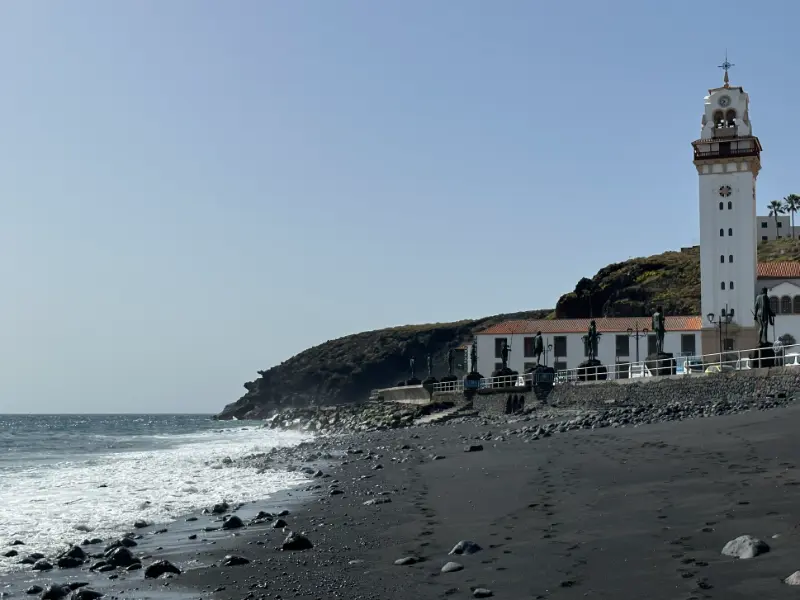
I would include Dominican Convent Candelaria when it fits the surrounding route and the interests of the people travelling with me. It is not about collecting another pin on a map. It is about understanding one more layer of Tenerife and connecting that layer to the community and landscape around it.
My preferred approach is simple: know the key story before arriving, stay flexible about access, respect the place as part of local life and combine it with nearby stops. Done that way, even a small heritage site becomes a meaningful part of a much richer Tenerife trip.