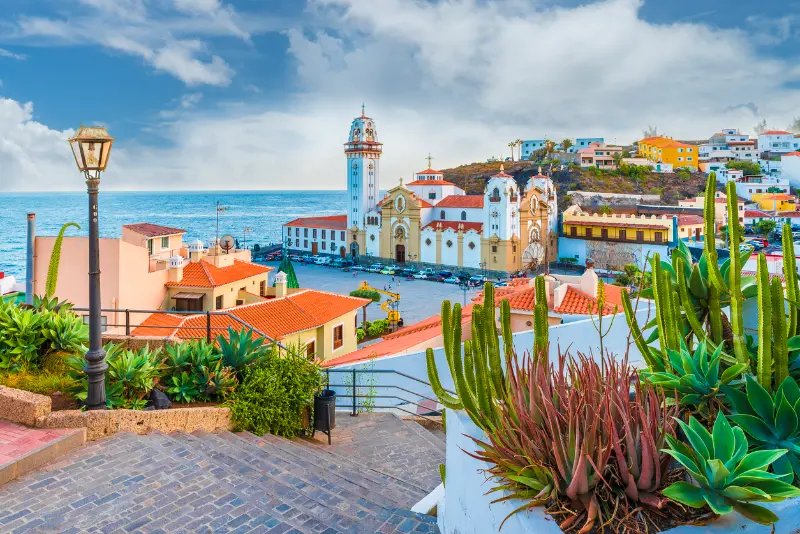
Cueva de Chinguaro Güímar is a focused heritage stop in Güímar for travellers who want to understand the town beyond its headline sights. I use it as part of a connected local walk rather than as an isolated pin on the map.
At a glance
| Place | Güímar |
|---|---|
| Address | Camino El Taro, 38500 Güímar |
| Best for | History, architecture, local culture and a slower town walk |
| Time to allow | 30–60 minutes for the site; 2–3 hours for the wider local cluster |
| Planning rule | Check current access before travelling and combine it with nearby places |
Why I would include it
Cueva de Chinguaro is one of the places where Tenerife’s Indigenous Guanche history, later Christian devotion and modern heritage interpretation overlap. I approach it carefully because the story is culturally significant and easily reduced to a simplified legend. The official tourism record identifies the cave as a historic site associated with Mencey Acaymo and with the earliest veneration of the image later known as the Virgin of Candelaria.
What makes this stop useful is context. Tenerife’s best-known attractions can dominate an itinerary, but smaller heritage sites explain how towns actually developed: where people worshipped, learned, worked, stored crops, managed civic life or adapted older buildings to new uses. I use this page as a layer beneath the general destination guide, not as a replacement for it.
History and context
Cueva de Chinguaro is classified as a historic site and is considered archaeologically important.
According to the official Tenerife tourism account, historians identify it as the cave-palace associated with Acaymo, mencey of Güímar.
The same official account states that Guanches venerated the image later identified as the Virgin of Candelaria and associated it with the Indigenous figure Chaxiraxi.
Chinguaro is therefore presented as the first sanctuary connected with the Virgin of Candelaria in the Canary Islands before the later cult centre developed in Candelaria itself.
The site is best understood together with Candelaria and the broader Güímar Valley rather than as an isolated archaeological curiosity.
How I approach the Guanche and Christian layers
I avoid presenting the encounter between Guanche belief and Christian interpretation as a neat one-line conversion story. The official account reflects a later religious tradition, while the archaeological and Indigenous context deserves its own respect. I keep the wording careful and distinguish documented heritage interpretation from assumptions about what every person in the fifteenth century believed.
The physical simplicity of a cave can make the site feel less impressive than a basilica, but that is exactly why context matters. Chinguaro helps explain how sacred geography can begin in a modest natural space and later move into formal architecture, pilgrimage and civic identity.
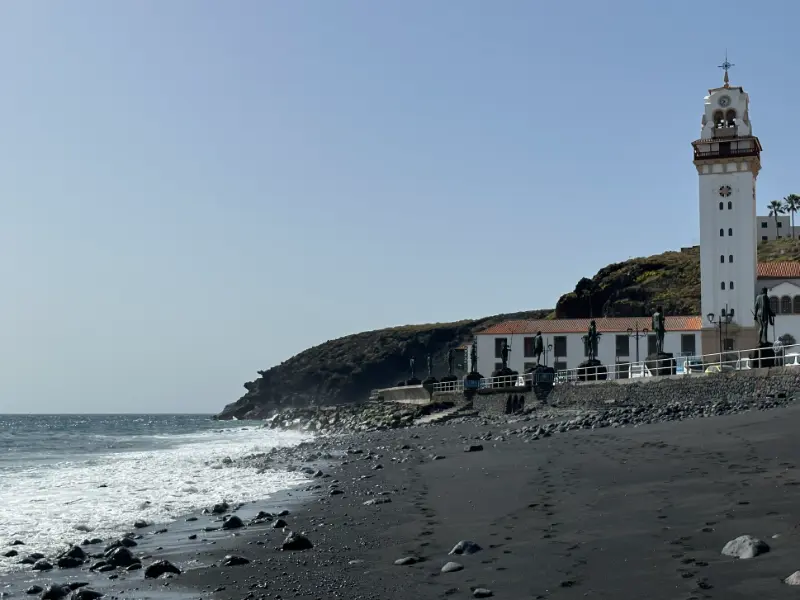
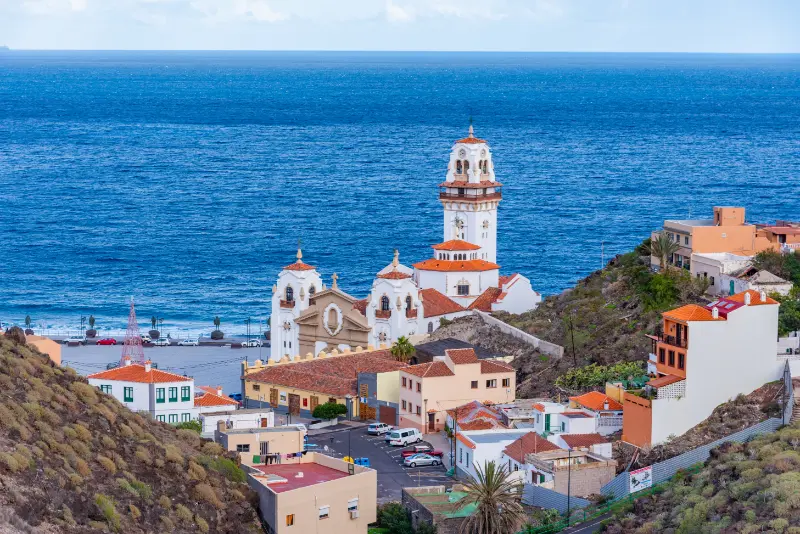
For me the strongest itinerary links Chinguaro with the Basilica of Candelaria and Cueva de Achbinico on another stop or the same day. Those places allow the story to be followed geographically instead of compressed into a museum-style summary.
How I fit it into a half-day
I combine Chinguaro with central Güímar, then continue to Candelaria if I want to follow the religious-historical thread. If the main goal is volcanic nature, I stay in the Güímar municipality and add the Malpaís instead. I would not squeeze Chinguaro, the pyramids, a three-hour hike and Candelaria into one short winter day.
For planning the surrounding area, I would keep these guides open:
What this stop adds to a Tenerife itinerary
A long Tenerife trip becomes much more interesting when the days do not all have the same rhythm. Teide, Anaga, beaches and major attractions are important, but they are visually and logistically intense. A smaller heritage stop in Güímar creates contrast. I can spend part of a day walking, looking at materials and reading the town before returning to the coast or mountains.
It also helps distribute time beyond the island’s busiest visitor zones. That does not mean searching for somewhere merely because it is “hidden”. These are established local places with documented history. The point is to understand them on their own terms rather than turning them into another checklist of secret spots.
I find this particularly useful for repeat visitors. Once the headline attractions are familiar, detailed town clusters make Tenerife feel much larger. Two churches ten kilometres apart may share materials and devotional traditions but have completely different histories of patronage, rebuilding and community use.
How I plan the visit
I treat this as a heritage stop, not an attraction with a guaranteed theme-park timetable. Before travelling, I check the official page and, when relevant, the municipality’s current cultural programme. Churches can close for services, funerals or local celebrations; exhibition spaces can open only when an event is running; historic houses can have maintenance periods. A current check is much more useful than an old timetable copied from another blog.
I also avoid building a long cross-island drive around one small monument. The value comes from combining several places in the same municipality. That approach reduces parking, gives me time for a coffee or lunch, and makes the historical context much clearer. If the interior is unexpectedly closed, the day still works because the surrounding streets, landscape and nearby sites remain part of the plan.
For a relaxed visit I allow roughly 30–60 minutes for the place itself, more if there is an exhibition, guided activity or religious art I want to study. The wider historic-centre circuit normally deserves at least two hours. I would rather see three connected places properly than photograph eight doorways and remember none of them.
Getting there and parking strategy
For these smaller towns I prefer one parking decision followed by walking. Driving from one nearby monument to another usually saves little time and can create more stress on narrow streets. I choose a legal public parking area or street space where permitted, then cover the centre on foot. On market days, festivals and religious feast days, I expect traffic arrangements to change.
If I am travelling without a car, I check TITSA’s current journey planner rather than relying on route numbers copied into an old article. Bus connections around the metropolitan north and the main TF-5 corridor are generally useful, while Isla Baja journeys can take longer. The key is to check the return connection before I begin a rural or coastal extension.
Best time of day
For a town-centre heritage walk, I prefer the morning or later afternoon. Midday can be warm on exposed squares, while some small businesses and cultural spaces may have limited opening patterns. In northern Tenerife, cloud can arrive even when the south is sunny, so I carry a light layer rather than assuming resort weather applies everywhere on the island.
Weekdays often feel more ordinary and local; weekends can be livelier around markets, family lunches and events. Neither is automatically better. I choose according to whether I want quiet architecture time or a busier sense of community life, and I check the municipal calendar when a festival could alter access.
Accessibility, children and respectful visiting
Historic buildings in Tenerife can include steps, uneven paving, narrow doorways and changes of level that are not obvious from a map. I never assume that an entire site is step-free because the square outside is flat. Travellers using a wheelchair, mobility scooter or pushchair should confirm the exact entrance and current accessible route before setting out.
With children, I turn the visit into a simple question rather than a lecture: what was this building for, who used it, and what detail tells us that? A bell tower, wine press, cloister, patio or pottery vessel is easier to remember than a sequence of dates. I keep indoor visits short and alternate them with a plaza, garden, snack or viewpoint.
In active churches I dress and behave as I would in any functioning place of worship. I silence the phone, avoid flash where it is prohibited and never walk through a ceremony to get a photograph. In cultural buildings I follow staff instructions about photography and do not lean on old woodwork, altars or display cases.
Photography without missing the place
My first image is usually a contextual photograph rather than a close-up. I include the square, neighbouring houses, a stretch of street or the surrounding slopes so the building has a geographical story. After that I look for materials and construction details: volcanic stone, timber, roof tiles, ironwork, plaster, garden geometry or the way light enters a courtyard.
Morning and late-afternoon side light often reveals texture better than harsh midday sun, but I would not delay an entire itinerary for ideal light. More important is avoiding blocked doorways and respecting people who are using the space for ordinary life. Historic centres are not film sets; residents still need to walk, drive, worship and work there.
Where I pause for food or coffee
I do not build these articles around one restaurant because businesses, opening days and ownership can change faster than historic information. Instead I leave time for a café, bakery or local restaurant in Güímar and choose from places that are clearly open on the day. In wine-country towns I look for local wines by the glass; in Isla Baja I am happy with a simple Canarian lunch rather than driving to a resort area for something familiar.
This flexible pause is more than a convenience. It prevents the heritage circuit from becoming a forced march and gives me a chance to notice the normal pace of the town. I would rather spend forty minutes over lunch and skip one minor stop than hurry through every building.
Where I would stay nearby
If I wanted to explore Güímar and the surrounding district slowly, I would compare accommodation around Güímar. For this kind of itinerary, location matters more to me than resort facilities: a base that reduces repeated cross-island driving can make early-morning town walks, rural routes and evening meals much easier.
Official information
Before travelling I check the official Tenerife tourism page for Cueva de Chinguaro Güímar. I use it to confirm the address and any current visitor information, then check municipal or parish notices if I need a specific opening time. This is especially important for working religious buildings and spaces used for temporary exhibitions.
Frequently asked questions
Is this worth a special trip across Tenerife?
Usually not on its own. I think it is worth visiting when it forms part of a wider day in the same town or district. The site becomes much stronger when paired with nearby heritage, a local meal, a viewpoint, a wine stop or a short walk.
Do I need a ticket?
I do not assume a ticket is required unless the current official information says so. Small churches and civic heritage spaces often have different access arrangements from conventional museums. I check the official source shortly before the visit for any admission, booking or event details.
How long should I allow?
About 30–60 minutes is a sensible planning range for the individual place, but the surrounding historic centre deserves longer. If an interior is closed, I use that time for the streets and nearby sites rather than waiting around without a confirmed reopening time.
Can I combine it with a beach or hike?
Yes, but I separate the logistics. Heritage walking needs ordinary comfortable shoes and flexible timing; a mountain trail or rough volcanic coast may need very different footwear, weather checks and daylight planning. I normally finish the town section first and then change focus.
Final thoughts
Cueva de Chinguaro Güímar is most rewarding when I do not ask it to carry an entire day on its own. Its real value is the way it deepens Güímar: one building or collection can explain a chapter of local history that a general sightseeing list cannot. I would keep the visit flexible, walk the surrounding streets and let the nearby places create the narrative.
That is also the approach I prefer for My Tenerife Experience as the site grows: not one giant guide that tries to contain everything, but connected pages that allow a traveller to move from the broad destination to the exact church, house, trail, beach or cultural site that matches the day they actually want.