
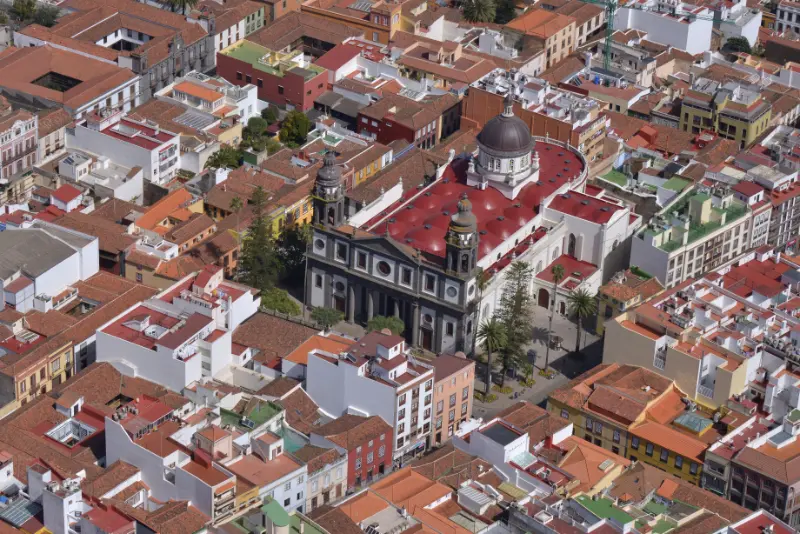
The Catedral de La Laguna is one of the places where Tenerife’s history is easiest to read in layers. It began as the church of Los Remedios in the sixteenth century, became the cathedral of the new Nivariense diocese in the nineteenth century and was substantially rebuilt in the early twentieth century. The result is not a single-period monument: a neoclassical façade from the earlier building stands in front of a later interior with neo-Gothic vaulting, while the chapels preserve works that are older than both. I would include it in a first La Laguna walk even when interior access is restricted, because the building still explains the city’s religious and civic evolution from the street.
Quick visit facts
| Location | Historic centre of San Cristóbal de La Laguna |
|---|---|
| Origins | Los Remedios church began in the early 16th century |
| Cathedral status | Elevated to cathedral in the 19th century after creation of the Nivariense diocese |
| Architecture | Neoclassical façade with a largely early-20th-century neo-Gothic interior |
| Current note | An official Tenerife tourism page currently warns that the cathedral is under renovation and cannot be visited; verify before going |
Why the cathedral is more complicated than it first looks
The façade can make the building appear older and more stylistically unified than it really is. The earlier church suffered repeated structural problems, and by the end of the nineteenth century much of it had to be replaced. The early-twentieth-century reconstruction retained the main façade while rebuilding the body of the church. That is why I look at the exterior and interior as two chapters rather than one seamless design.
This layered character is exactly what makes the cathedral interesting. La Laguna was the political and ecclesiastical centre of Tenerife for centuries, and the building changed as institutions, engineering techniques and tastes changed. It is a useful reminder that heritage cities are not frozen in the century in which they were founded.
The artworks I would look for when access is possible
The cathedral’s collection is as important as its architecture. Official tourism material highlights the Retablo de Mazuelos, whose Flemish panels are linked to Hendrick van Balen’s circle, the Carrara-marble pulpit by the Genoese sculptor Pasquale Bocciardo, the image of the Virgen de los Remedios and other paintings and sculptures connected with Canary, Flemish, Genoese and Spanish workshops.
I would not try to see everything at once. A better approach is to choose three anchors: the main chapel, the marble pulpit and one devotional image or painting. That leaves enough attention to notice the spatial effect of the vaults and ambulatory rather than turning the visit into a list of names.
Current 2026 access: the detail I would check first
There is a practical reason not to rely on an old travel blog here. As checked on 18 September 2026, one official Turismo de Tenerife architecture page explicitly says the cathedral is under renovation and, for the moment, cannot be visited. Other official destination pages still describe it as part of the normal historic-centre route. I treat the closure warning as the safer information and verify again on the day.
Even during a closure, the cathedral remains worth including in a walking route because the exterior, square and surrounding street pattern make sense together. I would simply avoid building a tightly timed itinerary around an interior visit until the official status confirms reopening.
How I would place it in a La Laguna walking route
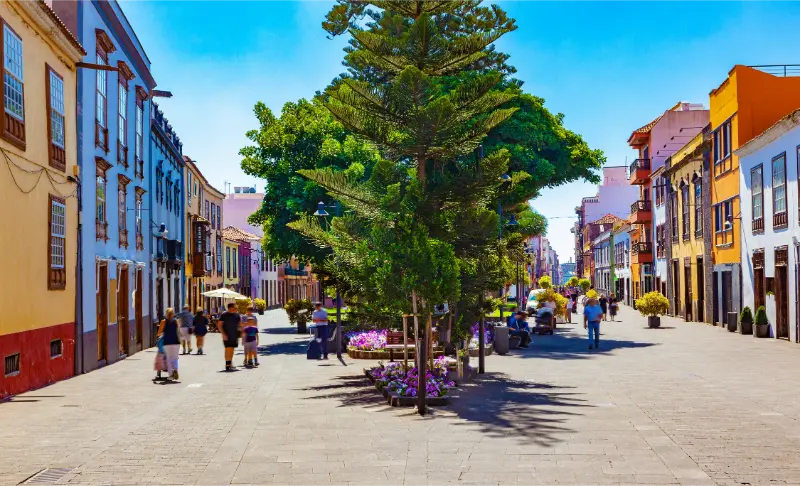
I would approach from the pedestrian centre rather than drive directly to the door. The cathedral sits naturally between the Villa de Arriba and Villa de Abajo parts of the historic centre, so it works well after the Iglesia de La Concepción and before the palaces around Plaza del Adelantado.
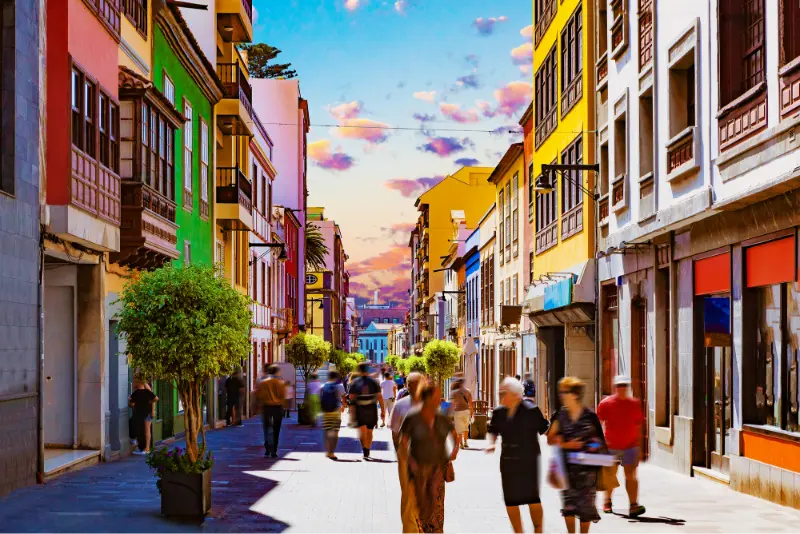
That sequence also helps with interpretation: La Concepción represents the older parish focus, the cathedral shows the later ecclesiastical centre, and the palaces explain the civil elite of the UNESCO city. In a compact area, the walk becomes a story rather than a collection of isolated monuments.
How I would plan the visit
I build the stop into a compact local route rather than drive across Tenerife for one doorway. That reduces parking stress and gives the site context. Historic centres and small museums are often more rewarding when I can compare them with the streets, squares, markets or landscapes that produced them.
I also leave flexibility. Opening hours can change for public holidays, conservation work, religious services, private events or temporary exhibitions. My practical rule is simple: if entering the building is essential to the day, I check the official source again that morning. If the exterior or surrounding district is valuable by itself, I can be more spontaneous.
How much time I would allow
I separate time inside from total visit time. A compact museum may need only 45 minutes, yet the real stop can take 90 minutes once I include walking, ticketing, photography and a nearby coffee. A church or palace may be quicker if only the exterior is accessible, but I still avoid scheduling another fixed-time activity immediately afterwards.
For a culture-heavy day, I rarely stack more than three substantial interiors in one half-day. Alternating an indoor visit with a square, garden, lunch or short walk keeps attention higher and makes details easier to remember.
Photography, accessibility and families
Photography rules are not universal. I keep flash off around artworks and living collections, look for signs and ask before filming extensively. In active religious sites I never photograph worshippers without permission, and in gardens or wildlife spaces I avoid handling plants or animals for a better picture.
Accessibility also has to be checked site by site. A pedestrian historic centre can be easy to reach while a heritage staircase, old threshold or narrow gallery is not. When step-free access is essential, I contact the venue rather than infer accessibility from a modern-looking entrance. With children, I shorten the visit and give them one or two things to look for; that usually works better than expecting them to read every label.
When I would go
Weekday mornings are usually the easiest time for combining cultural attractions with open museums, but they are not automatically the quietest during school visits or organised groups. Late afternoon often gives better street atmosphere, while indoor opening can be more limited. I choose according to the experience I want rather than chasing a mythical hour with no other visitors.
Tenerife’s local fiestas, Carnival, religious celebrations and heritage weekends can transform normal access. Those dates can be wonderful, but they require a different plan. I check road closures, event programmes and special opening rules before assuming an ordinary timetable still applies.
Where I would stay if I wanted a slower visit
For a day trip, I would normally return to my main base. If I want two culture-heavy days without repeated driving, I sometimes compare accommodation in San Cristóbal de La Laguna. Staying locally is most useful when I want early streets, evening restaurants or several attractions that open on different schedules.
Common mistakes I would avoid
- Using an old Google review as the only source for opening hours.
- Assuming an open gate means every interior room is public.
- Driving from monument to monument inside a walkable historic centre.
- Trying to photograph everything instead of spending time with a few details.
- Ignoring services, worship, conservation work or local events that can temporarily change access.
What I would combine nearby
I prefer these combinations because they keep the day geographically coherent. The point is not to collect the largest possible number of attractions; it is to understand one part of Tenerife more deeply while spending less time in traffic.
Official source
For current access, opening information and temporary changes I check the official information for this site before travelling.
Frequently asked questions
Can I visit the cathedral inside in September 2026?
I would not assume so. An official Tenerife tourism page currently states that it is under renovation and not visitable, so check the latest official status before planning an interior visit.
Is the façade the same age as the interior?
No. The main façade is an earlier neoclassical survival, while much of the present church body dates from the early twentieth-century reconstruction.
Why is it important to La Laguna?
It became the cathedral of the Nivariense diocese and contains major religious artworks connected with Tenerife’s long Atlantic cultural links.
Is it easy to combine with other sights?
Yes. It is in the pedestrian historic centre and fits naturally with La Concepción, Casa Lercaro, Teatro Leal and Plaza del Adelantado.
Final thoughts
Catedral de La Laguna earns a place in a Tenerife itinerary when I treat it as part of its neighbourhood rather than an isolated pin on a map. I would verify the practical details, give the site enough time to reveal its context and then continue on foot to nearby places. That slower approach is usually what turns a short stop into something I actually remember after the trip.