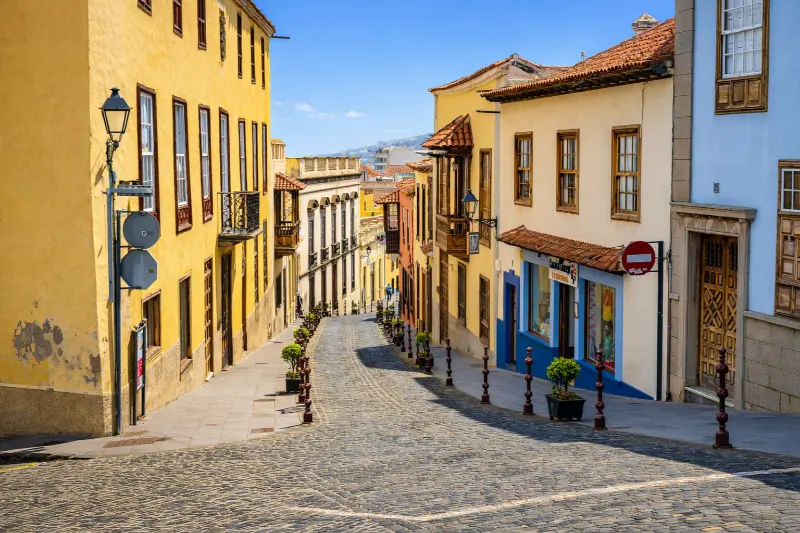
Casa de los Balcones is one of the places where La Orotava’s historic centre becomes tangible: timber, courtyards, craft traditions and domestic architecture make more sense when I can see how they fit together inside a real house.
Why the house matters
The official Tenerife tourism page dates the building to around 1670 and highlights the long third-floor balcony made from Canary pine heartwood, known locally as tea. The internal patio has open galleries and an imposing wooden wine press. Those details matter because they show how status, climate, craftsmanship and agricultural life were expressed in architecture rather than presented only in museum labels.
Traditional crafts are part of the story
Casa de los Balcones has long been associated with traditional Canarian crafts. I pay attention not only to finished objects but to techniques, materials and the relationship between household spaces and artisan work. For travellers who have seen lace, embroidery or wooden balconies only in souvenir shops, the setting gives those objects a more meaningful context.
The surrounding historic complex
One reason I would not treat the Casa as an isolated attraction is the concentration of heritage nearby. The tourism authority notes Casa Jiménez Francy, built in 1632, and Casa Molina/Casa del Turista within a short walk. The broader streetscape is the real attraction: façades, courtyards, churches, stone and timber repeated across the historic centre.
How I look at the famous balcony
The balcony is visually dominant, but I try not to let one photograph replace the visit. I look at joinery, proportions, shade and how upper floors relate to the courtyard. Traditional Canarian balconies were functional as well as decorative, creating semi-outdoor space adapted to climate and domestic life.
La Orotava deserves the rest of the day
My La Orotava guide covers the wider town, including gardens, churches and viewpoints. I would normally build a half day around the historic centre, not drive in solely for Casa de los Balcones and leave. If I am based in Puerto de la Cruz, La Orotava is especially easy to combine with the coast without making the day feel like a road trip.
Current visitor information
The historic complex has an official website that sells tickets and presents Casa de los Balcones together with Palacio Lercaro, Molino de Gofio del Hoyo and Casa Eladia Machado. I check the official Casa de los Balcones site for current opening hours, ticket combinations and any temporary changes rather than embedding a price that may date quickly.
Photography in a historic house
Courtyards create strong light contrasts, so I expose for highlights and let shadows remain natural rather than using flash automatically. I also check the venue’s current photography rules. The most memorable images are often details—a carved balustrade, wooden gallery, stone threshold or textile work—rather than another full façade shot.
What the house teaches about La Orotava
After the visit I notice balconies elsewhere in town differently. I start seeing them as climate devices, status symbols, craft objects and extensions of domestic rooms. That is why I value small historic-house museums: the building becomes a visual key that makes the whole urban landscape easier to read.
How I fit Casa de los Balcones into a Tenerife itinerary
I would not plan Casa de los Balcones in isolation. I first look at the geography of the day and decide what belongs naturally before or after it. I would pair the house with the historic centre, nearby gardens and a long lunch. Puerto de la Cruz can be added later, but I would not leave La Orotava after a 30-minute museum stop. That approach keeps driving or bus time under control and leaves enough margin for weather, queues, a longer lunch or simply staying somewhere because it is better than expected. For wider planning I use my La Orotava travel guide and then build the day around one main experience rather than a collection of unrelated pins.
When I would go
Morning gives me cooler streets and time to wander before lunch. On busy excursion days, arriving earlier also makes photography around the historic centre calmer. Tenerife is a year-round destination, but the best hour for a specific place can matter more than the best month. I think about light, heat, wind, crowds and whether the surrounding streets are lively or congested. I also check the exact local forecast instead of relying on a forecast for the island as a whole; altitude and exposure create very different conditions over short distances.
How long I would allow
I allow 45–75 minutes for the house itself and at least half a day for La Orotava as a whole. I prefer a realistic visit that includes arrival, orientation and a few pauses. The number printed on a map rarely includes parking, walking from a bus stop, buying a ticket, using changing facilities or finding lunch. Building those small transitions into the plan is one of the easiest ways to make a Tenerife day feel relaxed rather than rushed.
Getting there without wasting half the day
La Orotava is accessible by bus from Puerto de la Cruz and other north-coast locations. By car, I park outside the tightest historic lanes and walk uphill rather than hunting for a space beside the attraction. If I use public transport, I check both the outward and return timetable before leaving, not when I am ready to go home. If I drive, I save a legal parking option and a second choice on the map. Tenerife distances can look short, but urban traffic, steep roads and limited parking can change the real journey time. My getting around Tenerife guide explains the wider trade-offs between car, bus and taxi.

What I would bring
Comfortable shoes are important because the historic centre has slopes and older paving. I also bring a light layer because north-coast weather can change quickly. I keep the day bag light: water, sun protection, a charged phone, and a thin layer if the visit may continue into evening or a higher area. For swimming places I add footwear suitable for hot paving or rough surfaces and never assume lockers or shaded space will be available. For museums or religious buildings I prefer simple, respectful clothing and a small bag that is easy to carry.
Accessibility and travelling at a slower pace
Historic houses can include thresholds, stairs and narrow circulation. If step-free access is essential, I contact the venue for the current accessible route before travelling. Accessibility is not only about a wheelchair symbol: slopes, cobbles, stairs, distance from parking, toilets and shaded seating all matter. When step-free access is essential I confirm the current arrangements directly before travelling. My accessible Tenerife guide is a useful starting point for broader planning.
Where I would eat nearby
I prefer eating in central La Orotava after the visit, which lets the house become part of a broader cultural morning rather than a stand-alone ticketed stop. I usually separate the attraction from lunch unless there is a genuinely good reason to eat on site. That gives me more choice and prevents a queue at the café from dictating the day. I look for a local restaurant, bakery or simple bar within the same area and keep one backup saved. For context on island dishes and restaurant habits, see my what to eat in Tenerife guide and eating out in Tenerife guide.
Where to stay if this place is a priority
Puerto de la Cruz is the easiest nearby base for most travellers, while La Orotava itself suits visitors who want a quieter historic setting. I choose accommodation by map position rather than marketing description. A property that looks close can still be awkward on foot if there is a steep road, motorway barrier or long detour. I compare live options with accommodation in and around La Orotava and then cross-check the neighbourhood in my where to stay in Tenerife guide.
Common mistakes I would avoid
- Visiting only for the exterior balcony photo.
- Driving into the narrowest historic streets unnecessarily.
- Assuming every part of a 17th-century house is step-free.
- Leaving no time for the rest of La Orotava.
The common thread is simple: I try not to turn Casa de los Balcones into a box-ticking stop. Tenerife rewards a little spare time, especially in places where the surrounding promenade, historic streets, gardens or coastline are part of the experience.
What I check on the day
Before leaving I verify the official opening or access information, local weather, any temporary closure and the route back. I verify current admission options and whether the ticket includes more than one historic property, then decide how much of the complex I genuinely want to see. I save the official page and any ticket or reservation offline. This takes only a few minutes and is much more reliable than assuming that an old screenshot, blog post or map listing is still correct.
My final take
Casa de los Balcones earns its place in a Tenerife itinerary because it turns abstract ideas about Canarian architecture and craft into a real, human-scale space. I would visit slowly and keep the rest of La Orotava in the same day.
Frequently asked questions
Do I need to book in advance?
It depends on the venue and ticket type. I check the official page close to the visit; where timed tickets or guided experiences are offered, advance booking can be useful even if basic admission is available at the door.
Is it worth visiting if I only have a few days in Tenerife?
I would include it when the subject genuinely matches my interests and it fits geographically with the rest of the day. On a short first trip, I avoid adding an attraction simply because it appears on a long checklist.
Can I visit with children?
Usually yes, but I adjust the duration and expectations. A shorter, focused visit with food or outdoor time afterwards works better than making children absorb every exhibit or historical detail.